BBC micro:bit Go Kit V2
micro:bitIn stock

BBC micro:bit Go Kit V2

A starter pack with a BBC micro:bit V2 pocket-sized computer, USB cable and battery pack, ready for first coding projects.

Grade levels
Grades 4–5Grades 6–8
Request price

Pricing depends on quantity and configuration. Add to your quote list and we'll reply with an offer.

Order via WhatsApp

Product overview

The BBC micro:bit Go is the official starter pack for the micro:bit V2, a pocket-sized computer that shows students how software and hardware work together. It is designed for beginners and gives a confidence-building first step into coding and physical computing.

The micro:bit V2 board has an LED display, programmable buttons, built-in sensors, a speaker and a microphone, plus pins for connecting other inputs and outputs. The Go pack includes one micro:bit V2 board (supplied in one of four colours), a micro USB cable, a battery holder with two AAA batteries, a quick-start guide, a safety leaflet and a sticker.

Students write programs on a computer, tablet or phone and transfer them to the board. Once the code is loaded, the micro:bit runs on its own from the battery pack, so projects can be carried around or built into models. The Micro:bit Educational Foundation offers free block-based and text-based editors along with curriculum-linked lessons and teacher training, making it easy to use in class.

Key features

  • Includes BBC micro:bit V2 board
  • LED display, buttons, sensors, speaker and microphone
  • Battery pack with two AAA batteries included
  • Micro USB cable and quick-start guide
  • Free block and text coding editors
  • Runs standalone once code is loaded
View on the official website

Related products

  • Grades 6–8Grades 9–12

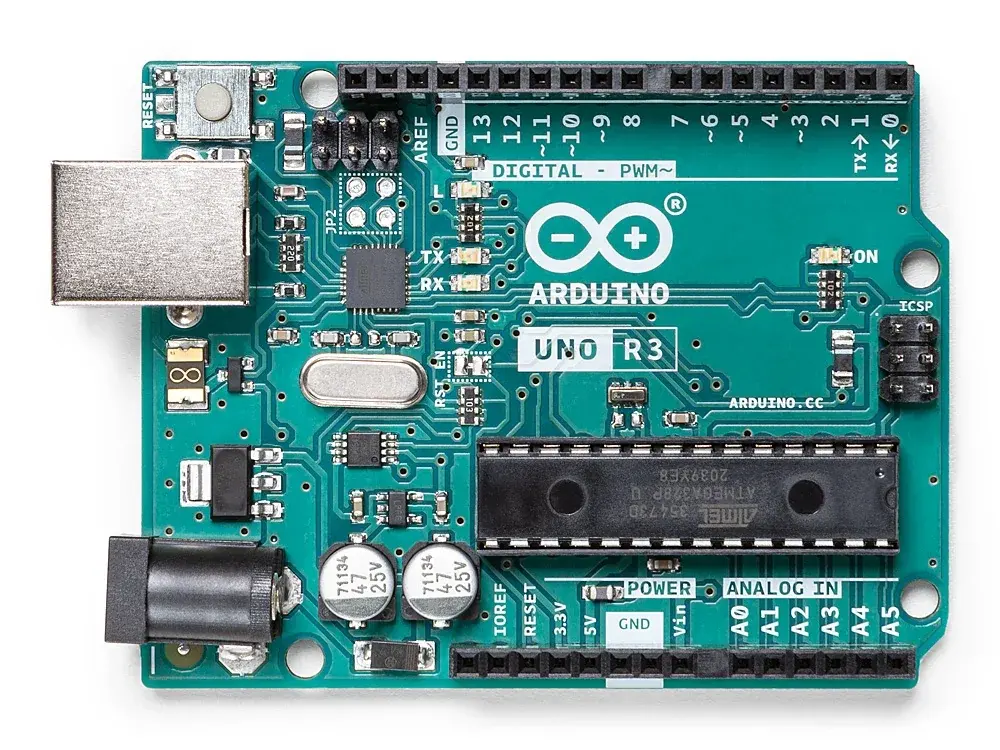
    Arduino UNO Rev3

    The Arduino UNO Rev3 is the entry-level microcontroller board that most people use when they first start with Arduino. It is the most used and best documented board in the Arduino family, which means students can find a very large number of tutorials, example projects and compatible add-on shields. The board is based on the ATmega328P microcontroller running at 16 MHz with 5V logic. It provides 14 digital input/output pins, six of which support PWM, plus six analog inputs. Memory includes 32 KB of flash, 2 KB of SRAM and 1 KB of EEPROM. It can be powered over USB or from an external supply, with 7-12V recommended. In the classroom, the UNO is used to read sensors, drive LEDs, motors and displays, and introduce programming concepts through the Arduino IDE. Its standard header layout fits a wide range of shields and breadboard projects, making it a dependable foundation for electronics, physical computing and robotics lessons.
  • Grades 6–8Grades 9–12

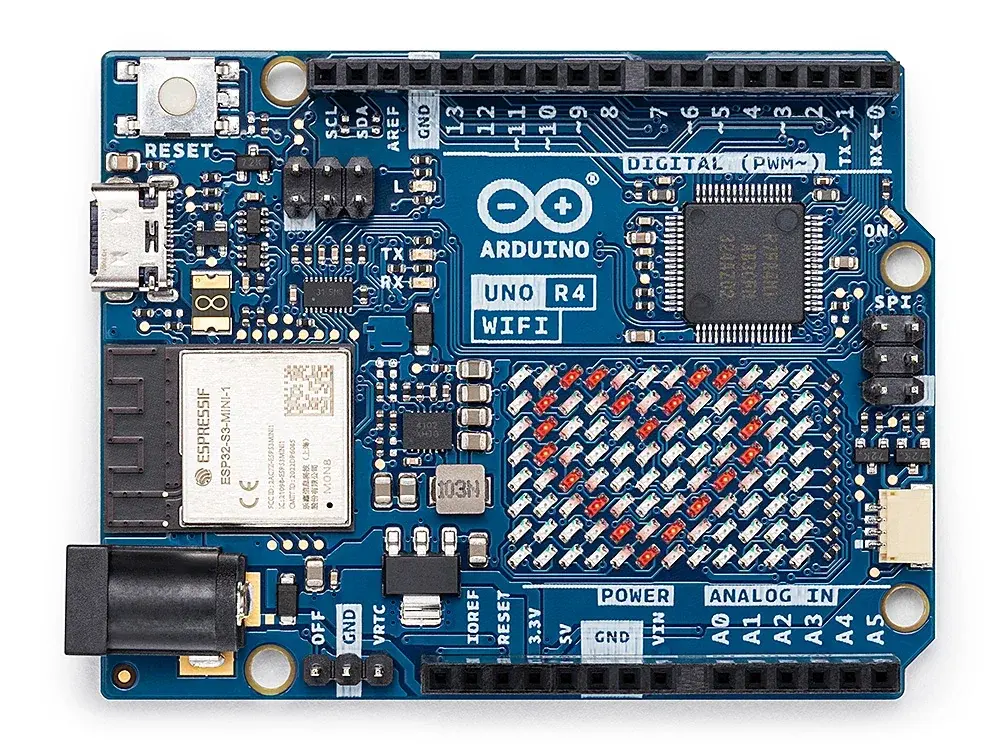
    Arduino UNO R4 WiFi

    The Arduino UNO R4 WiFi keeps the familiar UNO shape and pin layout while adding more processing power and wireless connectivity. It combines a Renesas RA4M1 Arm Cortex-M4 microcontroller running at 48 MHz with an Espressif ESP32-S3 module that handles Wi-Fi and Bluetooth, so students can build connected and Internet of Things projects. The board has 256 KB of flash and 32 KB of RAM on the main processor, 14 digital pins, six analog inputs and six PWM outputs. It supports UART, I2C, SPI and CAN, and adds a 12-bit DAC, an op-amp, a real-time clock and HID support. A 12x8 red LED matrix on the board can show icons, text and simple animations without extra parts. It uses a USB-C connector, includes a Qwiic connector, and accepts 6-24V input. Because it remains compatible with UNO shields and works with Arduino Cloud, it lets classes move from basic electronics to networked sensing and data projects on a single board.

  • Grades 6–8Grades 9–12

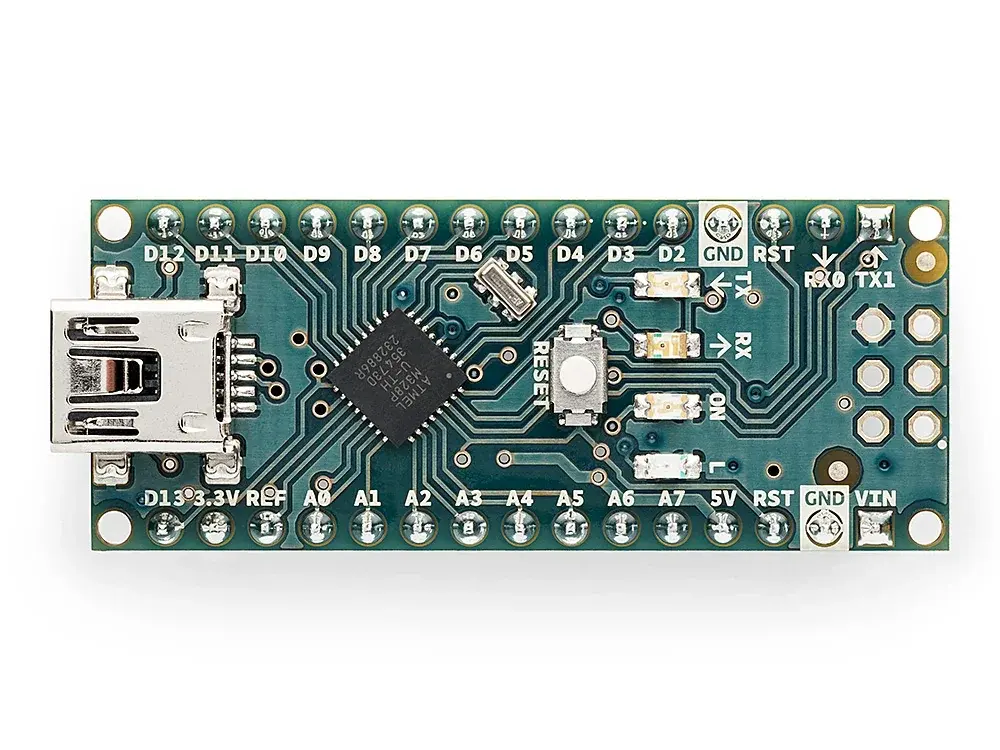
    Arduino Nano

    The Arduino Nano is the smallest of the classic Arduino boards, designed to plug straight into a breadboard. It offers functionality similar to larger boards such as the UNO but in a much smaller package, which makes it a good choice for compact builds, wearable prototypes and small robots. The Nano uses the ATmega328 microcontroller at 16 MHz with 5V logic. It has 32 KB of flash memory, 2 KB of SRAM and 1 KB of EEPROM, 14 usable digital pins of which six provide PWM, and eight analog inputs. It supports I2C and SPI communication, connects to a computer through a Mini-B USB cable, and measures just 18 x 45 mm. Students program the Nano with the same Arduino IDE and code used for other Arduino boards, so skills transfer directly between projects. In class it is useful when a design needs to fit inside an enclosure or a small model, or when several boards are used together on breadboards.

  • Grades 6–8Grades 9–12

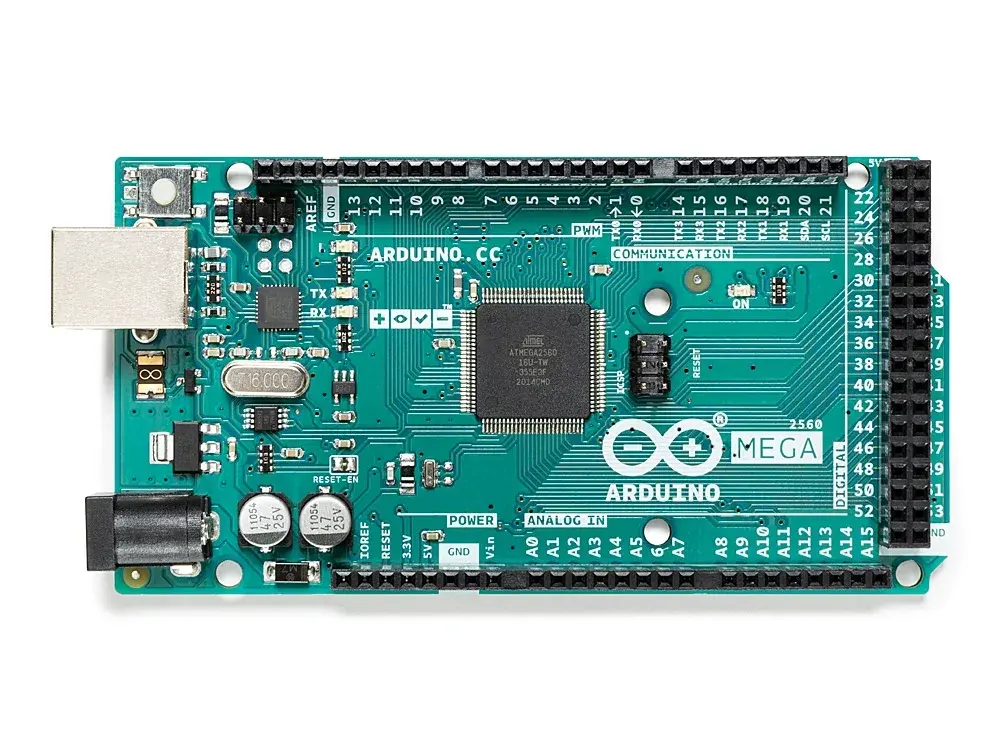
    Arduino Mega 2560 Rev3

    The Arduino Mega 2560 Rev3 is designed for projects that need many more connections than a standard board can offer, such as robots with multiple motors and sensors, 3D printers or large interactive installations. It is ready to use out of the box and can be powered over USB or from an external supply. It is built on the ATmega2560 microcontroller running at 16 MHz with 5V logic. The board provides 54 digital input/output pins, 15 of which can output PWM, along with 16 analog inputs and four hardware serial ports (UARTs). Memory includes 256 KB of flash, 8 KB of SRAM and 4 KB of EEPROM, giving room for longer programs. The Mega is compatible with most shields designed for the UNO and earlier boards, so students can reuse the same accessories and Arduino IDE skills while scaling up. It is well suited to advanced classes and project teams that have outgrown the pin count or memory of smaller boards.