Handy Scoopers
Learning ResourcesIn stock

Handy Scoopers

Four scissor-style scoopers with translucent scoops and drain holes for sensory play that builds fine motor and pre-cutting skills.

Age
⁦3+⁩ years
Grade levels
KGGrades 1–3
Request price

Pricing depends on quantity and configuration. Add to your quote list and we'll reply with an offer.

Order via WhatsApp

Product overview

Handy Scoopers from Learning Resources turn sensory play into fine motor practice. Their scissor-style handles mimic the finger position used for cutting, so as children open and close them they strengthen hand muscles, improve coordination and develop pincer grasp.

Children can scoop, sort, sift and transfer sand, water, water beads, rice, beans and other sensory materials. The translucent scoops let them see what they have collected, and built-in drain holes turn each scooper into a sifter for sand and water play. Bright colors and easy-grip handles make them welcoming for young learners.

The set includes four scoopers and a storage bucket. They fit naturally into sensory tables, early science and math centers, outdoor play and occupational therapy activities.

Key features

  • Four scissor-style scoopers
  • Builds pre-cutting and pincer grasp skills
  • Translucent scoops with drain holes
  • Works with sand, water, beads and rice
  • Storage bucket included
View on the official website

Related products

  • Grades 1–3Grades 4–5Grades 6–8

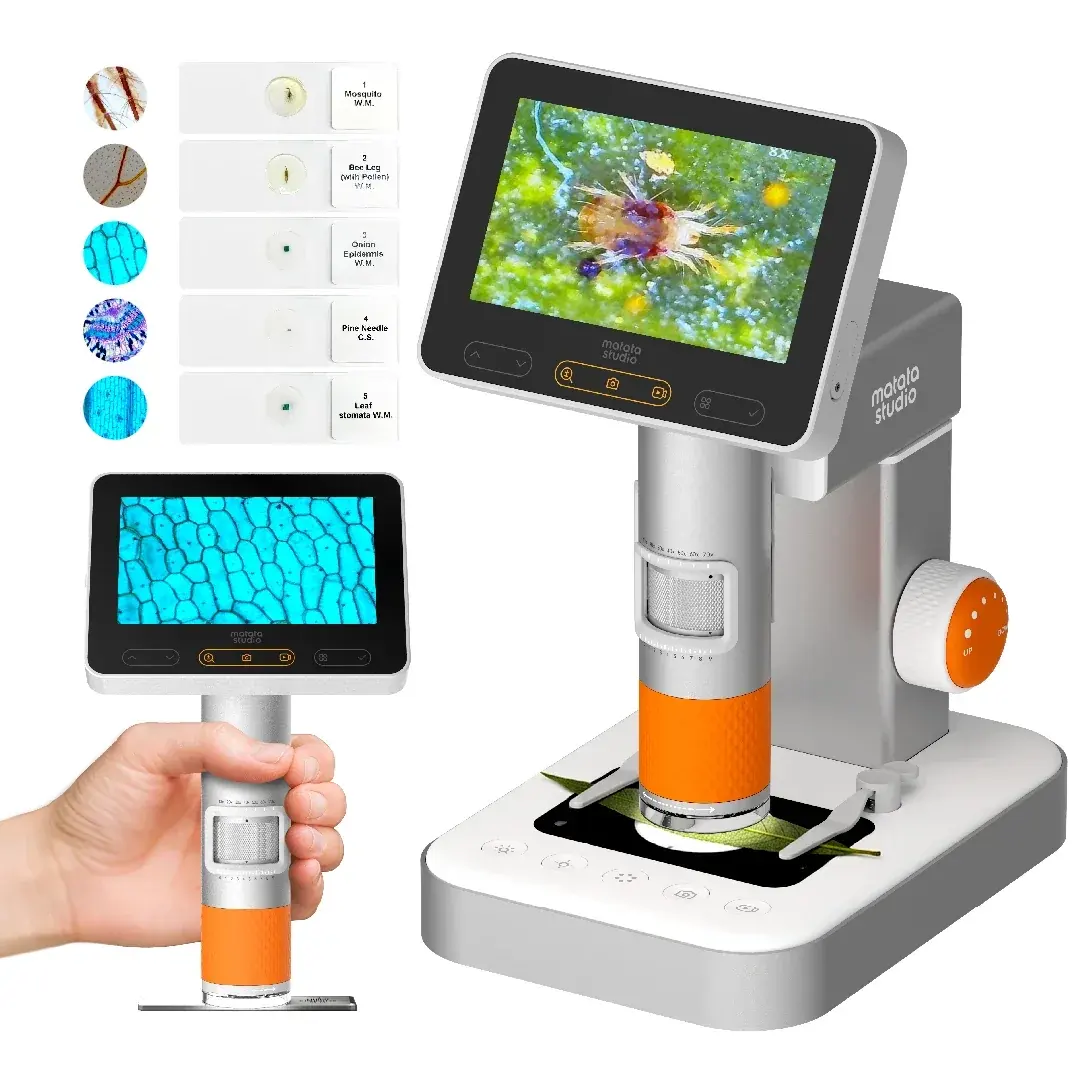
    MX2-AS Digital Microscope 100x–1600x (Wi-Fi, 4" touchscreen)

    The MatataStudio Digital Microscope MX2-AS pairs optical magnification with a digital camera so students can study the microscopic world on a screen instead of through an eyepiece. Its 4.3-inch capacitive display folds up to 135 degrees, and the microscope can be lifted out of its stand for handheld use indoors or outdoors. Learners can zoom continuously (about 9X to 72X on screen), switch between incident and transmitted lighting for solid objects or slides, and apply an on-screen color tint to bring out detail. Images and video are saved to 8GB of built-in storage, and Wi-Fi or a USB-C cable sends the live view to phones, tablets or computers, so a whole class can watch the same sample. The 2MP camera supports recording and measurement. The kit includes the microscope, MX stand, five prepared slides, two observation chambers, a USB-C cable, an exploration manual, two user guides and a storage bag, making it suitable for biology, geology and general science lessons.

  • Grades 1–3Grades 4–5Grades 6–8

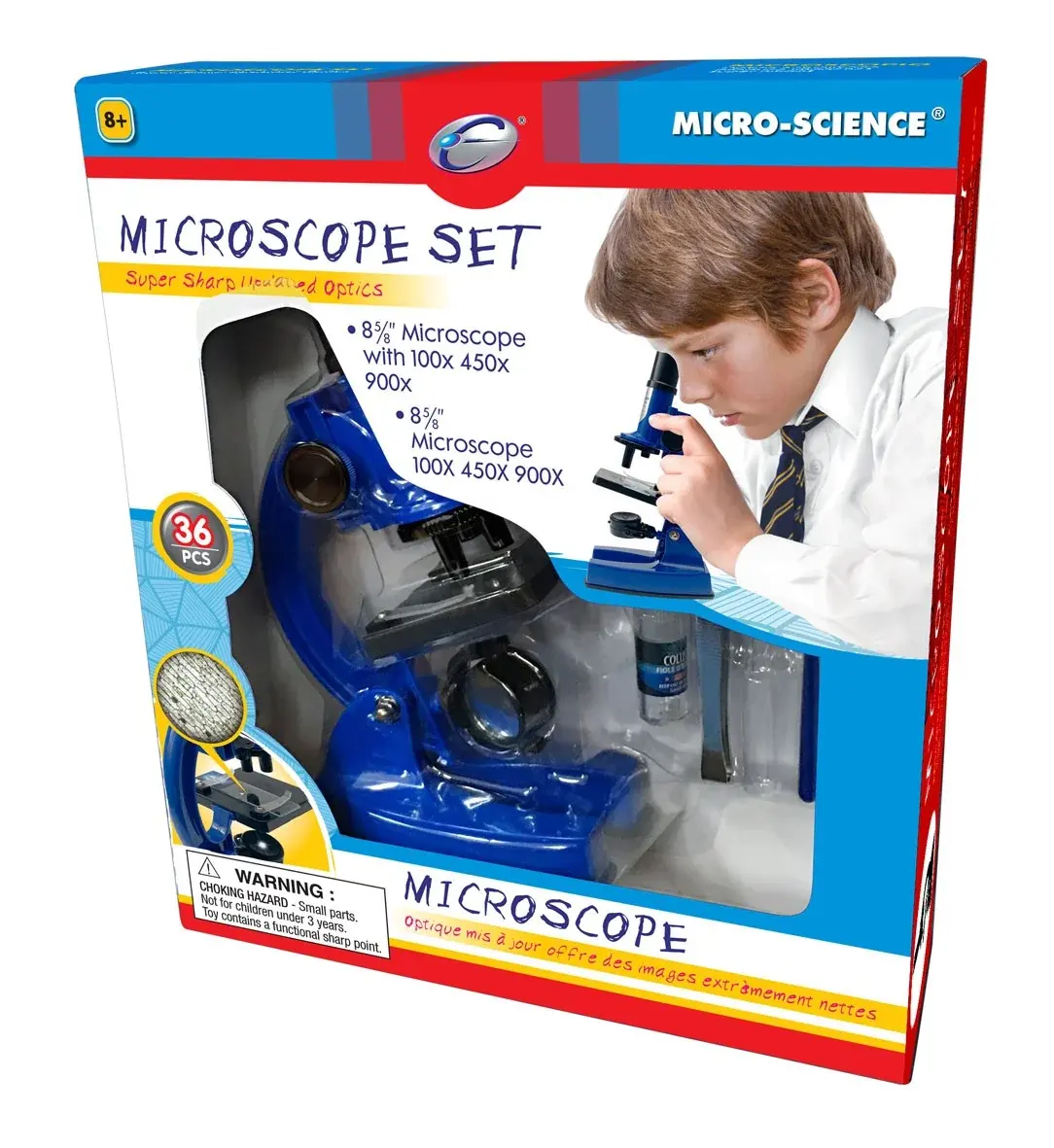
    Microscope Set 100/450/900X – 36 pcs

    This Eastcolight microscope set (models 21361/21362/21363, available in blue, black or red) gives young scientists a complete starter kit for exploring cells, fibres, insects and other small specimens. The roughly 8.6-inch microscope offers three magnification levels, 100x, 450x and 900x, so students can move from an overview of a sample to finer detail. Alongside the microscope, the set includes a magnifier, tweezers, a dissecting needle, 12 blank slides, 12 blank labels, one prepared slide, five cover slips and two collecting vials, plus an instruction manual. Two LR41 button batteries are included to power the microscope. In the classroom, students can collect samples in the vials, mount them on blank slides with cover slips, label their work and compare observations at each magnification, building practical skills in preparing and examining specimens.

  • Grades 1–3Grades 4–5Grades 6–8

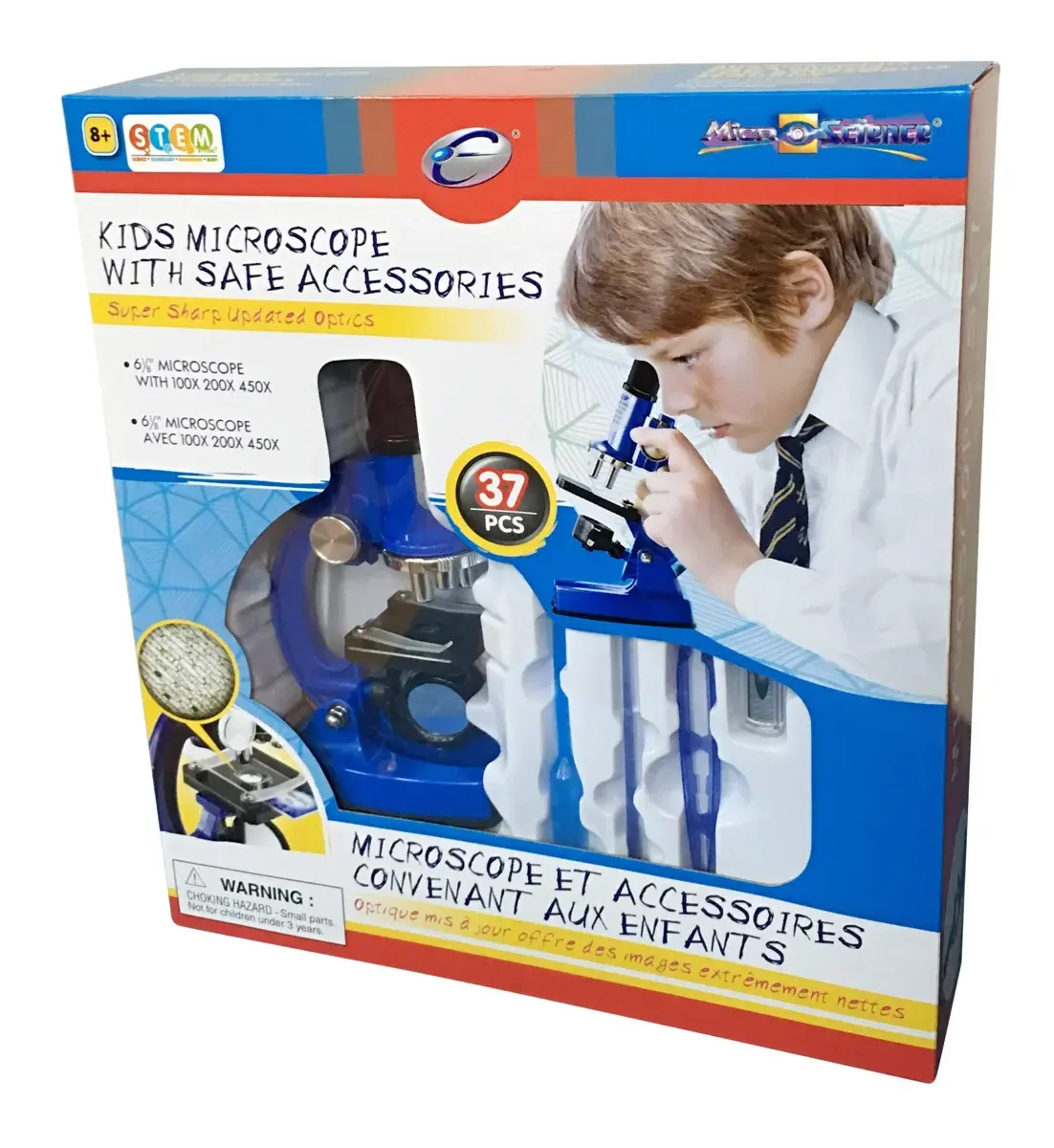
    Microscope Set 100/200/450X – 37 pcs

    This Eastcolight microscope set (model 21378) is designed as a first microscope for young learners. The compact optical microscope, about 6 1/8 inches tall, provides three magnification settings of 100x, 200x and 450x, suitable for looking at plant tissue, hair, salt crystals and similar everyday samples. The set comes with one prepared slide, seven blank slides, 12 slide covers and 12 blank labels, together with tweezers, a plastic pipette, a 3X hand magnifier and an instruction manual. (Eastcolight lists this set as 38 pieces including the manual.) Teachers can use it to introduce how a microscope works: students first inspect objects with the hand magnifier, then prepare their own slides with the pipette and tweezers, label them and compare what they see at each magnification level.