Coding Robots – Early Years

Authentic kits and components, quoted for your school. Add items to your quote list and we'll reply with pricing and delivery.

19 products

Filters

Clear all
Brand
Grade level

19 products

  • KGGrades 1–3

    KUBO Coding Starter Set

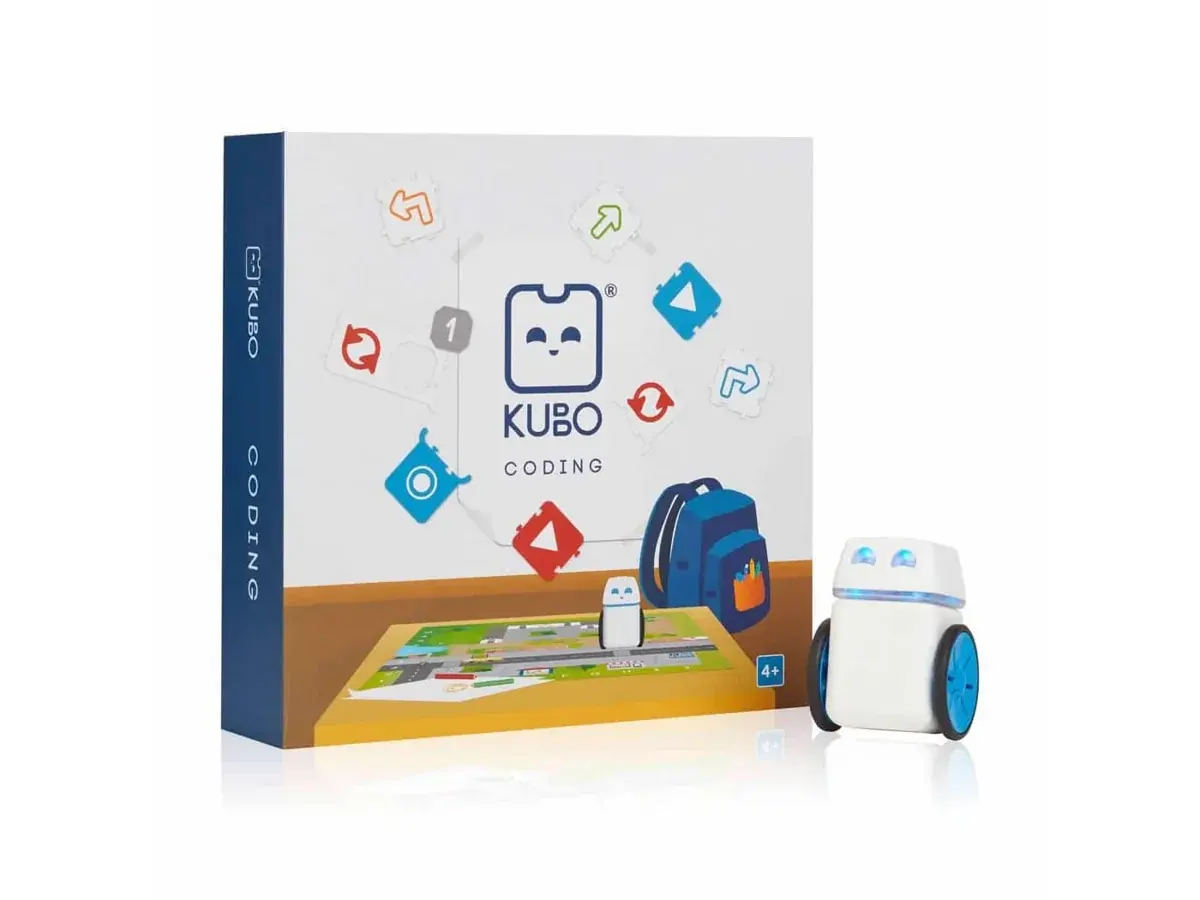
    The KUBO Coding Starter Set is the foundation of the KUBO system and introduces children aged about 4 to 10 to coding and computational thinking without screens. Students snap puzzle-like TagTiles® together to form a program, place KUBO on the sequence, and watch the robot follow the route across the activity map, with lights and sounds giving feedback. The set includes one KUBO robot, a 48 x 48 cm activity map, a micro-USB charging cable and 46 TagTiles: 14 Go Forward, 6 Go Left, 6 Go Right, 4 blue and 4 red Function (record and play) tiles, 2 Loop tiles and Parameter tiles numbered 1 to 10. Through these, learners progress from simple routes to functions, subroutines and loops. No coding experience is needed to teach with KUBO. The set comes with access to the KUBO Portal, which offers free standards-aligned curriculum, lesson plans and teacher guides aligned with ISTE, CSTA, NGSS, Common Core and TEKS, and it can be expanded with add-on TagTile sets such as Coding+.
  • KGGrades 1–3

    KUBO Coding+ Set

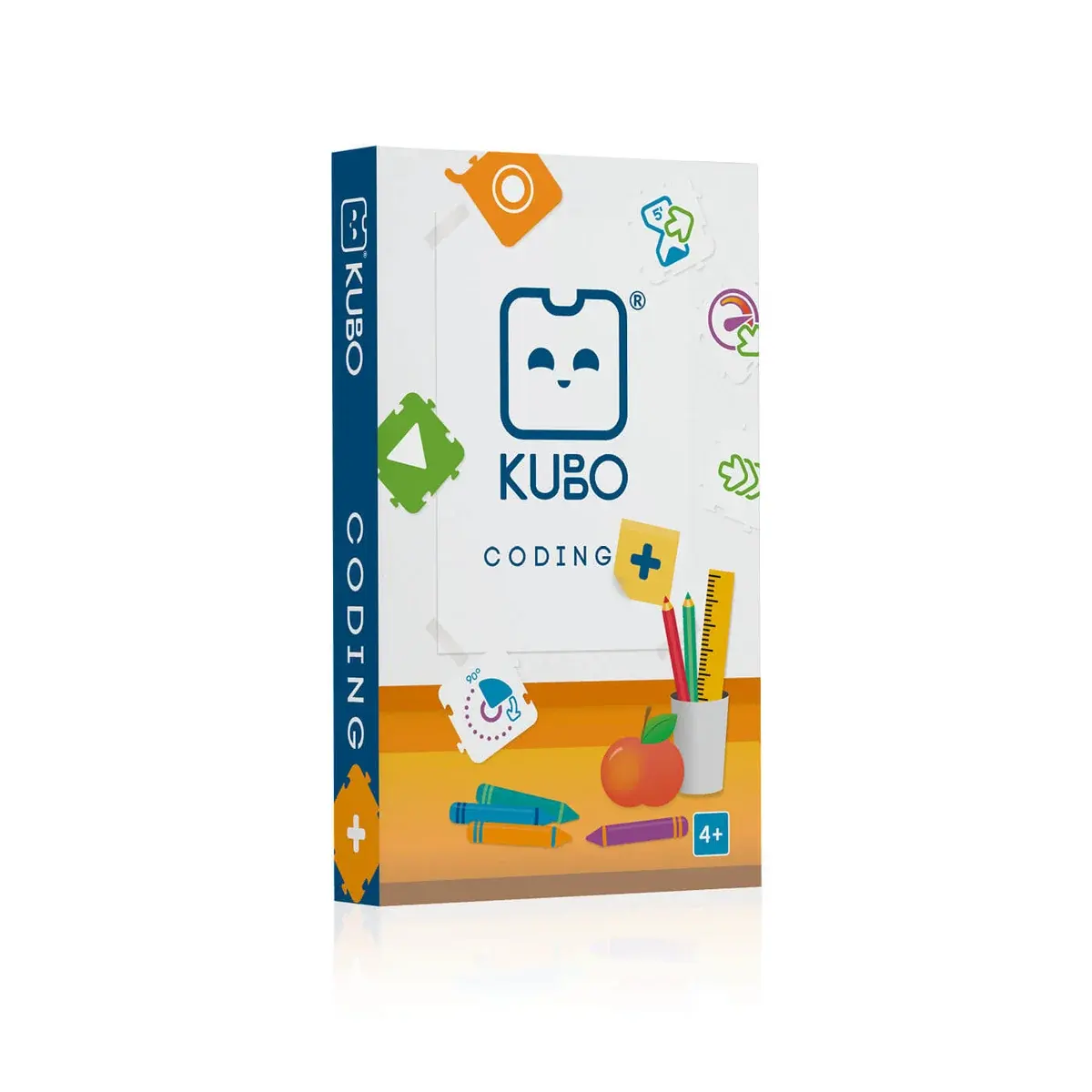
    The KUBO Coding+ Set is an expansion for classrooms that have mastered the KUBO Coding Starter Set. It adds 36 new TagTiles® that introduce the dimensions of time, distance, speed and direction, so students can decide how far, how fast and for how long KUBO moves. The tiles include Wait tiles for 2, 5 and 10 seconds; Slow, Medium and High Speed tiles; Go Forward tiles for 2x, 3x and 4x distances; 90-degree turns to the left and right and 180-degree turns; Go Back and U-turn tiles; and additional Function tiles designed for teamwork and group challenges. Working with these tiles, students build longer and more precise algorithms and become more confident using functions, subroutines and loops. The set requires a KUBO Coding Starter Set, which provides the robot and map. It comes with access to the KUBO Portal, where teachers find free lesson plans and guides aligned with ISTE, CSTA, NGSS, Common Core and TEKS, and no prior coding experience is needed.

  • KGGrades 1–3

    KUBO Coding++ Set

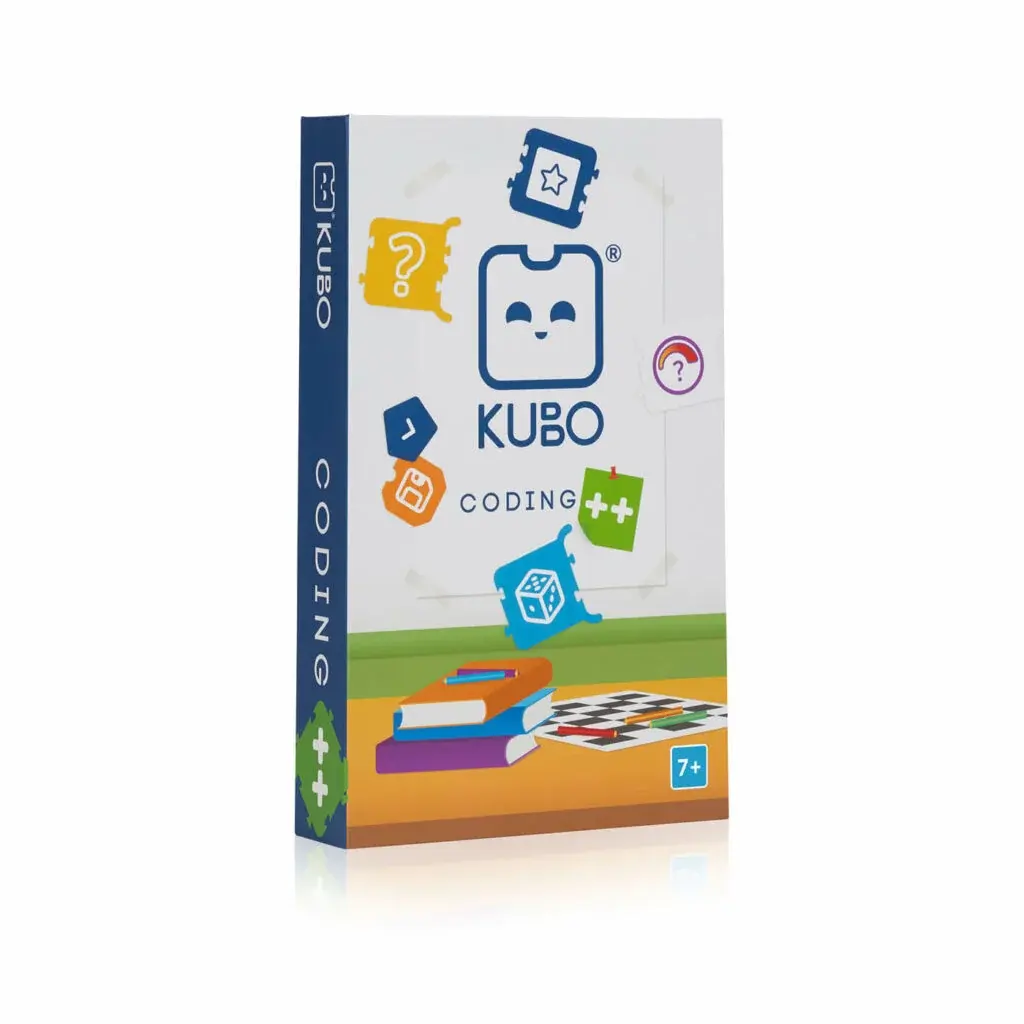
    The KUBO Coding++ Set is an add-on for students who have mastered the basics with KUBO and are ready for more advanced computer science ideas. Using the same puzzle-like TagTiles, learners build programs that respond to events, store and change values in variables, and make decisions with if/else conditions, all without a screen. The set contains 44 TagTiles, including variable tiles and operators (equal to, add to, subtract from), greater-than and less-than comparisons, start/end if tiles, true/false tiles, event tiles, 15-degree turn tiles, speed tiles, random and modulator tiles. Students lay the tiles out in sequence, the KUBO robot reads them, and the class immediately sees whether the logic works. The Coding++ Set requires the KUBO Coding Starter Set, which provides the robot and map. Teachers get free access to the KUBO Portal with standards-aligned curriculum materials and onboarding, making it straightforward to extend an existing KUBO program into upper primary grades.

  • KGGrades 1–3

    KUBO Coding Math Set

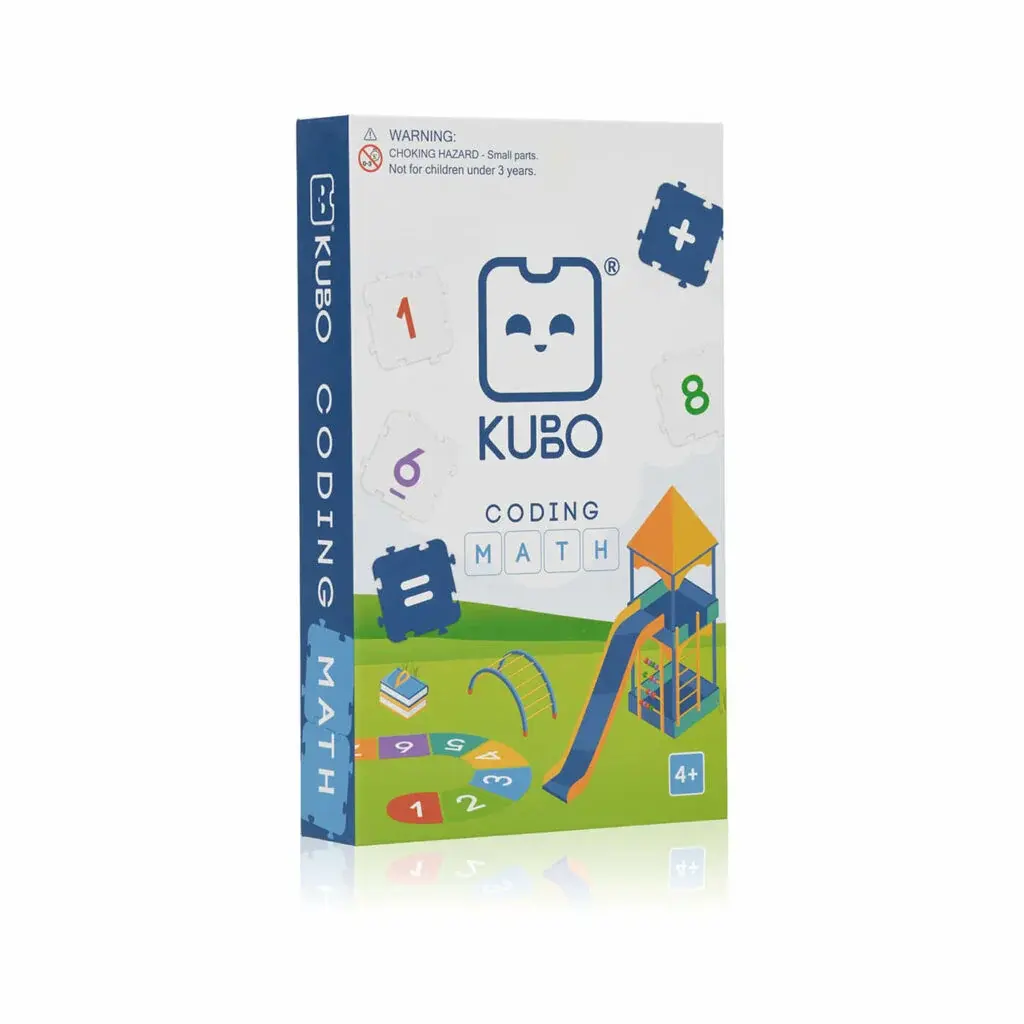
    The KUBO Coding Math Set lets teachers cover mathematics and coding in the same lesson. It adds a dedicated group of TagTiles to the KUBO system so that the robot's routes and challenges become math problems, while the robot and the classroom routine stay the same. The pack contains 50 Math TagTiles (33 numbers, 11 operators, 5 game tiles and a game activator tile), three themed challenge maps and more than 200 task cards. Activities address counting, cardinality, operations and algebraic thinking, so pupils practise number skills while planning and testing their programs. The set is fully screen-free and is designed to be paired with the KUBO Coding Starter Set, which supplies the robot and base map. Schools also receive free access to the KUBO Portal, which provides standards-aligned curriculum resources, onboarding and teacher training, and no previous coding experience is needed to get started.

  • KGGrades 1–3

    Tale-Bot Pro Screenless Coding Robot

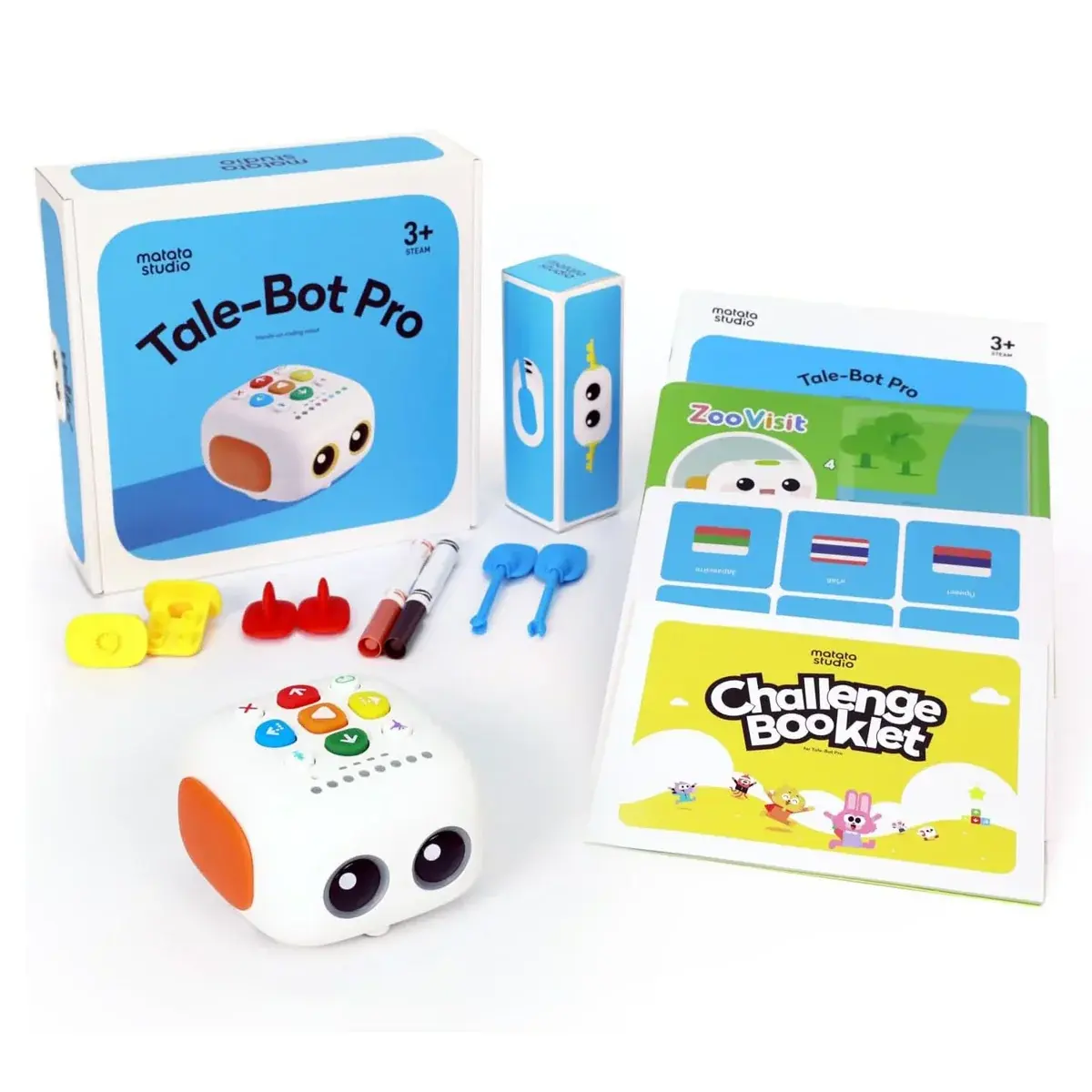
    Tale-Bot Pro is a screen-free coding robot designed for preschool and early primary classrooms. Children choose a goal on the map, plan the path, then press the colourful command buttons on the robot to enter each step before pressing play to watch it run. A Clear button removes the last command, so mistakes become quick debugging practice. Beyond movement, the robot can draw with markers, sing, dance and play back short voice recordings, which makes it well suited to storytelling and cross-curricular activities. Colour-coded indicators help children follow where they are in a program, and sequences, loops and cause-and-effect are introduced through play. The box includes the robot, a double-sided map (interactive and blank), two washable markers, six accessories such as wings and arms, a challenge booklet, a configuration card, a USB-C cable and a user guide. The rechargeable 1500 mAh battery runs for four hours or more, and the body is made from durable, eco-friendly ABS.

  • KGGrades 1–3

    Tale-Bot Pro Classroom Set – 6 robots

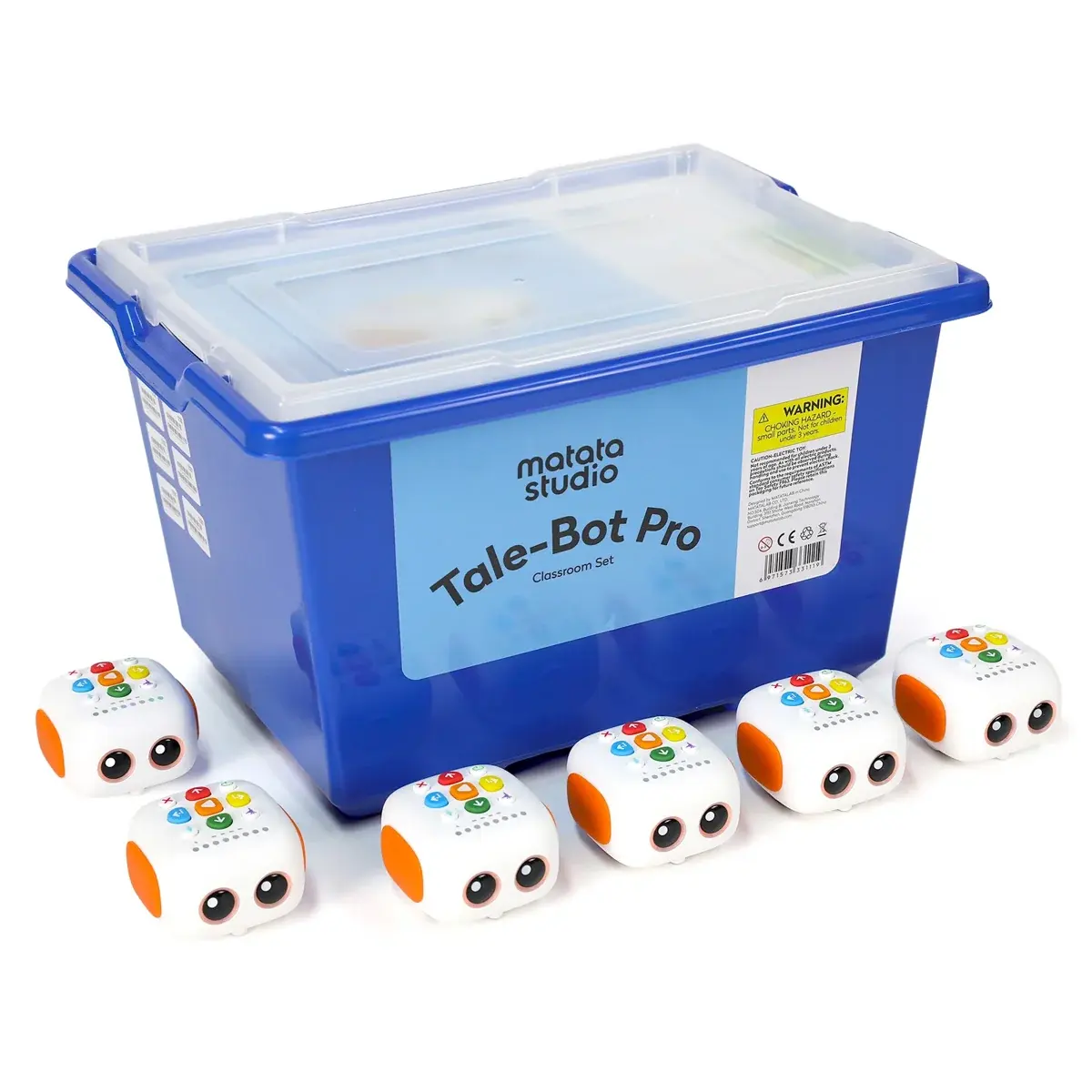
    The Tale-Bot Pro Classroom Set brings six Tale-Bot Pro robots together so that a whole class can code at once in pairs or small groups. Each robot is programmed by pressing the coloured command buttons on its back, with no tablet or computer required, which keeps young learners focused on planning, testing and fixing their sequences. The robots can move, draw shapes, dance with six preset moves, sing and play back custom voice recordings of up to 30 seconds per command. They are compatible with standard LEGO bricks for decoration and storytelling, and the included interactive maps and activity cards link coding to language, math and storytelling challenges. The set is designed for collaborative stations and guided group activities. Each robot uses a rechargeable 1500 mAh battery that charges in about 2.5 hours and runs for four hours or more. An optional MatataCode app is available for teachers who want to extend activities further.

  • KGGrades 1–3

    Tale-Bot Pro Activity Box

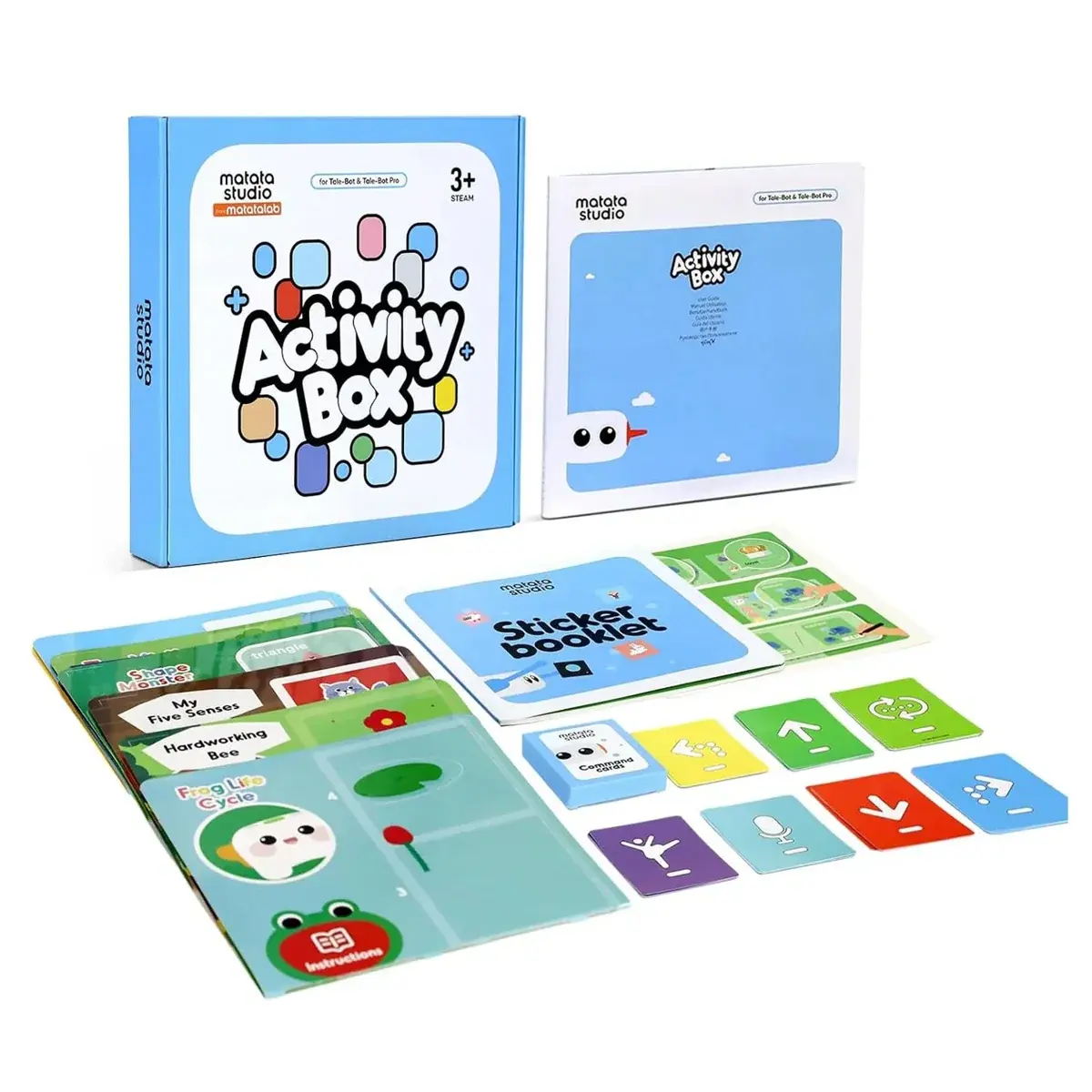
    The Tale-Bot Pro Activity Box is an accessory that turns Tale-Bot Pro coding sessions into themed, cross-curricular lessons. Its maps use OID technology that the robot recognises, so as Tale-Bot Pro travels across them it gives real-time voice feedback, plays sounds or carries out actions when it passes over specific spots and stickers. The box contains 10 interactive maps designed for learning to code, together with a blank map and a wide selection of interactive stickers. The themes connect programming with science, English language arts, social studies, math, social-emotional learning and the arts. Because children can place objects, cards and stickers freely, they can also design their own scenes and coding challenges instead of only following ready-made ones. The Activity Box is made to be used with the Tale-Bot Pro robot, which is sold separately, and works well as a learning-centre resource in early years and lower primary classrooms.

  • KGGrades 1–3

    Coding Set Pro – Screenless Coding Robot

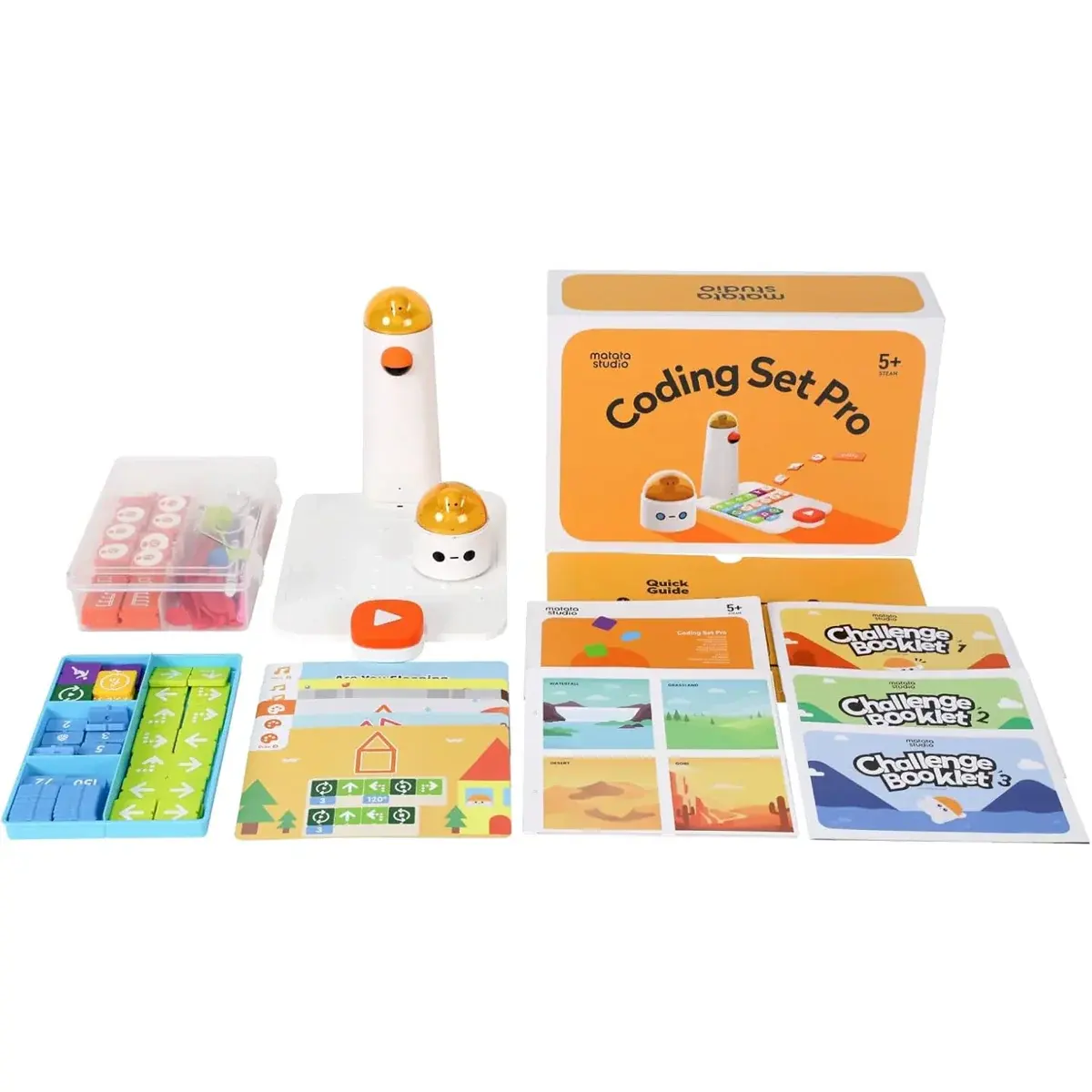
    The Coding Set Pro is a hands-on coding kit in which children build programs from physical, icon-based blocks rather than on a screen. Blocks are placed on the Control Board, the Command Tower reads the sequence and sends it to MatataBot, and the robot carries it out on the map so students can test and debug their ideas straight away. The set covers sequencing, loops, functions and pattern recognition, and extends coding into geometry, drawing with programmed angles, music composition and storytelling. It includes MatataBot, the Command Tower, Control Board, a double-sided map, movement, loop, function and number blocks, angle and music blocks, obstacles and flags, three challenge booklets and warm-up cards for art and music. MatataBot and the tower are rechargeable via USB-C and run for about four to six hours. Optional add-ons such as the Musician, Artist, Sensor and Animation packs can expand the kit as students progress.

  • KGGrades 1–3

    mTiny Smart Panda Robot

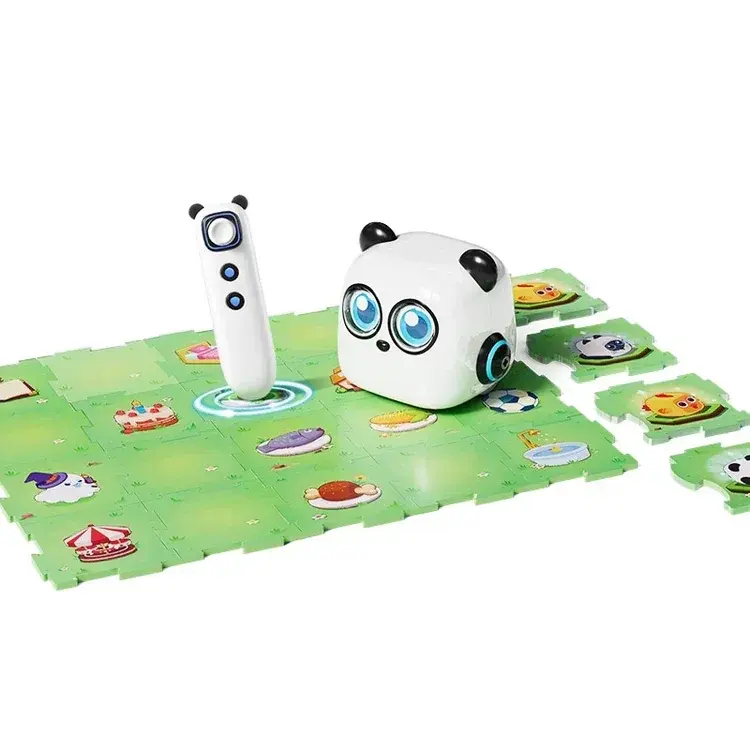
    mTiny from Makeblock is a screen-free coding robot for young learners, styled as a friendly panda with three dress-up options, more than ten preset emotions and over 300 sound effects. Children interact with it using a Tap Pen controller, so they can direct the robot without reading or using a device. Kids lay out physical coding cards to build sequences and use themed map blocks to complete scenario-based tasks. Activities combine coding with math, music, language, direction and spatial awareness, and social-emotional skills. The kit includes the robot, the tap pen, themed maps, coding cards, game cards and storybooks, and the robot is compatible with LEGO bricks. mTiny runs on rechargeable batteries and uses an OID sensor and a six-axis motion sensor to respond to the maps. For schools, Makeblock offers free downloadable lessons and teacher training, making the robot suitable for learning centres in kindergarten and lower primary classrooms.

  • KGGrades 1–3

    Botley 2.0 the Coding Robot

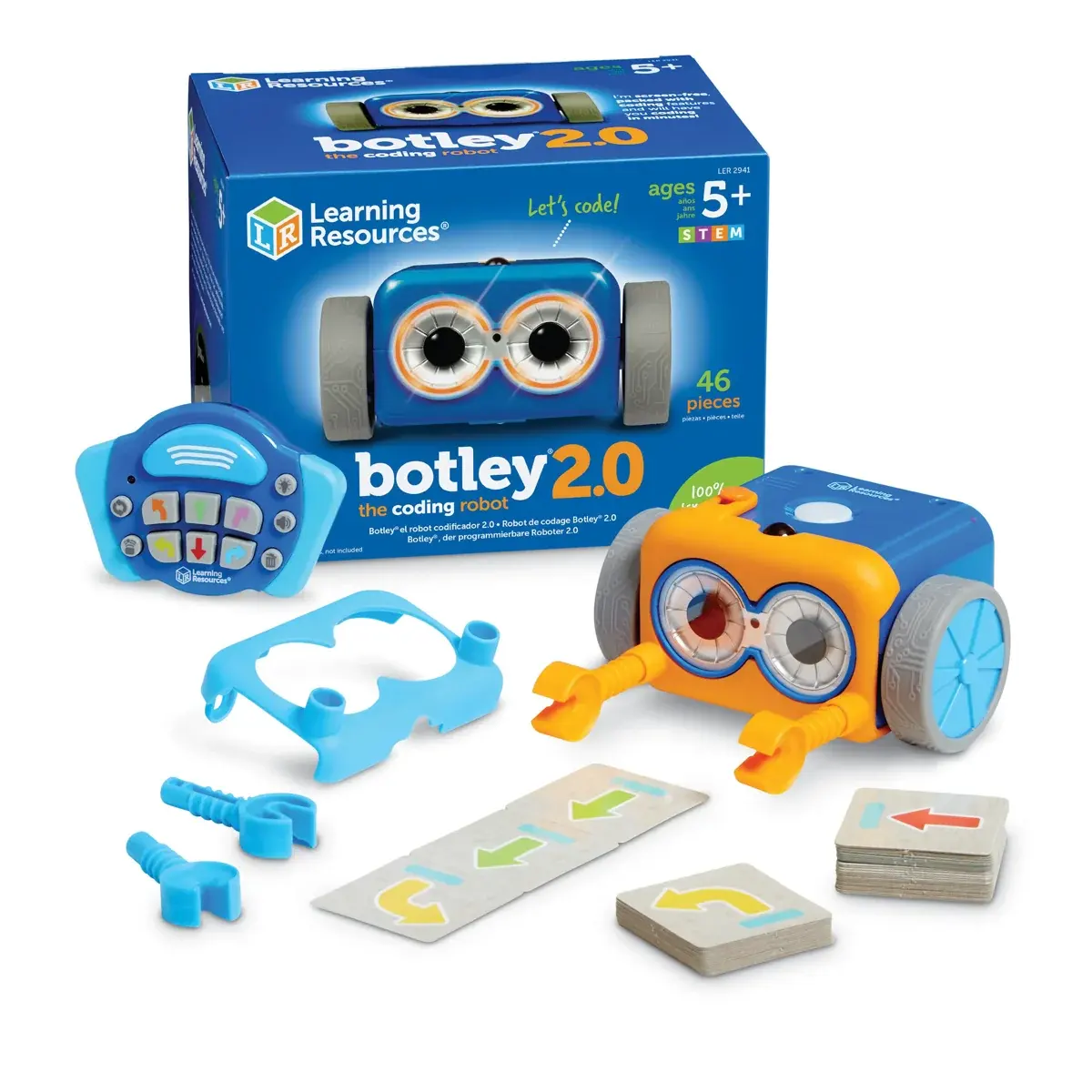
    Botley 2.0 is the updated version of Learning Resources' Botley coding robot, created to teach early coding through completely screen-free play. Children enter commands on a handheld remote programmer, send them to the robot and watch Botley carry them out, learning sequencing, logic and problem-solving along the way. The robot can move in six directions, follow color-based coding, put on a light show and run sequences of up to 150 steps. It offers 16 interactions, including turning into a train, police car or ghost, and a Botley Says memory game. A built-in light sensor makes Botley light up when it gets dark. The set includes Botley, the remote programmer, detachable robot arms, 40 coding cards and a starter guide within a 46-piece activity set. It runs on five AAA batteries (three for the robot, two for the remote), which are not included. Botley 2.0 works well at classroom learning centres for early primary students.

  • KGGrades 1–3

    Botley 2.0 the Coding Robot Activity Set

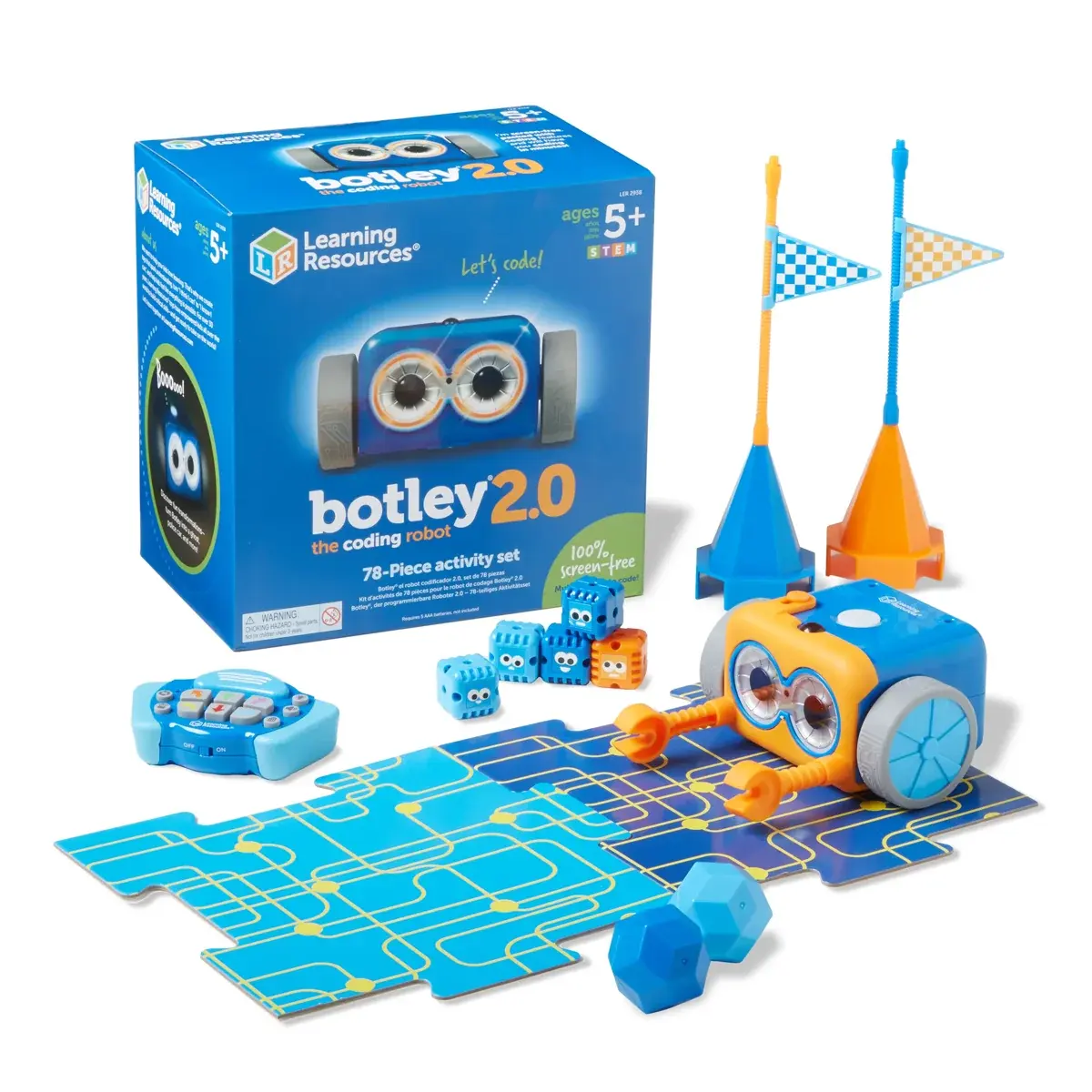
    The Botley 2.0 Coding Robot Activity Set combines the Botley 2.0 robot with a large selection of accessories for designing coding challenges. Children program Botley with a remote programmer, lay out coding cards to plan their steps and then test their route on the boards, keeping all learning hands-on and screen-free. The 78-piece set includes the robot, the remote programmer, 40 coding cards, six double-sided boards and stackable obstacle pieces for building mazes and courses. Botley 2.0 supports sequences of up to 150 steps, 45-degree turns, color coding, light shows and object-sensing reactions, so children can tackle longer and more complex paths as their skills grow. The robot also includes 16 interactions, such as turning into a train, police car or ghost, and a built-in sensor that lights it up in the dark. The set builds sequencing, logic, debugging and spatial reasoning, and is suited to classroom centres and small-group play. It requires five AAA batteries, not included.

  • KGGrades 1–3

    Code & Go Robot Mouse Activity Set

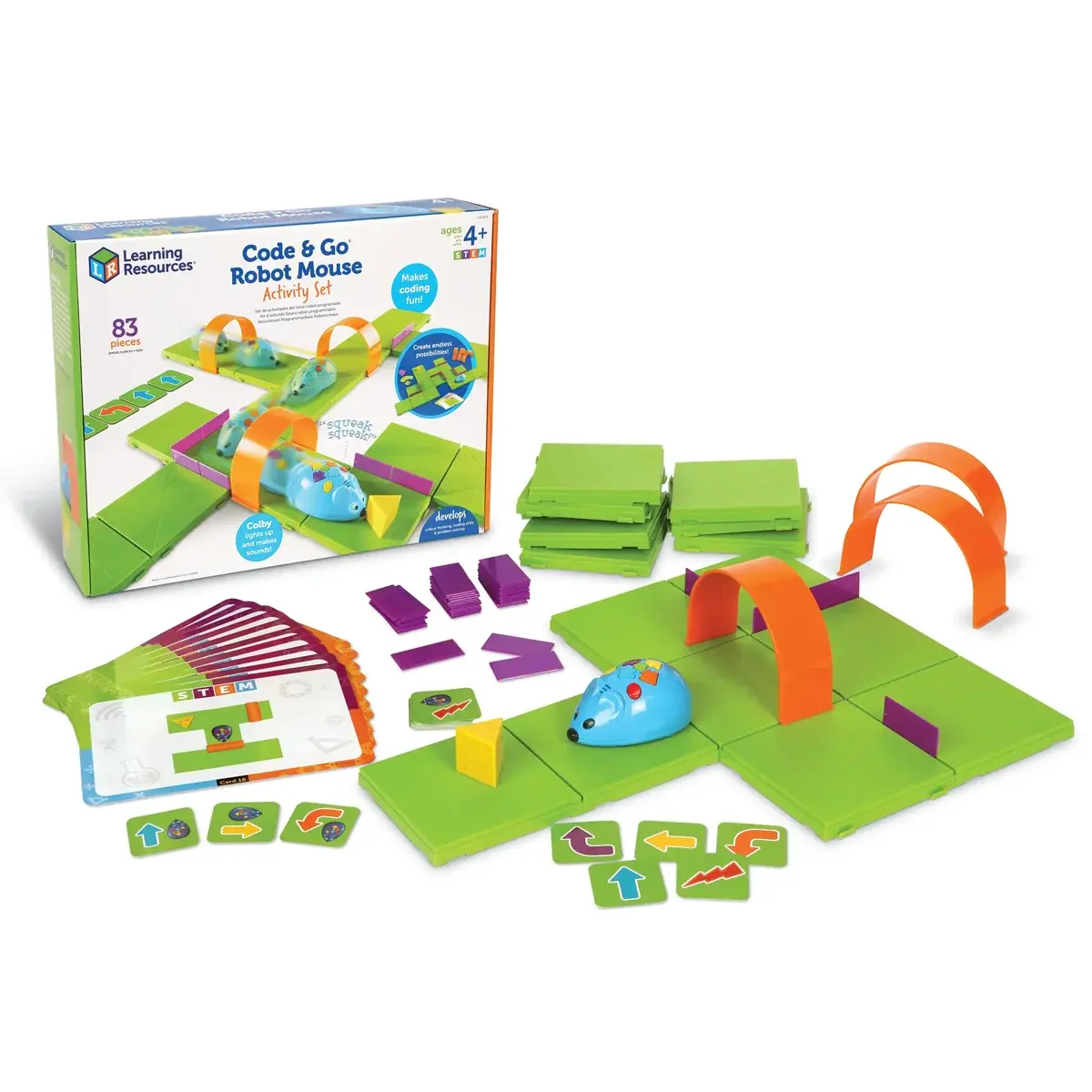
    The Code & Go Robot Mouse Activity Set introduces programming through maze building and a friendly robot mouse called Colby. Children design a maze, plan the route with coding cards, then enter the steps using the buttons on Colby's back and watch the mouse race to the cheese. The 83-piece set includes Colby, 16 maze grids that build a 20 x 20 inch board, 22 maze walls, three tunnels, 30 double-sided coding cards, 10 double-sided activity cards, a cheese wedge and an activity guide. Colby lights up, makes sounds and has two speeds, and it requires three AAA batteries, which are not included. Because the maze layout can be changed every time, the set supports open-ended challenges that build sequencing, logic, problem-solving and spatial reasoning. It is entirely screen-free, making it a practical choice for unplugged STEM centres in kindergarten and early primary classrooms.

Need a full classroom or lab?

We build bundles for 24–30 students with storage and charging, and can install and train your teachers.

Talk to us