Robotics Kits

Authentic kits and components, quoted for your school. Add items to your quote list and we'll reply with pricing and delivery.

22 products

Filters

Clear all
Brand
Grade level
Active filters:Robotics KitsClear all

22 products

  • Grades 4–5Grades 6–8Grades 9–12

    Maker & Coder MC4.0 AIoT Robotics Kit

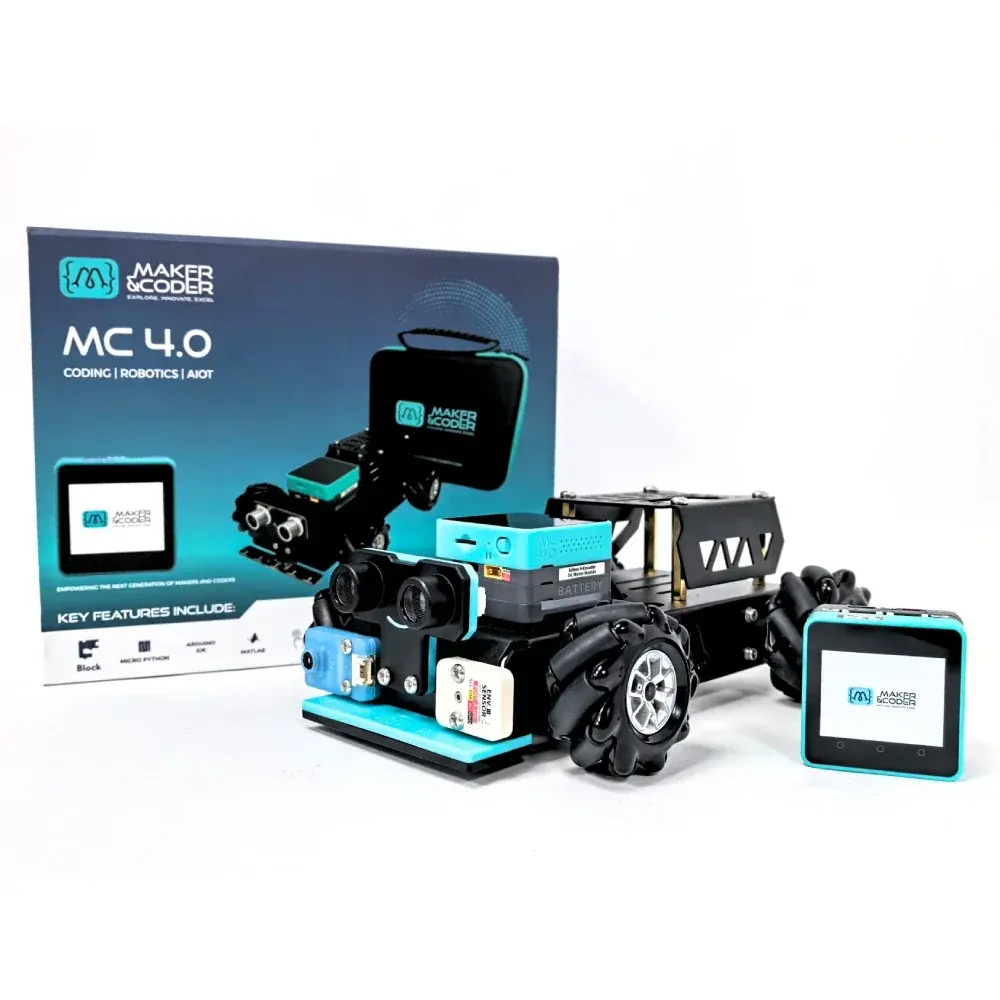
    The Maker & Coder MC4.0 AIoT Robotics Kit brings robotics, artificial intelligence and the Internet of Things together on one platform aimed at high-school learners. Built around the MC4.0 controller, it lets students design robots that see, sense their surroundings and share data online. The kit includes an AI camera for image recognition and object tracking, an environmental sensor, a 4-channel relay module, four DC motors with encoders, two servo motors, mecanum wheels for omnidirectional movement, a battery pack, cables and documentation. Students can program it in Scratch, Python or Arduino, so it supports both newcomers and experienced coders. Typical projects include obstacle-avoiding robots, image-recognition applications, environmental data collection and IoT monitoring systems that connect to cloud platforms such as AWS and Azure. Lesson plans and setup guides are provided, with a full curriculum through the MC4.0 Academy learning portal, making it suitable for science labs, tech clubs and makerspaces.
  • Grades 4–5Grades 6–8Grades 9–12

    Maker & Coder MC4.0 STEAM Kit

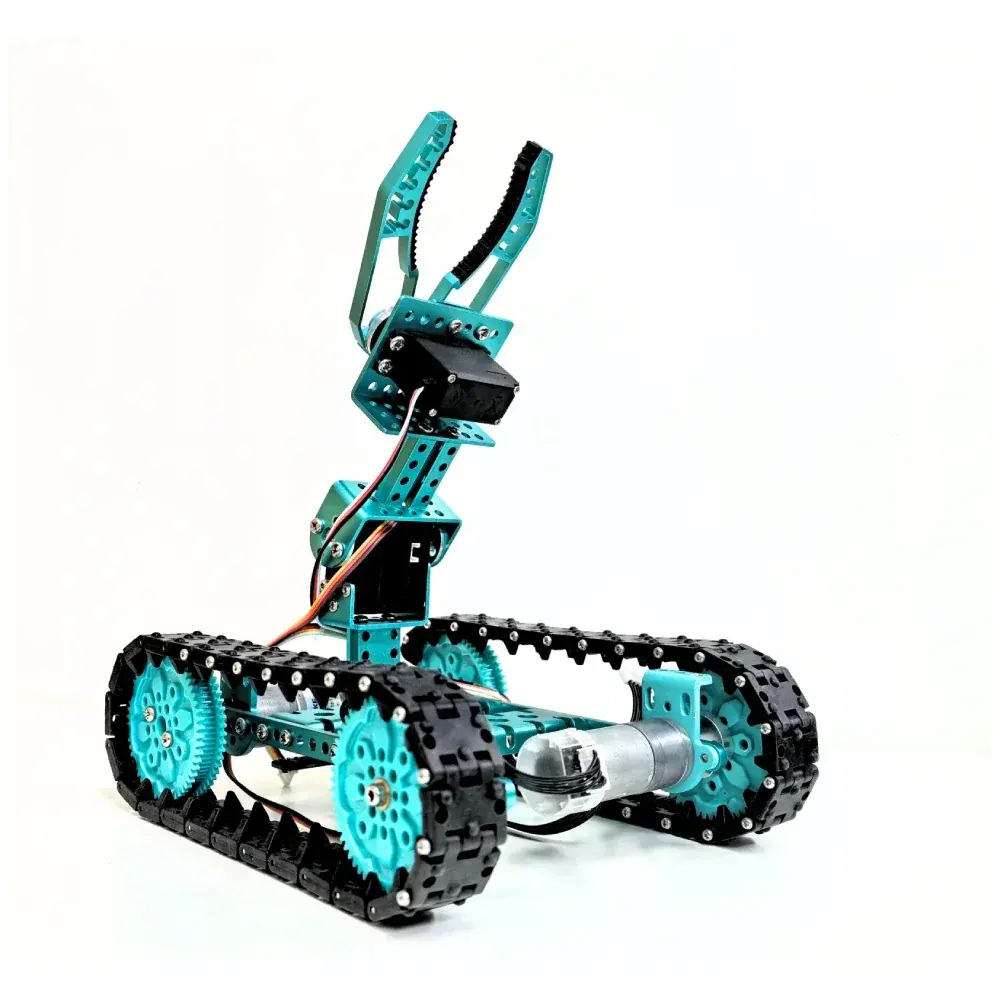
    The Maker & Coder MC4.0 STEAM Kit is an educational robotics platform for learners aged 12 and up who want to explore science, technology, engineering, arts and maths through building. Its focus is helping students progress from visual block coding to text-based programming. At its centre is the MC4.0 controller with a touchscreen, speaker, microphone, real-time clock, IMU and vibration motor. The tray box adds a DC motor driver, two servo motors, an ultrasonic sensor, a line-follower sensor, a metal gripper pack, gears, track tyres, metal beams, linkages, fasteners, spacers and tools, plus a user manual and quick-start guides. Students begin with simple robot cars and advance to sensor-based projects that involve gripper construction and mechanical design, coding first in blocks and later in Arduino IDE and Python. The modular design accepts additional Maker & Coder sensors and modules, and teachers can use it for group projects and individual challenges in STEM/STEAM classes and makerspaces.

  • Grades 4–5Grades 6–8Grades 9–12

    STEM Robot Car Starter Kit – Mecanum Wheels, Camera, ESP32

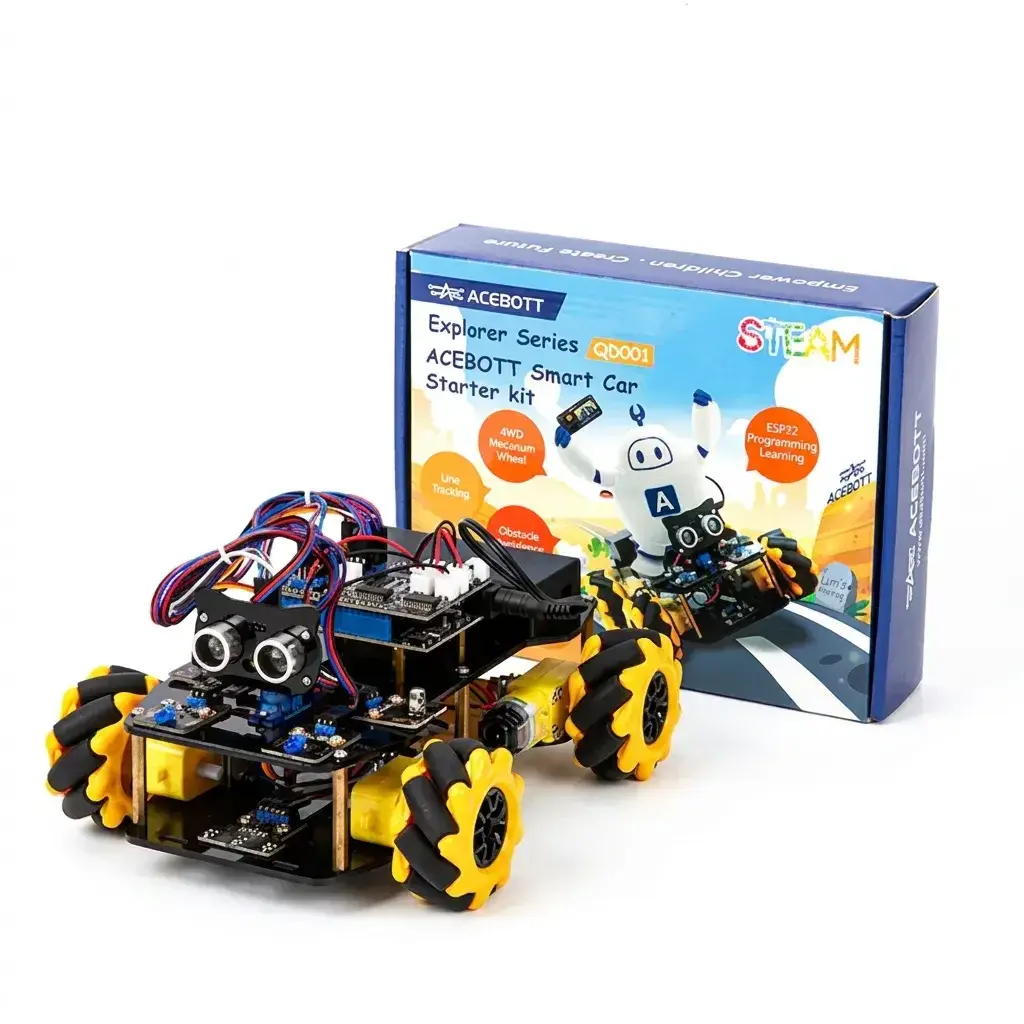
    This ACEBOTT starter kit (QD001 series) is a four-wheel-drive smart robot car built around an ESP32 controller board. Its mecanum wheels let the car travel forward, backward, sideways and diagonally, giving students a hands-on way to explore omnidirectional motion and autonomous driving ideas. After assembling the car, learners program it to follow lines, avoid obstacles and respond to different remote-control methods, including an IR remote and a mobile app. The kit supports ACECode block programming as well as Arduino and Python, and comes with 16 story-based tutorials. The QD001 is offered with a camera pack so students can add live video and vision-based projects. The car is the core of ACEBOTT's Explorer series and accepts further expansion packs, such as AI, tank, robot-arm, solar and GPS packs, so a class can keep extending the same platform. Getting started follows three steps: assemble, code and drive. Batteries are not included.

  • Grades 4–5Grades 6–8Grades 9–12

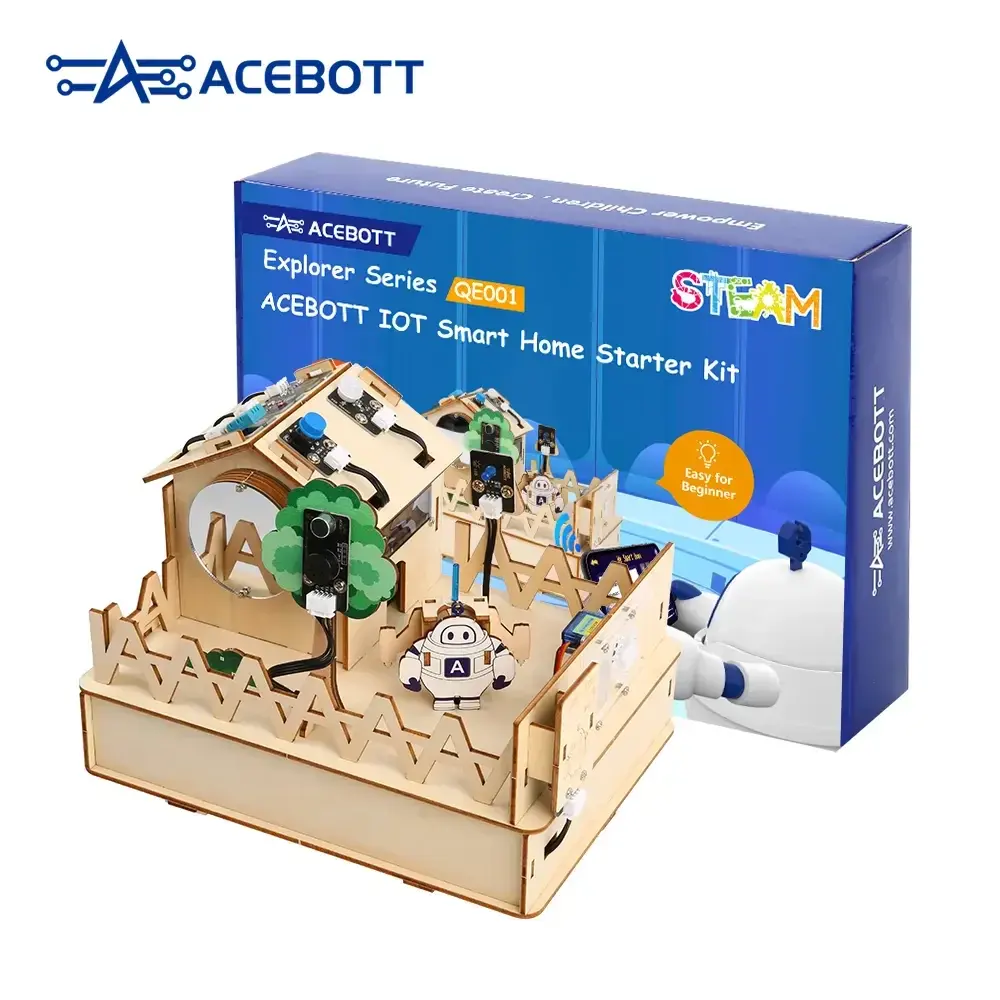
    Smart Home IoT STEM Kit

    The ACEBOTT Smart Home IoT Starter Kit (QE001) introduces the Internet of Things through a model house that students build and program themselves. Built on an ESP32 board, it turns everyday home automation into a series of hands-on STEM projects for learners aged 8 to 12. Projects include controlling the house from a mobile app and by voice, unlocking the door with RFID cards, closing a window automatically when the rain sensor detects water, and switching LED and RGB lighting. Each feature shows how sensors, controllers and outputs work together in a real connected system. Students program the kit with ACECode, a Scratch-style visual language, and can move on to Arduino as they gain confidence. A step-by-step, story-based curriculum and online tutorials support use at home or in class, and the ESP32 design leaves room for further customisation.

  • Grades 4–5Grades 6–8Grades 9–12

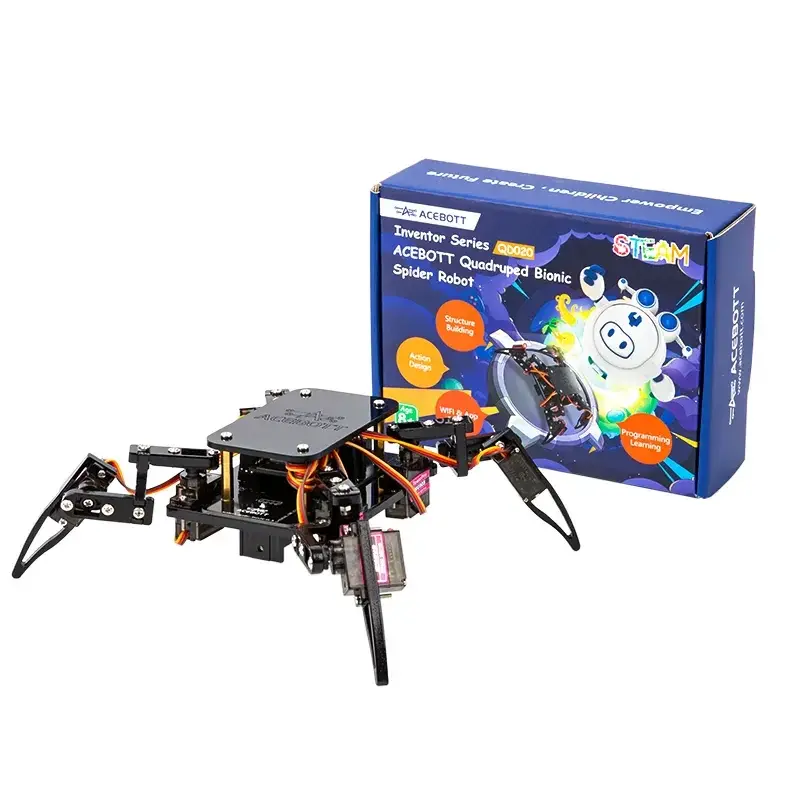
    Quadruped Bionic Spider Robot Kit

    The ACEBOTT QD020 Quadruped Bionic Spider is a robot kit from the Inventor series that imitates the walking movement of a spider. Aimed at ages 12+ and makers, it combines mechanical assembly, electronics and programming in one project. The spider uses an ESP8266 controller and MG90 metal-gear servos to move its four legs. Through the mobile app it can walk in six directions and perform nine preset actions, including standby, lying down, sleep, greeting, push-ups, fighting, dancing and swinging. Once students learn the basics, they write their own code to create new movements. Programming is supported in ACECode (Scratch-based) and Arduino, guided by eight lessons that cover both electronics and coding. The kit uses a unified screw system for simpler assembly and charges via Type-C; it takes an 18650 battery, which is not included.

  • Grades 4–5Grades 6–8Grades 9–12

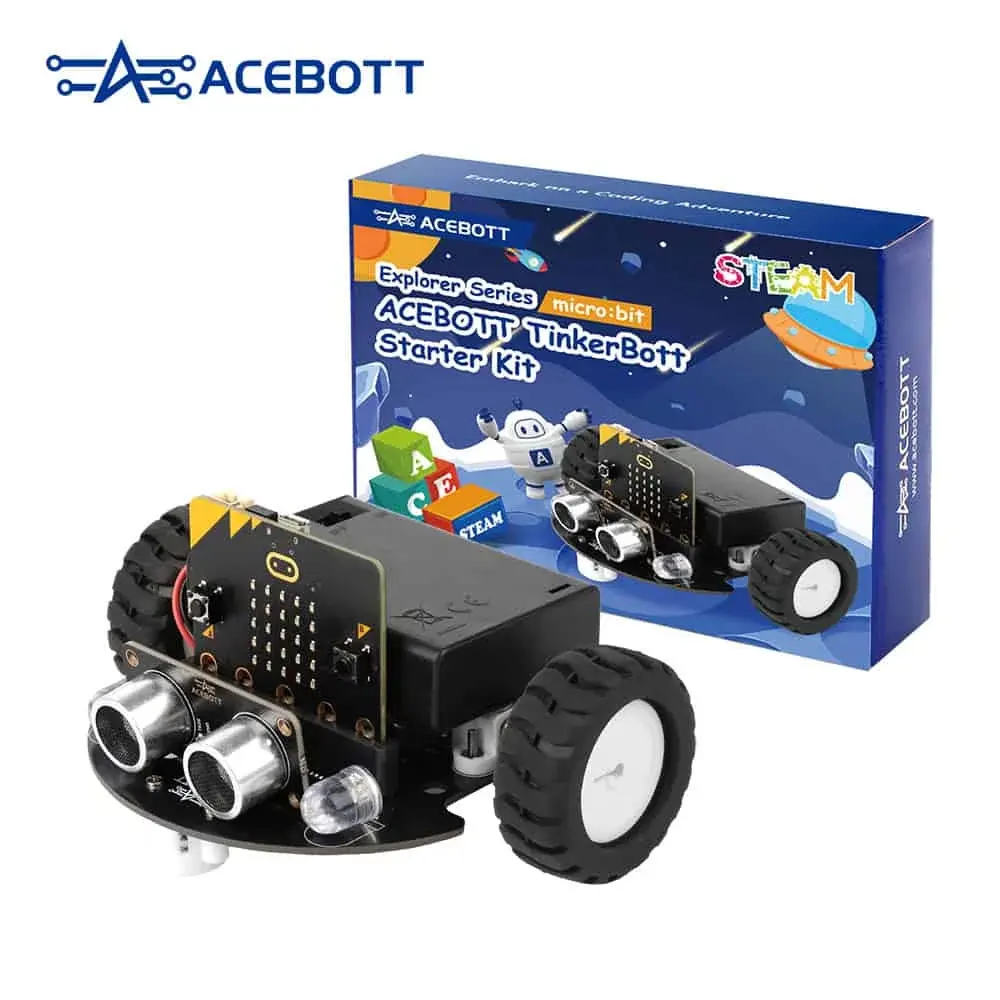
    Tinkerbott Starter Kit

    The ACEBOTT TinkerBott (QD024) is a micro:bit-powered robot car kit for learners aged 8 and up and K-12 classrooms. It pairs quick assembly with guided tutorials so students can move from building to coding in a single lesson. Using Microsoft MakeCode block programming, students make the car drive, light its headlights, avoid obstacles and respond to several control methods. The project shows how a microcontroller reads inputs and drives motors, and it is compatible with LEGO bricks (not included) for custom add-ons. The kit includes the micro:bit control board; batteries must be purchased separately. TinkerBott can be extended with additional ACEBOTT expansion packs, making it a flexible starter platform for coding and robotics units.

  • Grades 4–5Grades 6–8

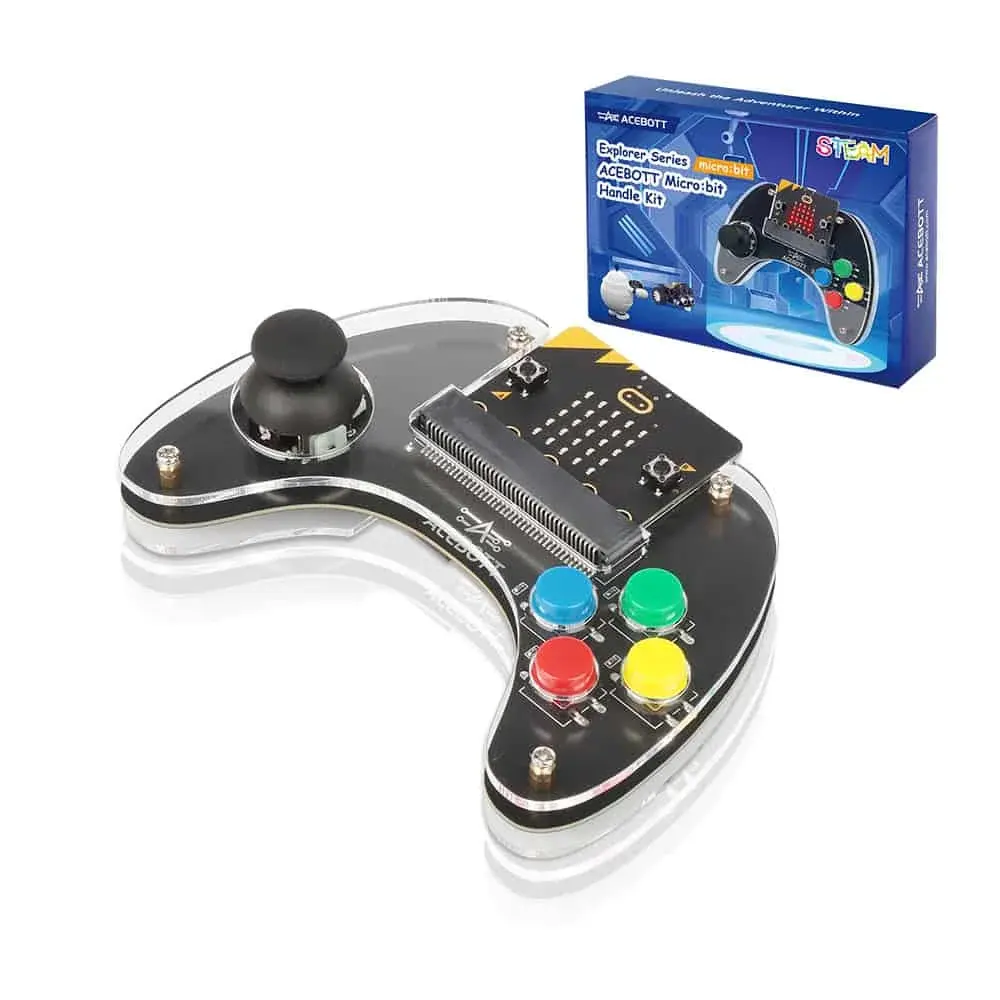
    Wireless Controller for micro:bit Kits

    The ACEBOTT QD026 Wireless Controller is a remote control designed for micro:bit-based coding robots. Built with an acrylic body in a familiar gamepad layout, it gives students a hands-on way to steer and operate the robots they build and program. The controller has a joystick for direction and several action buttons. A micro:bit V2 (sold separately) slots in as its brain, and students program both the controller and the robot in MakeCode blocks, learning how wireless messages are sent, received and turned into actions. It works with ACEBOTT Explorer-series robot kits and other micro:bit-compatible coding robots, making it a useful add-on for classroom challenges, races and collaborative projects in STEM and STEAM lessons.

  • Grades 4–5Grades 6–8Grades 9–12

    Quarky Creator's Kit

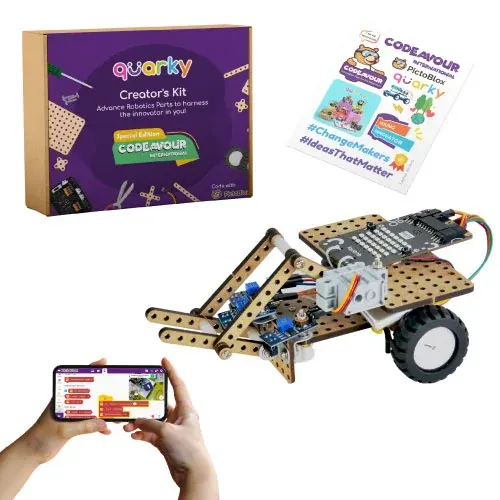
    The Quarky Creator's Kit from STEMpedia is an advanced toolkit for building custom, high-performance robots with the Quarky robotics platform. It was created with Codeavour International participants in mind, especially teams preparing for the Track 2 AI-Robo challenge, but it also suits any class exploring mechanisms and robot design. The kit combines electronics, mechanical and construction parts, including four high-speed motors described as three times faster than standard ones, five IR sensors, two 180-degree servo motors, a battery, the Quarky Expansion Board, wheels, caster wheels, many plates, strips and brackets, fasteners and tools. Two practice objects are supplied for training machine-learning models. With these parts, students can assemble more than 100 robot configurations, following a step-by-step DIY course that takes them from construction to programming. Note that the Quarky board itself is not included and must be obtained separately.

  • Grades 4–5Grades 6–8Grades 9–12

    Codeavour Robo Soccer League Starter – Large Package

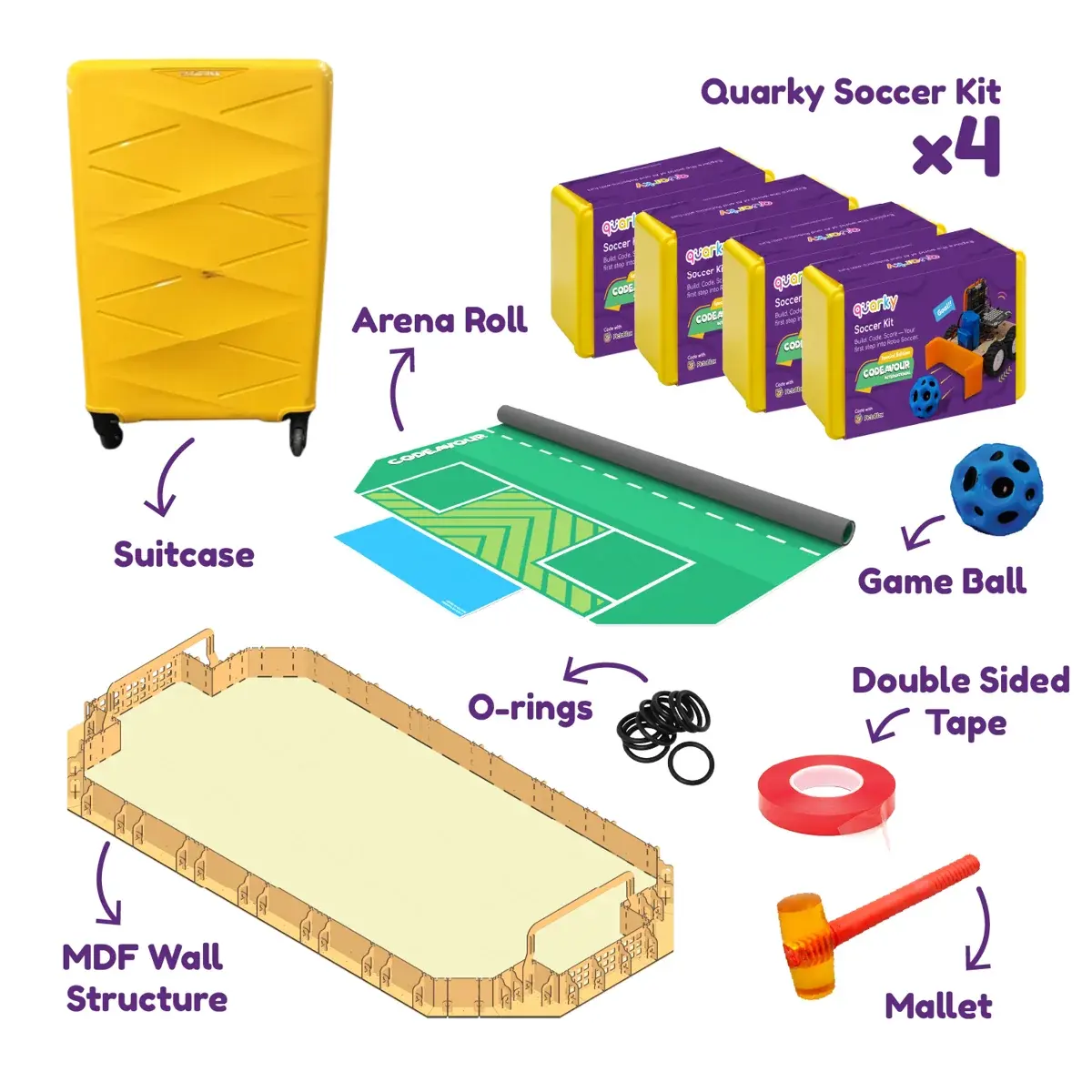
    The Robo Soccer Large Package from STEMpedia recreates the official Track 3 Robo Soccer League setup used in Codeavour 7.0 International. It gives schools, clubs and event organisers everything needed to run robot soccer matches, workshops or inter-school tournaments. The package contains four Quarky Soccer Kits, a complete Robo Soccer Arena Kit with walls, puzzle-base floor sections and goal arches, a game ball, a mallet, red marking tape, DC adaptors, O-rings, screws, double-sided tape, sandpaper and a screwdriver, all stored in a suitcase for transport. The 8 ft x 4 ft arena gives two teams of up to six students room to practise, code and compete together. The set is designed for easy assembly and repeated use, making it a good fit for STEM labs, robotics clubs and hands-on sessions that build teamwork alongside coding skills.

  • Grades 4–5Grades 6–8Grades 9–12

    Codeavour Arena Fence Kit

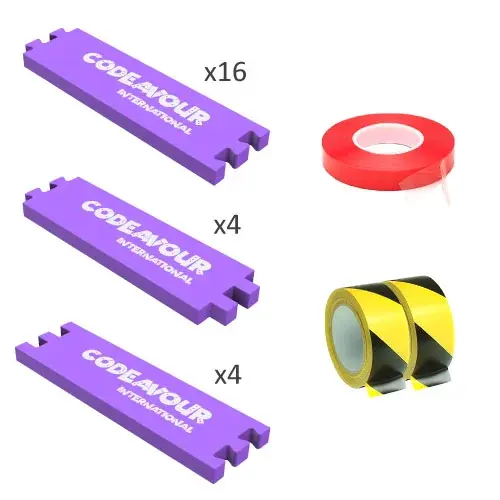
    The Codeavour Arena Fence Kit from STEMpedia is an accessory for teams practising on the Codeavour International Track 2 arena. It surrounds the playing field with a boundary so robots stay on the arena instead of wandering off during test runs. The kit contains 16 straight wall pieces, eight corner wall pieces of two types, two rolls of black-and-yellow marking tape and double-sided tape. The custom foam pieces are lightweight yet sturdy and protect the arena, while the tapes mark the Pit Area and help hold the arena in place during intense sessions. With the fence installed, students can set up their field to competition specifications and plan robot positions as they would on competition day. The arena roll and arena objects kits are sold separately.

  • Grades 4–5Grades 6–8Grades 9–12

    Alpha Set A

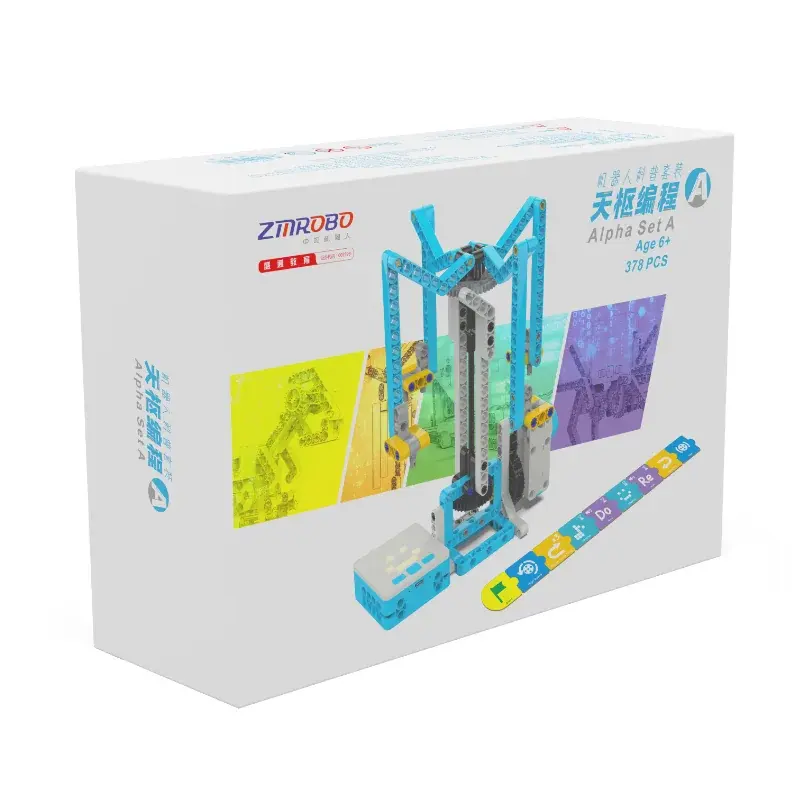
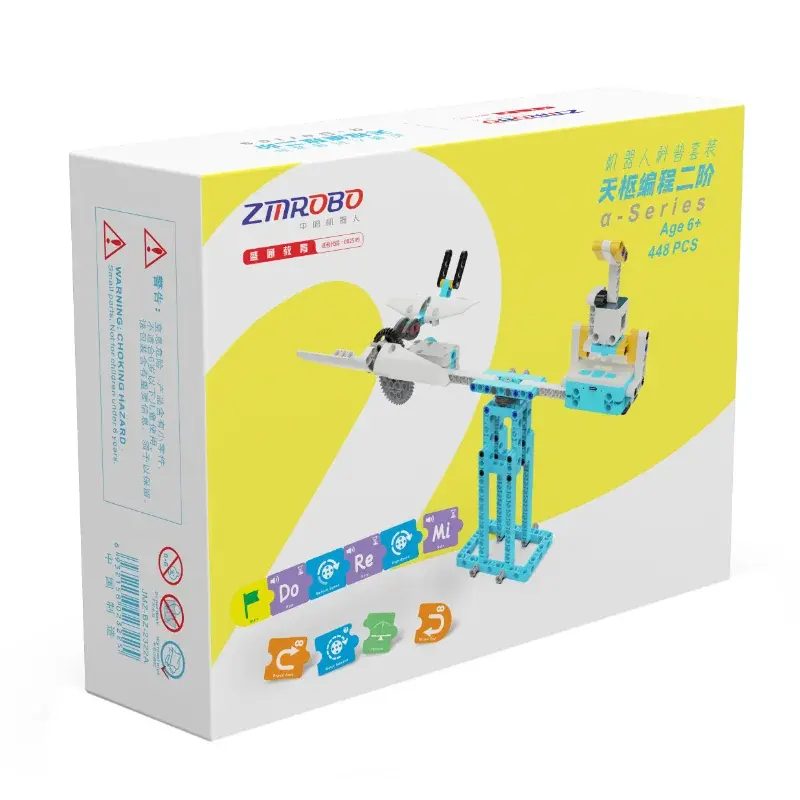
    Alpha Set A from ZMROBO is the core set of the Alpha series, introducing children aged 6+ to robot design and programming without a computer. Building blocks form the robot's skeleton, electronic modules act as its nervous system, and command cards give it behaviour. The set contains an M5 controller with ESP32 chip, built-in lithium battery, 5x7 dot-matrix screen and five I/O ports, plus a medium motor, OID module, LED module and button module. There are 59 command cards in nine categories and 77 types of building blocks with more than 378 parts. Children arrange cards in logical order and scan them with the OID module so the robot runs the program; Python programming is also supported. A 16-lesson project-based curriculum moves through creative building, motor-driven models, card programming and open-ended creation, with builds such as a catapult, carousel, crab and pirate ship. Teaching slides, lesson plans, videos and building manuals support classroom delivery.

  • Grades 4–5Grades 6–8Grades 9–12

    Alpha Set B

    Alpha Set B is an expansion for ZMROBO's Alpha Set A that brings more sensors and command cards to the screen-free card-coding system. It cannot be used on its own and requires Alpha Set A. New components include an ultrasonic sensor with blue lamp ring, a tilt sensor with 3-axis gyroscope, a MIC (sound) sensor and a 10-level potentiometer knob, all automatically identified by the controller. These let robots react to their environment and to people. The set adds more than 350 building pieces, and programs are still built by scanning command cards with the OID module. Its 16-lesson curriculum covers moving figures, animals, vehicles and games, with builds such as a gymnast, inchworm, magic dragon, stunt motorcycle and rocket car. Students learn numeric command cards, use mind maps to analyse tasks and combine several sensors in one program.

Need a full classroom or lab?

We build bundles for 24–30 students with storage and charging, and can install and train your teachers.

Talk to us