STEAM products for schools and labs

Authentic kits and components, quoted for your school. Add items to your quote list and we'll reply with pricing and delivery.

265 products

Filters

Clear all
Brand
Grade level

265 products

  • Grades 6–8Grades 9–12

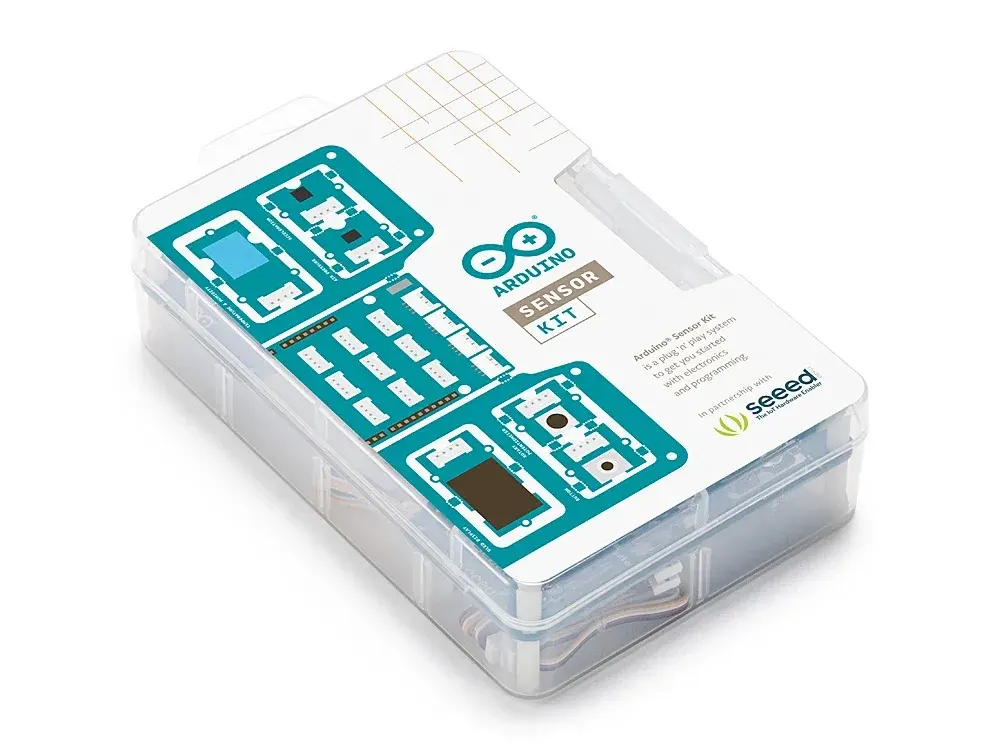
    Arduino Sensor Kit – Base

    The Arduino Sensor Kit – Base is aimed at makers and students who have just started with Arduino and want to explore sensors and actuators without complicated wiring. Developed together with Seeed Studio, it uses the Grove connector system so that each module plugs into the shield in seconds. The kit is built around a Base Shield that sits on top of an Arduino UNO and provides 16 Grove connectors: seven digital, four analog, four I2C and one UART. The included modules come pre-wired on the board and cover an LED, a button, a potentiometer, a buzzer, a light sensor, a sound sensor, an air pressure sensor, a temperature sensor, a motion sensor and an OLED screen. An online platform provides instructions for connecting, coding and testing each module, organised as short lessons. Students can use modules individually or combine them into larger projects. The Arduino UNO board is not included in this version and is purchased separately.
  • Grades 6–8Grades 9–12

    Blockduino

    Blockduino by Blockduino. Microcontroller board or kit for electronics, coding and maker projects. Contact us for a quotation, classroom quantities and delivery to your school.

  • Grades 4–5Grades 6–8

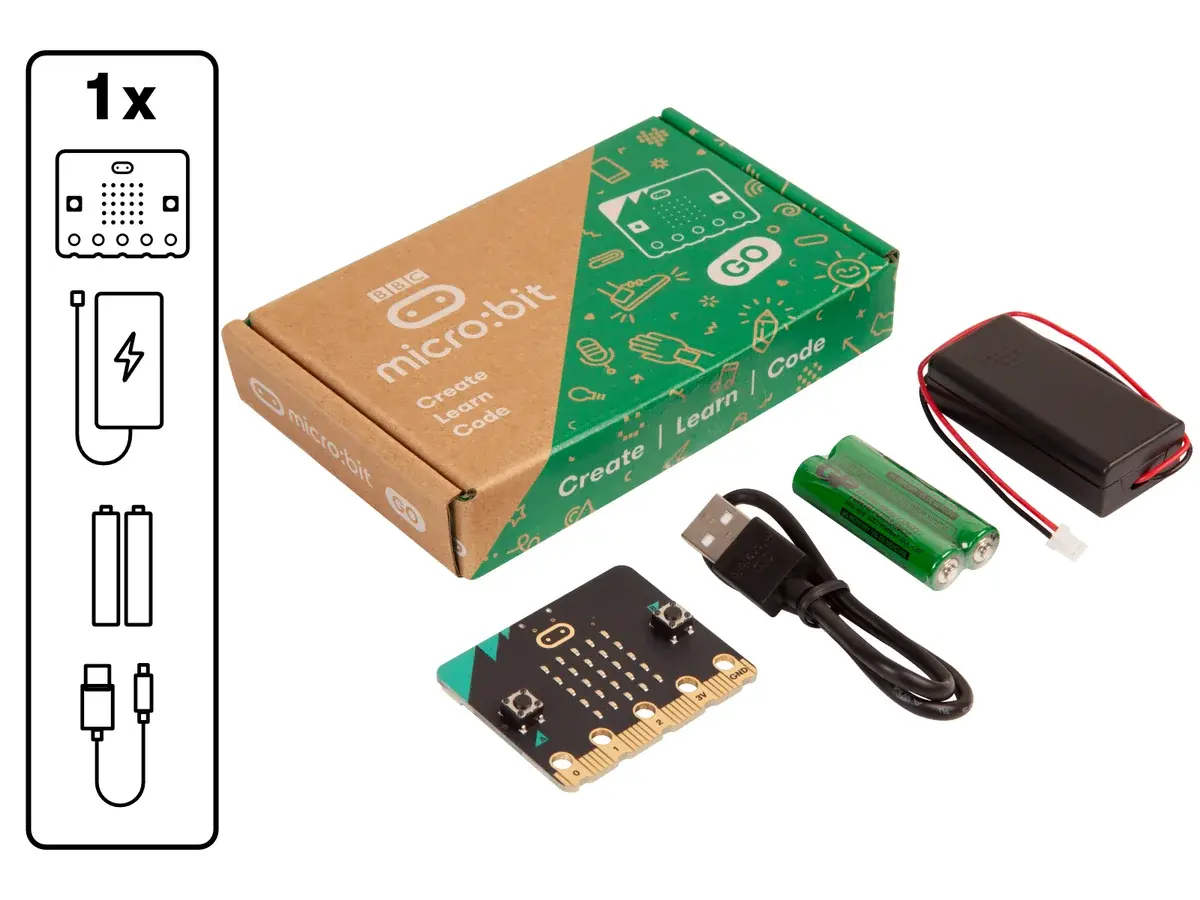
    BBC micro:bit Go Kit V2

    The BBC micro:bit Go is the official starter pack for the micro:bit V2, a pocket-sized computer that shows students how software and hardware work together. It is designed for beginners and gives a confidence-building first step into coding and physical computing. The micro:bit V2 board has an LED display, programmable buttons, built-in sensors, a speaker and a microphone, plus pins for connecting other inputs and outputs. The Go pack includes one micro:bit V2 board (supplied in one of four colours), a micro USB cable, a battery holder with two AAA batteries, a quick-start guide, a safety leaflet and a sticker. Students write programs on a computer, tablet or phone and transfer them to the board. Once the code is loaded, the micro:bit runs on its own from the battery pack, so projects can be carried around or built into models. The Micro:bit Educational Foundation offers free block-based and text-based editors along with curriculum-linked lessons and teacher training, making it easy to use in class.

  • Grades 4–5Grades 6–8

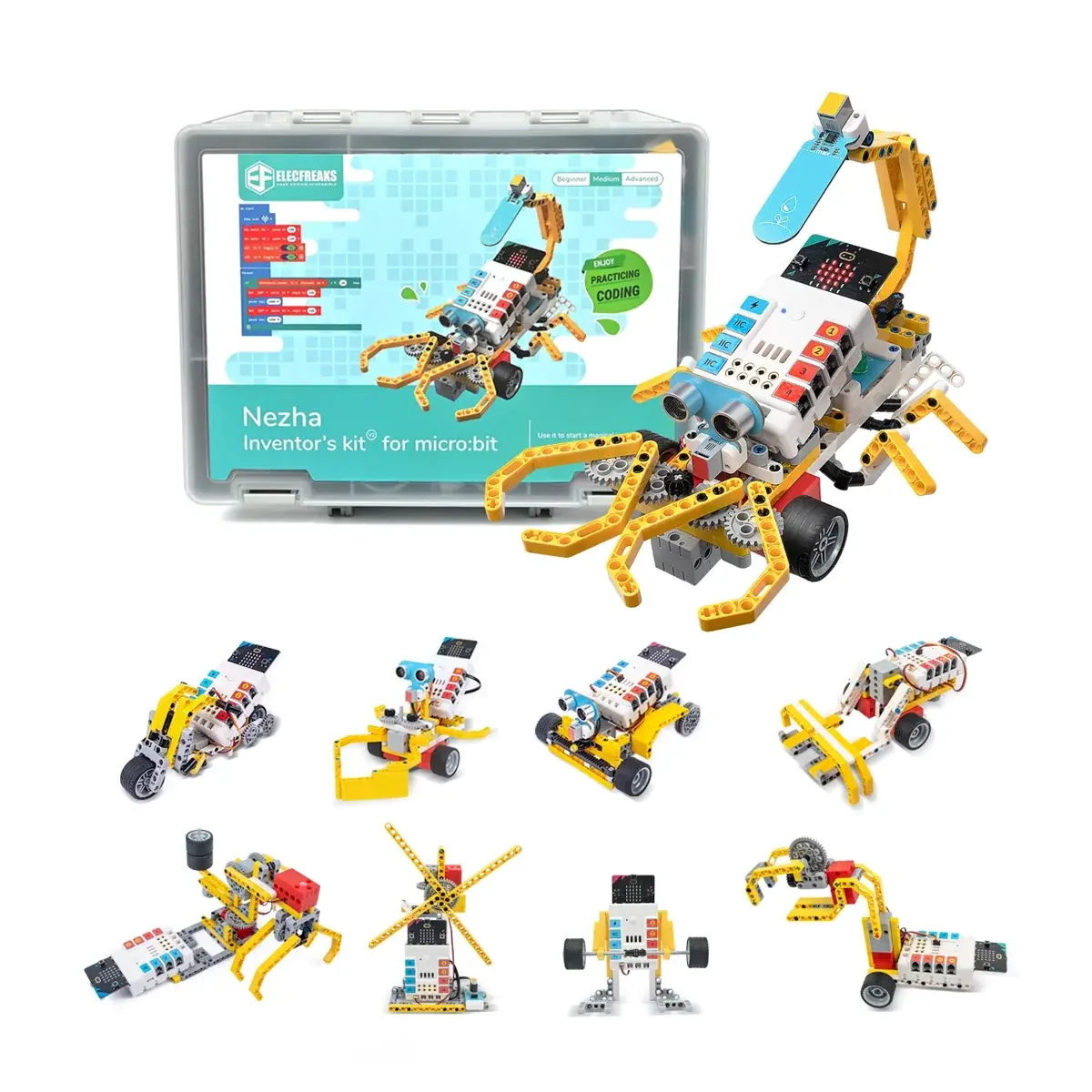
    Nezha Inventor's Kit V2 for micro:bit

    The ELECFREAKS Nezha Inventor's Kit V2 turns a BBC micro:bit into the controller for motorised, sensor-driven models. Built around ELECFREAKS' Planet X sensor modules, it combines electronics with construction so students design, build and program working inventions. At the heart of the kit is the Nezha expansion box, which offers four servo ports and four motor ports and runs on a rechargeable battery. The kit includes sensor modules such as LEDs, a potentiometer, a soil moisture sensor, an ultrasonic distance sensor, a crash sensor and a line-tracking sensor, along with TT motors, a 360-degree servo, wheels, gears, RJ11 cables, a line-following map and more than 400 building blocks. RJ11 anti-reverse connectors make wiring quick and reduce mistakes. The kit comes with 32 themed project cases that progress from guided builds to open-ended invention. It can be programmed with MakeCode blocks, JavaScript or Python, and its parts are compatible with LEGO and Fischertechnik elements. A micro:bit board is not included and must be purchased separately.

  • Grades 6–8Grades 9–12

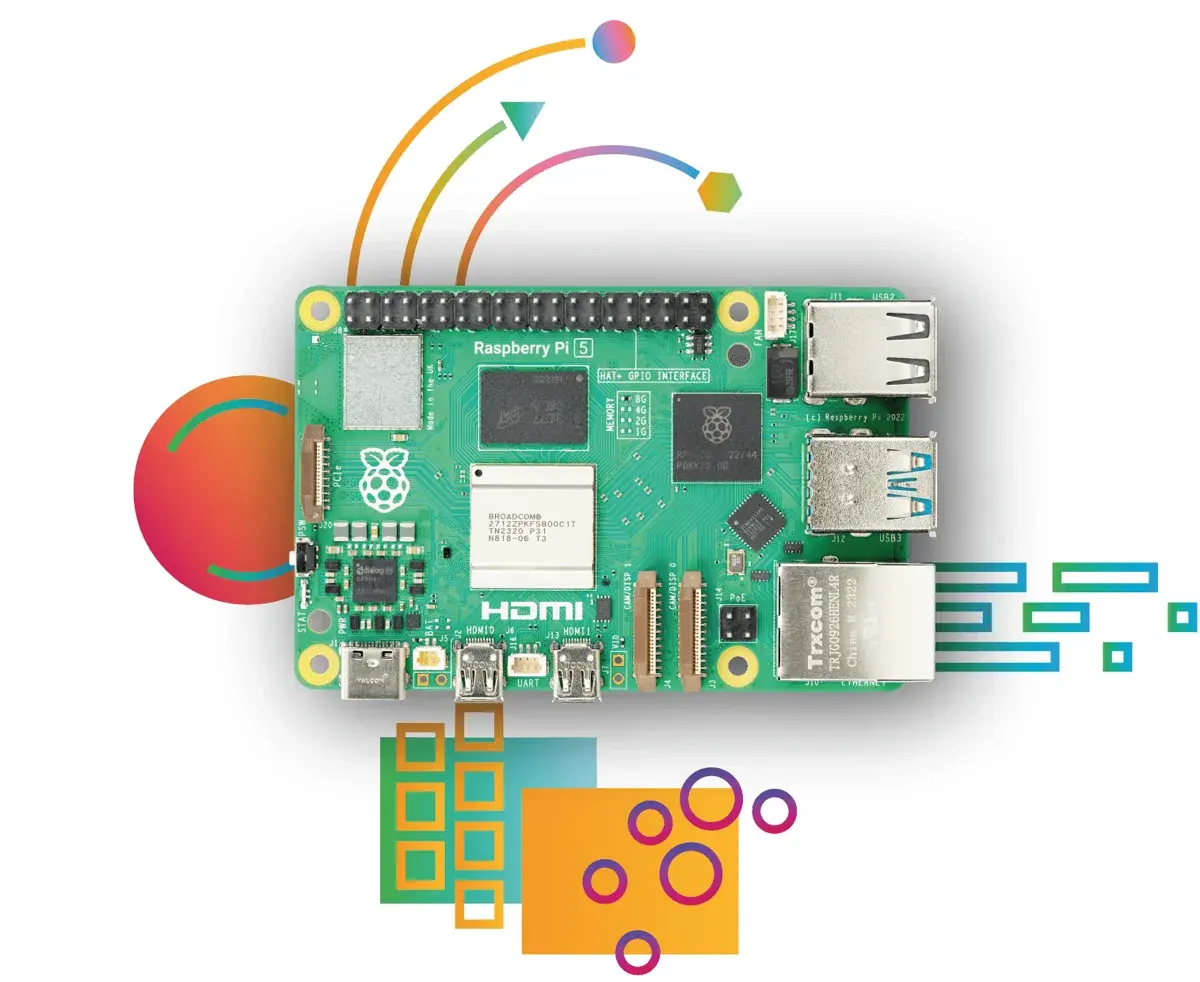
    Raspberry Pi 5

    Raspberry Pi 5 is a full computer on a single small board, offering two to three times the performance of the previous generation. With 8GB of RAM it can run a desktop operating system, programming tools and more demanding projects, while its GPIO header lets students connect it directly to electronics. It uses a Broadcom BCM2712 quad-core 64-bit Arm Cortex-A76 processor at 2.4GHz and a VideoCore VII graphics processor. Connectivity includes two 4Kp60 HDMI outputs, two USB 3.0 and two USB 2.0 ports, Gigabit Ethernet, dual-band Wi-Fi and Bluetooth 5.0. It also offers two camera/display connectors, a PCIe 2.0 interface for fast storage, a microSD slot, a real-time clock, a power button and a 40-pin GPIO header. It is powered through USB-C. In school, Raspberry Pi 5 can serve as a low-cost computer for learning programming, as a platform for physical computing with sensors and motors, or as the basis for camera, networking and AI projects.

  • Grades 6–8Grades 9–12

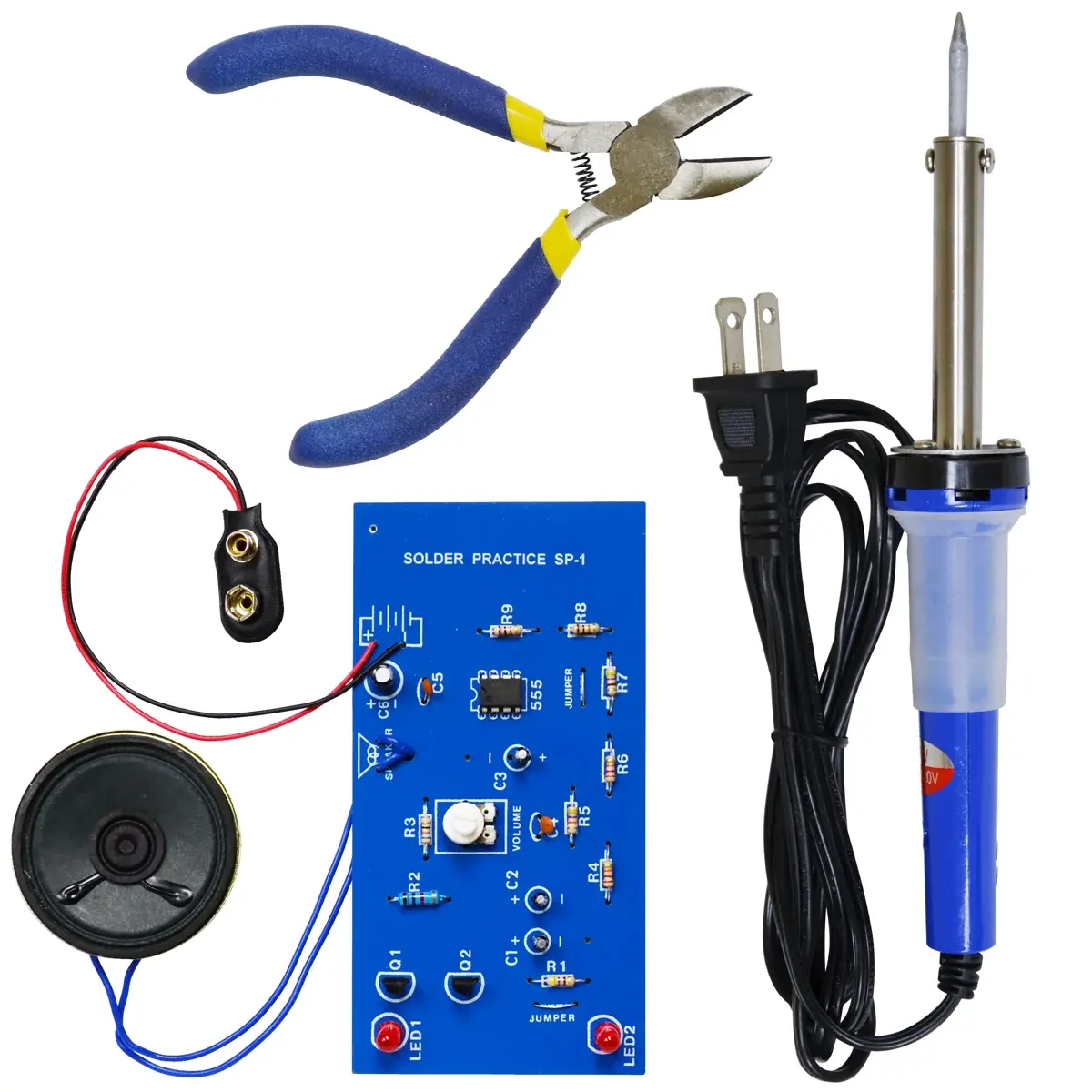
    Solder Practice Kit with Iron & Cutters

    The Elenco AK-100 Solder Practice Kit is made for learners who have never soldered before. It provides a structured way to build this core electronics skill, starting with practice and ending with a finished circuit that shows whether the work was done correctly. Students first practise their technique on a dedicated area of the circuit board. Once comfortable, they assemble a European-style siren circuit with flashing LEDs on the same board; when the LEDs blink and the siren sounds, the circuit has been built correctly. A lesson manual explains soldering and how the circuit operates, and includes a self-test to check understanding. The kit comes with a soldering iron, wire cutters and all the components needed, so no extra tools are required. It runs on one 9V battery, which is not included. It suits technology, engineering and electronics classes introducing hands-on assembly, with appropriate supervision and safety practices for working with a hot iron.

  • Grades 6–8Grades 9–12

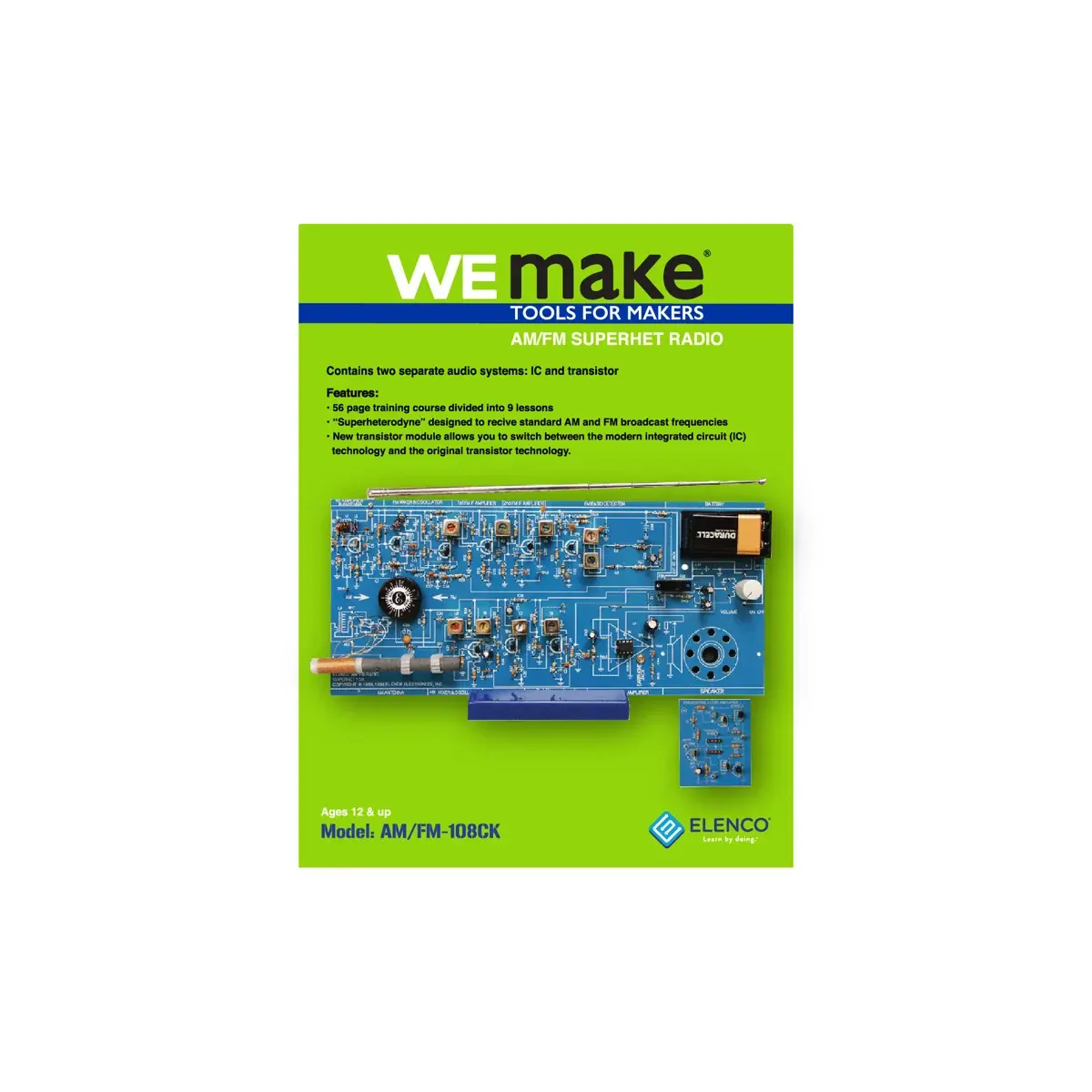
    AM/FM Radio Kit

    The Elenco AM/FM Radio Kit (AMFM108CK) guides students through building a working superheterodyne receiver that picks up standard AM and FM broadcast stations. It is a classic project for understanding how radio receivers process signals, stage by stage. The kit comes with a 56-page training course split into nine lessons. Students build and test the radio in two parts, first the AM section and then the FM section, covering the audio amplifier, AM detector, AM IF, AM amplifier, mixer and oscillator, FM detector, the two FM IF stages and the FM RF stage. A transistor module lets learners switch between a modern integrated circuit audio amplifier and the original transistor design, so they can compare the two approaches. The kit includes the components, transistors, an LM386 integrated circuit and a mounting stand for the finished radio. It requires soldering and one 9V battery, which is not included. It is well suited to secondary-school electronics and physics classes as an extended, multi-lesson project.

  • Grades 1–3Grades 4–5Grades 6–8

    60-in-1 Electronic Playground

    The Elenco 60-in-One Electronic Playground is a self-contained electronics lab where students build circuits by connecting wires to spring terminals. No soldering is needed, and the unit comes fully assembled with all its electronic parts mounted and ready to use. Following step-by-step instructions, learners can build more than 60 projects, including a finger-touch lamp, a magnetic bridge, a voltmeter, a Morse code sender, an alarm, an electronic noisemaker, a kazoo, a keyboard, an AM transistor radio, a radio announcer and a metal detector. Along the way, students explore fundamental ideas such as voltage and current and the behaviour of components including resistors, capacitors, transistors, diodes, transformers, speakers and antennas. The kit runs on one 9V battery, which is not included. Because circuits can be built, changed and rebuilt quickly, it works well for introductory electronics lessons, science clubs and small-group stations.

  • Grades 1–3Grades 4–5Grades 6–8

    130-in-1 Electronic Playground

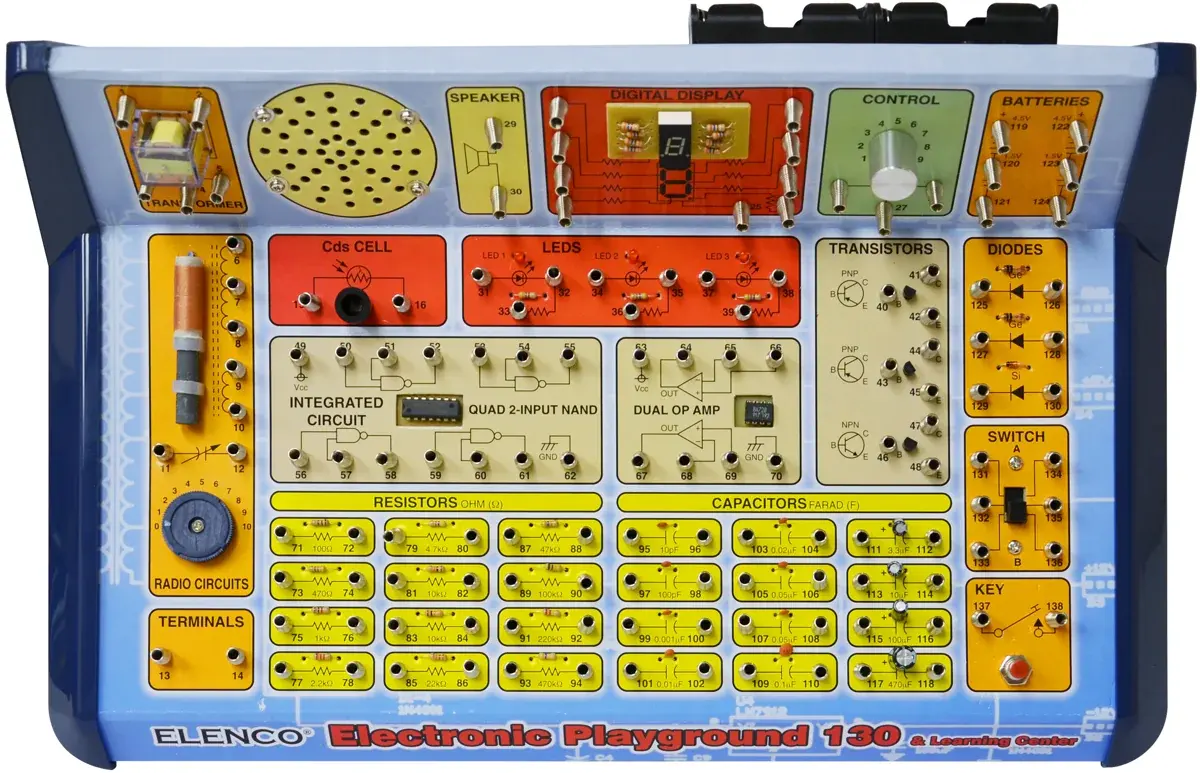
    The Elenco 130-in-One Electronic Playground is a larger electronics learning lab that introduces students to the principles of electricity and electronics, along with related ideas from physics and magnetism. Circuits are built using spring coil connections, so there is no soldering and parts can be reused for every project. The lab includes a built-in speaker, a seven-segment LED display, two integrated circuits and rotary controls. A detailed, illustrated step-by-step manual guides learners through more than 130 projects, such as an AM broadcast station, an electronic organ, strobe lights, a timer and logic circuits. Because the spring connections are simple and safe, students can work independently and quickly try variations on each circuit. The kit is powered by six AA batteries, which are not included. It suits upper-primary and middle-school science and technology classes that want a reusable, all-in-one platform for a sequence of electronics activities.

  • Grades 1–3Grades 4–5

    Circuit Explorer Rocket

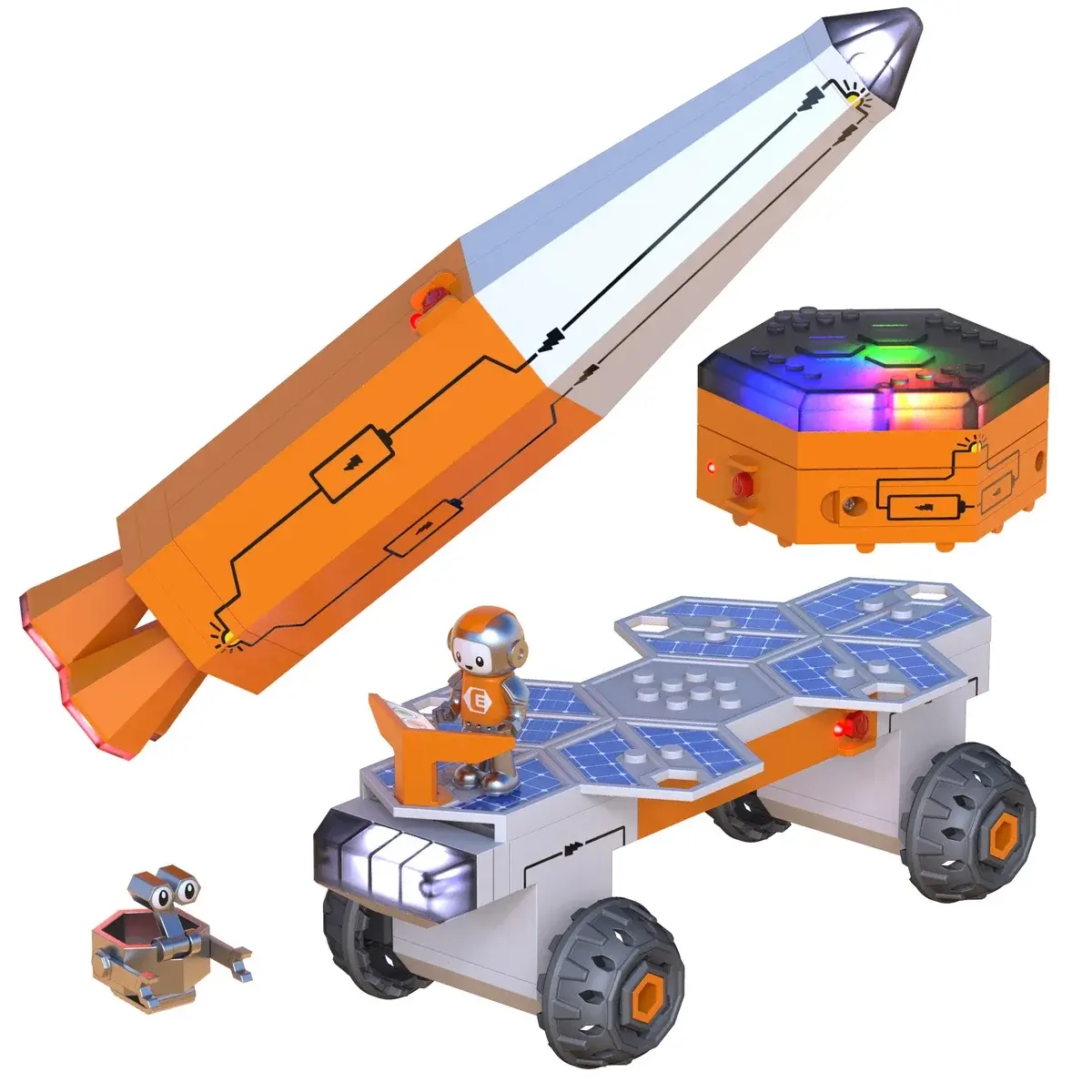
    Circuit Explorer Rocket brings circuit learning off the flat board and into a three-dimensional space world. Children line up the circuit graphics printed on oversized pieces and snap them together in the correct order; when the circuit is complete, the model powers up. This makes the idea of a closed circuit visible and easy for young learners to grasp. With the set, children build a rocket with a light-up nose cone and nozzles, a space rover with light-up headlights, and a landing pad with colour-changing lights. Astronaut and robot figures and a sticker sheet for customising the models are included, so finished builds become part of imaginative space play. The chunky, wire-free pieces are designed for small hands, allowing children to build on their own with simple visual instructions. The rocket, rover and landing pad each need three AAA batteries (nine in total, not included). The set supports early-years and primary STEM lessons on basic circuits and engineering in a screen-free way.

Need a full classroom or lab?

We build bundles for 24–30 students with storage and charging, and can install and train your teachers.

Talk to us