STEAM products for schools and labs

Authentic kits and components, quoted for your school. Add items to your quote list and we'll reply with pricing and delivery.

265 products

Filters

Clear all
Brand
Grade level

265 products

  • KGGrades 1–3

    mTiny Smart Panda Robot

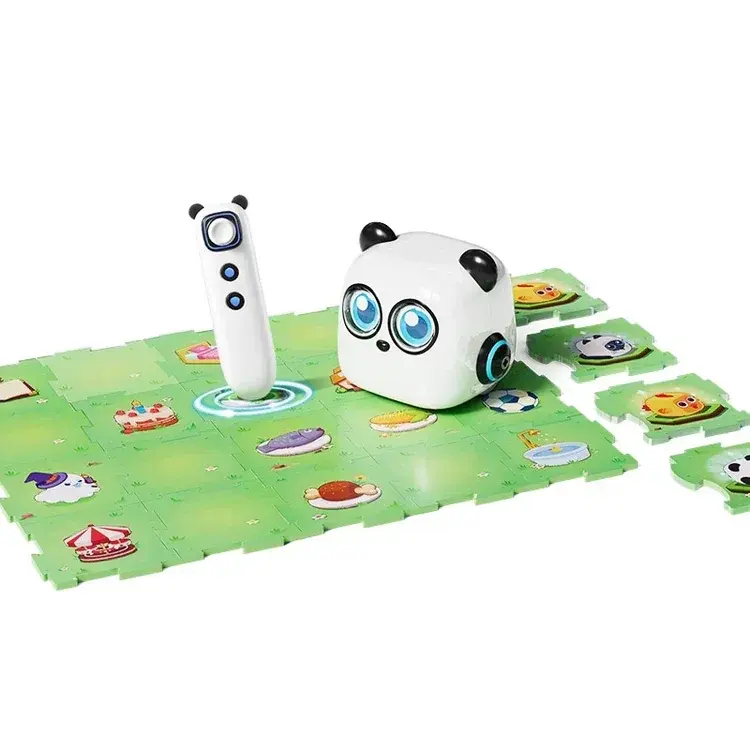
    mTiny from Makeblock is a screen-free coding robot for young learners, styled as a friendly panda with three dress-up options, more than ten preset emotions and over 300 sound effects. Children interact with it using a Tap Pen controller, so they can direct the robot without reading or using a device. Kids lay out physical coding cards to build sequences and use themed map blocks to complete scenario-based tasks. Activities combine coding with math, music, language, direction and spatial awareness, and social-emotional skills. The kit includes the robot, the tap pen, themed maps, coding cards, game cards and storybooks, and the robot is compatible with LEGO bricks. mTiny runs on rechargeable batteries and uses an OID sensor and a six-axis motion sensor to respond to the maps. For schools, Makeblock offers free downloadable lessons and teacher training, making the robot suitable for learning centres in kindergarten and lower primary classrooms.
  • KGGrades 1–3

    Botley 2.0 the Coding Robot

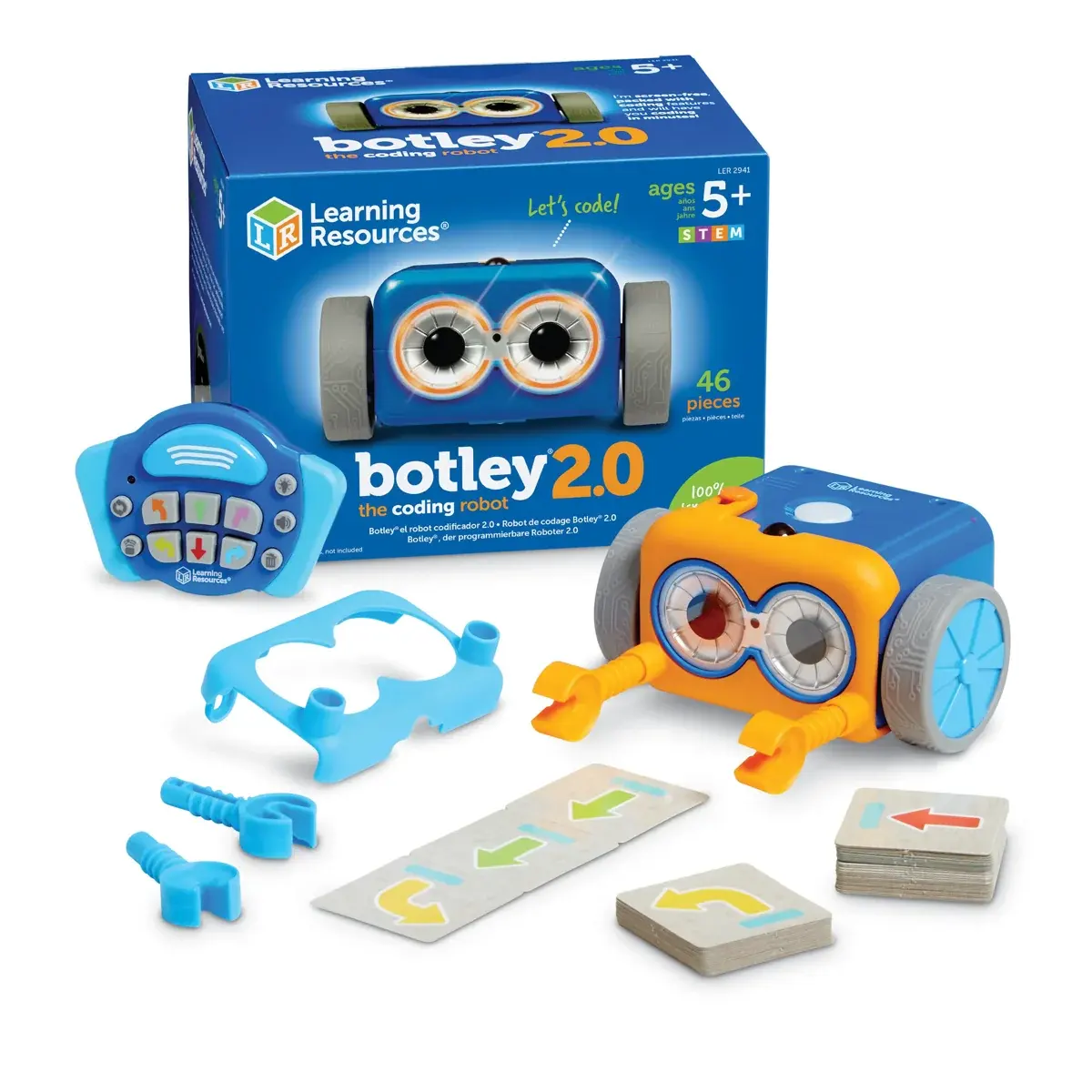
    Botley 2.0 is the updated version of Learning Resources' Botley coding robot, created to teach early coding through completely screen-free play. Children enter commands on a handheld remote programmer, send them to the robot and watch Botley carry them out, learning sequencing, logic and problem-solving along the way. The robot can move in six directions, follow color-based coding, put on a light show and run sequences of up to 150 steps. It offers 16 interactions, including turning into a train, police car or ghost, and a Botley Says memory game. A built-in light sensor makes Botley light up when it gets dark. The set includes Botley, the remote programmer, detachable robot arms, 40 coding cards and a starter guide within a 46-piece activity set. It runs on five AAA batteries (three for the robot, two for the remote), which are not included. Botley 2.0 works well at classroom learning centres for early primary students.

  • KGGrades 1–3

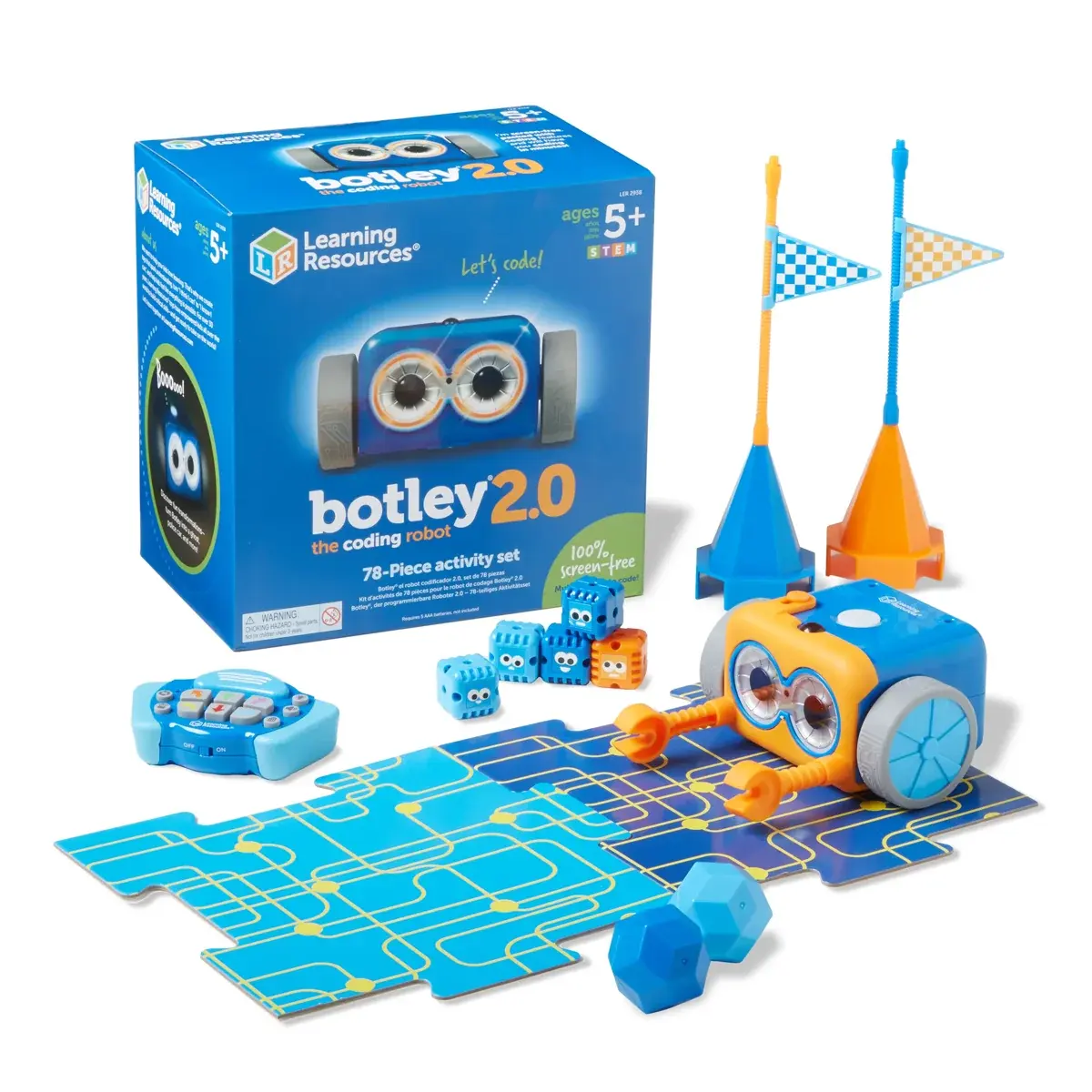
    Botley 2.0 the Coding Robot Activity Set

    The Botley 2.0 Coding Robot Activity Set combines the Botley 2.0 robot with a large selection of accessories for designing coding challenges. Children program Botley with a remote programmer, lay out coding cards to plan their steps and then test their route on the boards, keeping all learning hands-on and screen-free. The 78-piece set includes the robot, the remote programmer, 40 coding cards, six double-sided boards and stackable obstacle pieces for building mazes and courses. Botley 2.0 supports sequences of up to 150 steps, 45-degree turns, color coding, light shows and object-sensing reactions, so children can tackle longer and more complex paths as their skills grow. The robot also includes 16 interactions, such as turning into a train, police car or ghost, and a built-in sensor that lights it up in the dark. The set builds sequencing, logic, debugging and spatial reasoning, and is suited to classroom centres and small-group play. It requires five AAA batteries, not included.

  • KGGrades 1–3

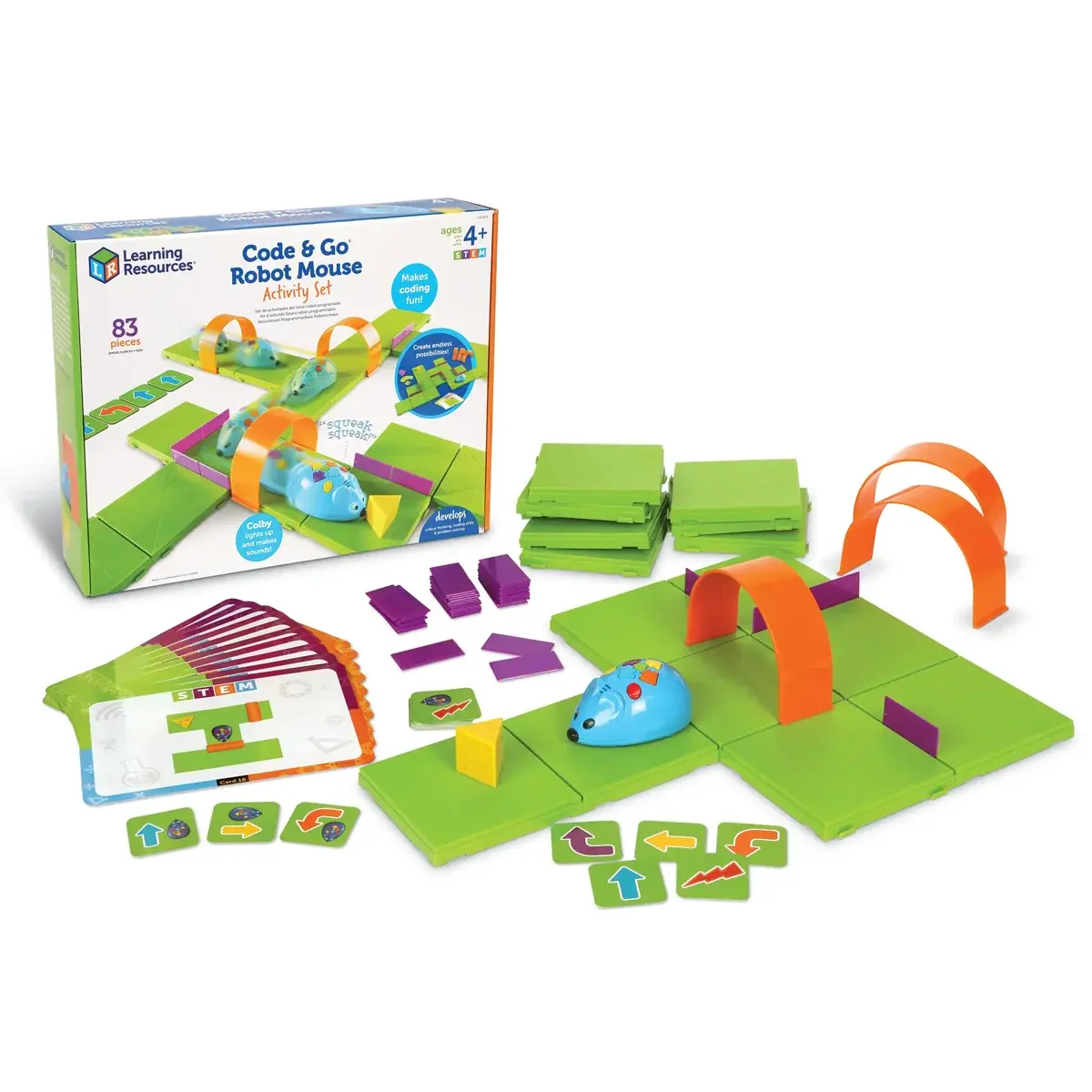
    Code & Go Robot Mouse Activity Set

    The Code & Go Robot Mouse Activity Set introduces programming through maze building and a friendly robot mouse called Colby. Children design a maze, plan the route with coding cards, then enter the steps using the buttons on Colby's back and watch the mouse race to the cheese. The 83-piece set includes Colby, 16 maze grids that build a 20 x 20 inch board, 22 maze walls, three tunnels, 30 double-sided coding cards, 10 double-sided activity cards, a cheese wedge and an activity guide. Colby lights up, makes sounds and has two speeds, and it requires three AAA batteries, which are not included. Because the maze layout can be changed every time, the set supports open-ended challenges that build sequencing, logic, problem-solving and spatial reasoning. It is entirely screen-free, making it a practical choice for unplugged STEM centres in kindergarten and early primary classrooms.

  • KGGrades 1–3

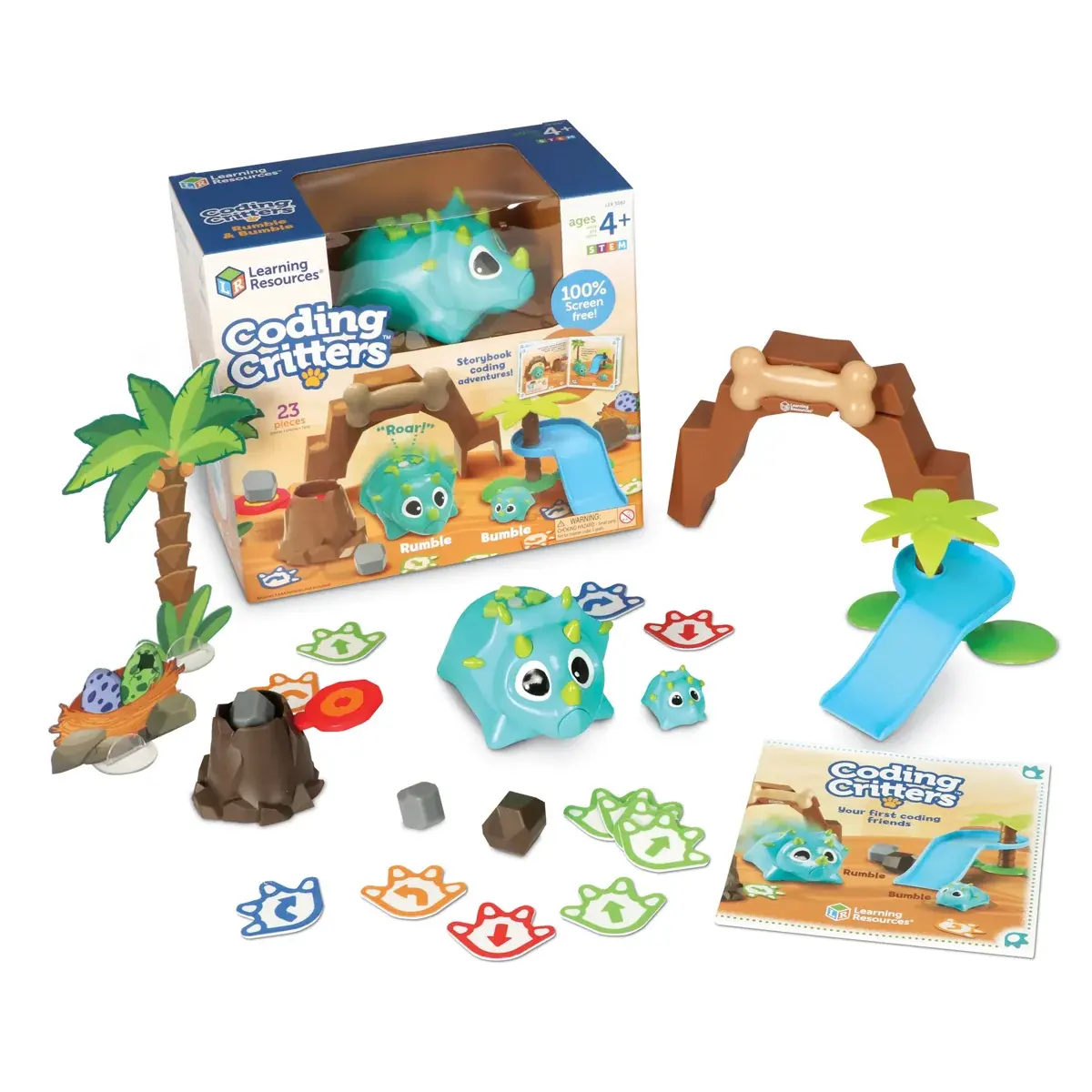
    Coding Critters Rumble & Bumble

    Coding Critters Rumble & Bumble introduces preschoolers to coding through a dinosaur-themed story and playset. Rumble is the programmable dinosaur: children enter directional steps such as forward, backward and left or right turns, then watch him carry out the sequence. Bumble is a non-motorised rolling companion that connects to Rumble magnetically. The included storybook guides children through coding challenges in which they work out the steps Rumble needs to complete each task, building sequencing, logic and problem-solving skills. The 23-piece set includes both dinosaurs, the coding storybook and playset accessories for creating scenes and tracks. The activities are fully screen-free and work best on hard, smooth surfaces. Rumble requires batteries, which are not included, while Bumble needs none. The set can be used for story-based coding at learning centres or for small-group play in early years classrooms.

  • KGGrades 1–3

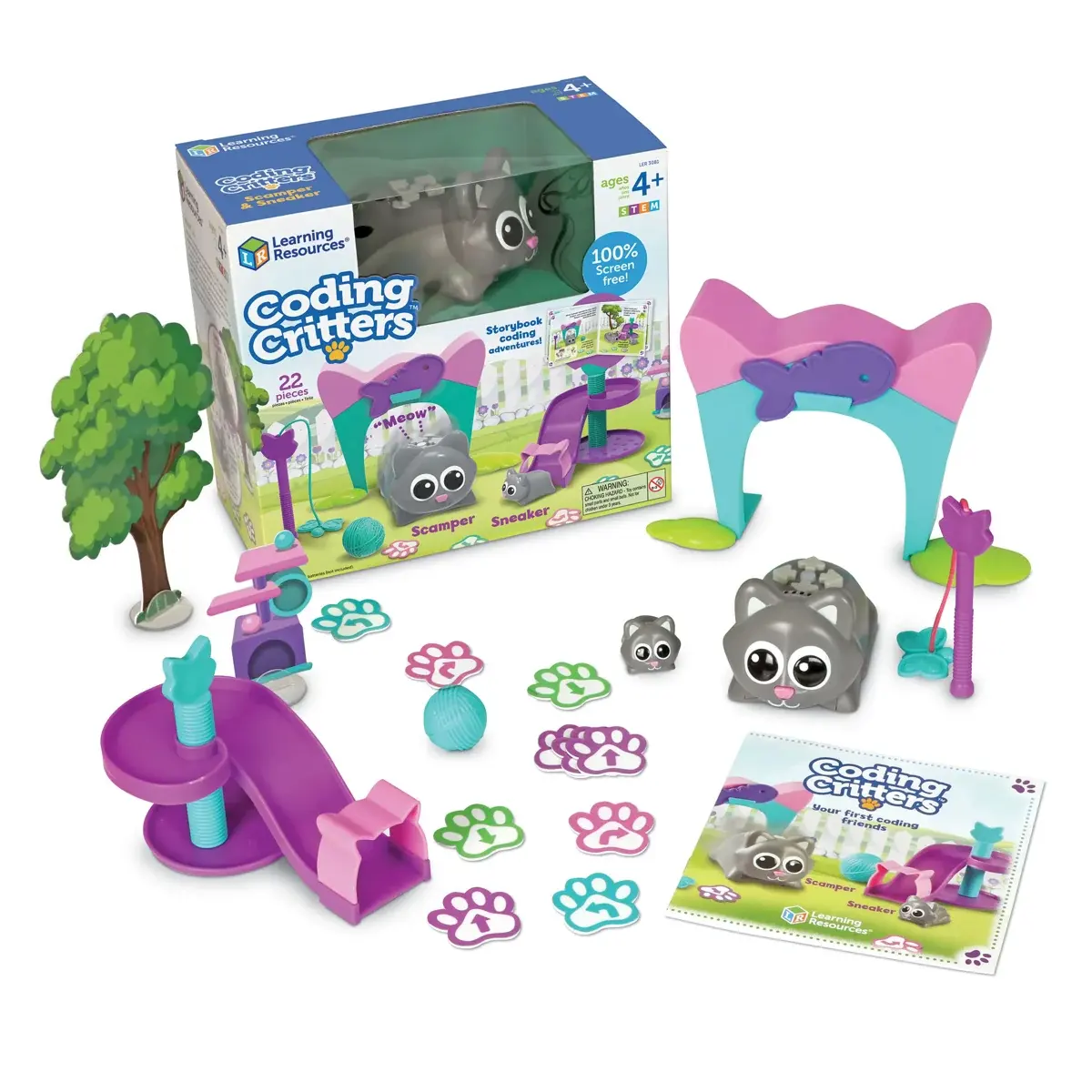
    Coding Critters Scamper & Sneaker

    Coding Critters Scamper & Sneaker brings early coding into pretend play with a robotic cat and her kitten friend. Children use simple buttons to program Scamper with a sequence of directions, then watch her move through the playset to complete the challenge. Scamper has two modes: a Coding Mode for building and running sequences, and a Play Mode with preset responses and sounds. Directional coding cards help children plan steps before entering them, and the colourful storybook sets out guided coding challenges that build sequencing, logic and problem-solving. The 22-piece set includes Scamper, the Sneaker kitten figure, playset pieces such as ramps and obstacles, and the coding storybook. It can be combined with other Coding Critters sets for more play. Batteries are required but not included, and the set contains small parts, so it is not suitable for children under three.

  • KGGrades 1–3

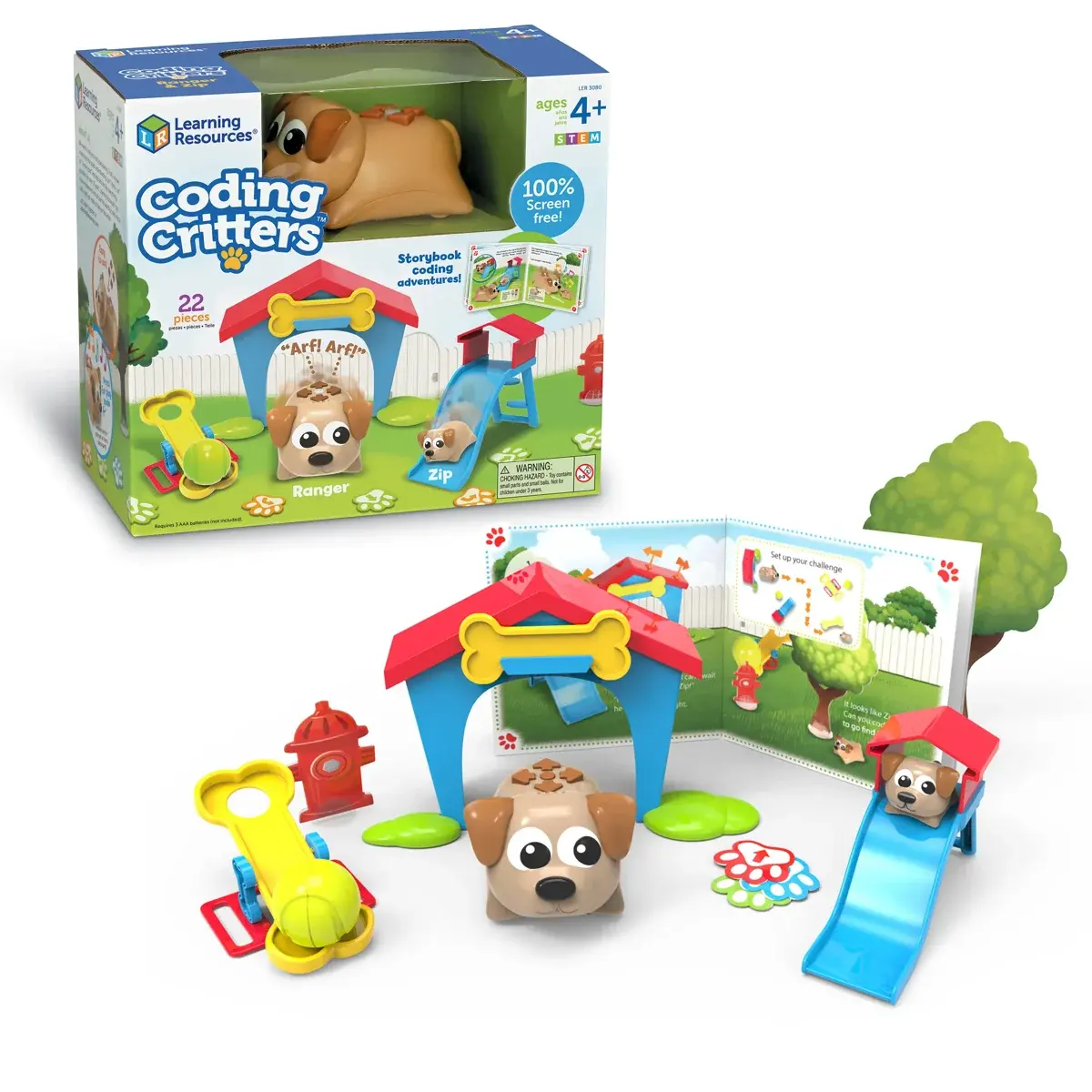
    Coding Critters Ranger & Zip

    Coding Critters Ranger & Zip is a story-led coding playset featuring two puppies. Ranger is the programmable robot dog, and Zip is a smaller companion with a magnetic nose that attaches to Ranger. Children plan routes with directional paw-print cards and program Ranger with sequences of up to 30 steps. In addition to Programming Mode, Ranger has a Play Mode with dancing to four songs, sleeping, patrolling and eating, each with sound effects. The included storybook presents coding missions that encourage children to think through each step, building sequencing, logic and problem-solving skills, and the activities work well for several children playing together. The 22-piece set includes Ranger and Zip, a doghouse, slide, seesaw, ball, bone, fire hydrant and tree, along with the storybook and paw-print coding cards. Ranger requires three AAA batteries, which are not included. The set is fully screen-free and suits early years learning centres.

  • KGGrades 1–3

    Coding Critters Bopper, Hip & Hop

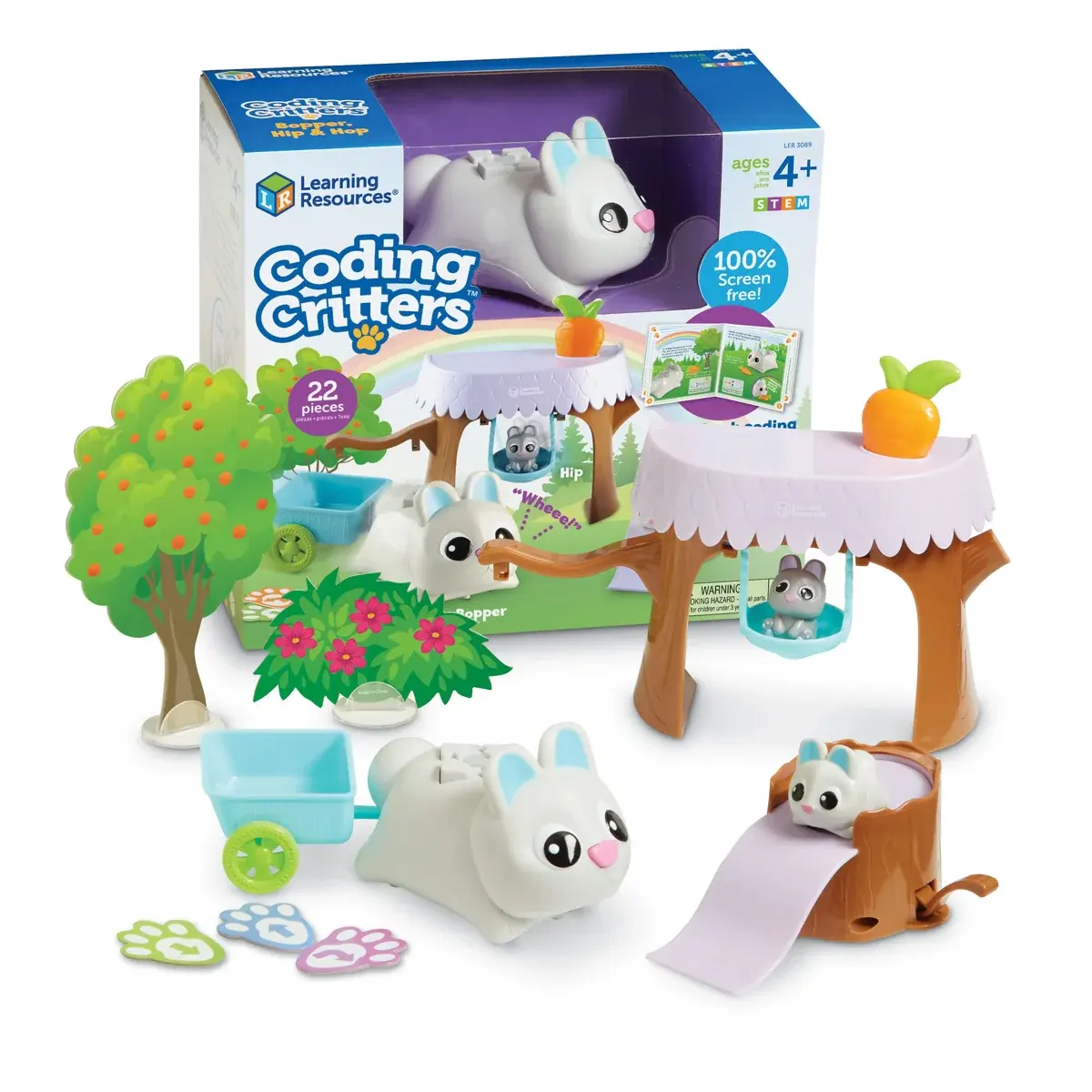
    Coding Critters Bopper, Hip & Hop introduces early coding through a story about a hard-working bunny and two lively bunny friends. Children program Bopper to complete tasks in the playset, such as collecting carrots, pulling a cart and using a log swing, and follow along with a screen-free storybook full of coding challenges. The set also has an interactive Play Mode: pressing Bopper's nose lets children feed, pet and care for the bunny and set it dancing and singing. Children can also create their own coding challenges by rearranging the playset, which encourages sequencing, logic and problem-solving. The 22-piece pet playset includes the bunnies, accessories such as a carrot, cart and log swing, and the coding storybook. Batteries are required but not included. The set is fully screen-free and works well for pretend play and coding stations in kindergarten classrooms.

  • KGGrades 1–3

    UARO Coding Robot – Levels 1–4

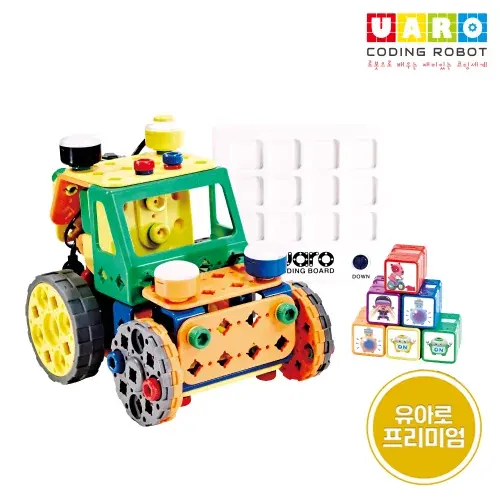
    UARO from Roborobo is a coding robot created for young children as their first experience of building and programming a robot. Children assemble their own robot models using UARO's frames and child-friendly tools, then program them without a PC or smart device. Coding is done with a dedicated coding board and coding blocks: arranging the blocks in the right order creates the robot's movement program, helping children develop computational thinking in a concrete, hands-on way. UARO also supports app-based coding when an optional communication module is fitted, letting children code by placing characters in the app. The accompanying activity workbooks are written around early childhood curriculum areas, and Roborobo highlights benefits for concentration, reasoning, creativity and fine-motor skills, as children turn screws and bolts while building. The progressive levels allow schools to introduce the robot step by step in kindergarten and early primary classes.

  • KGGrades 1–3

    Ozobot Evo Entry Kit

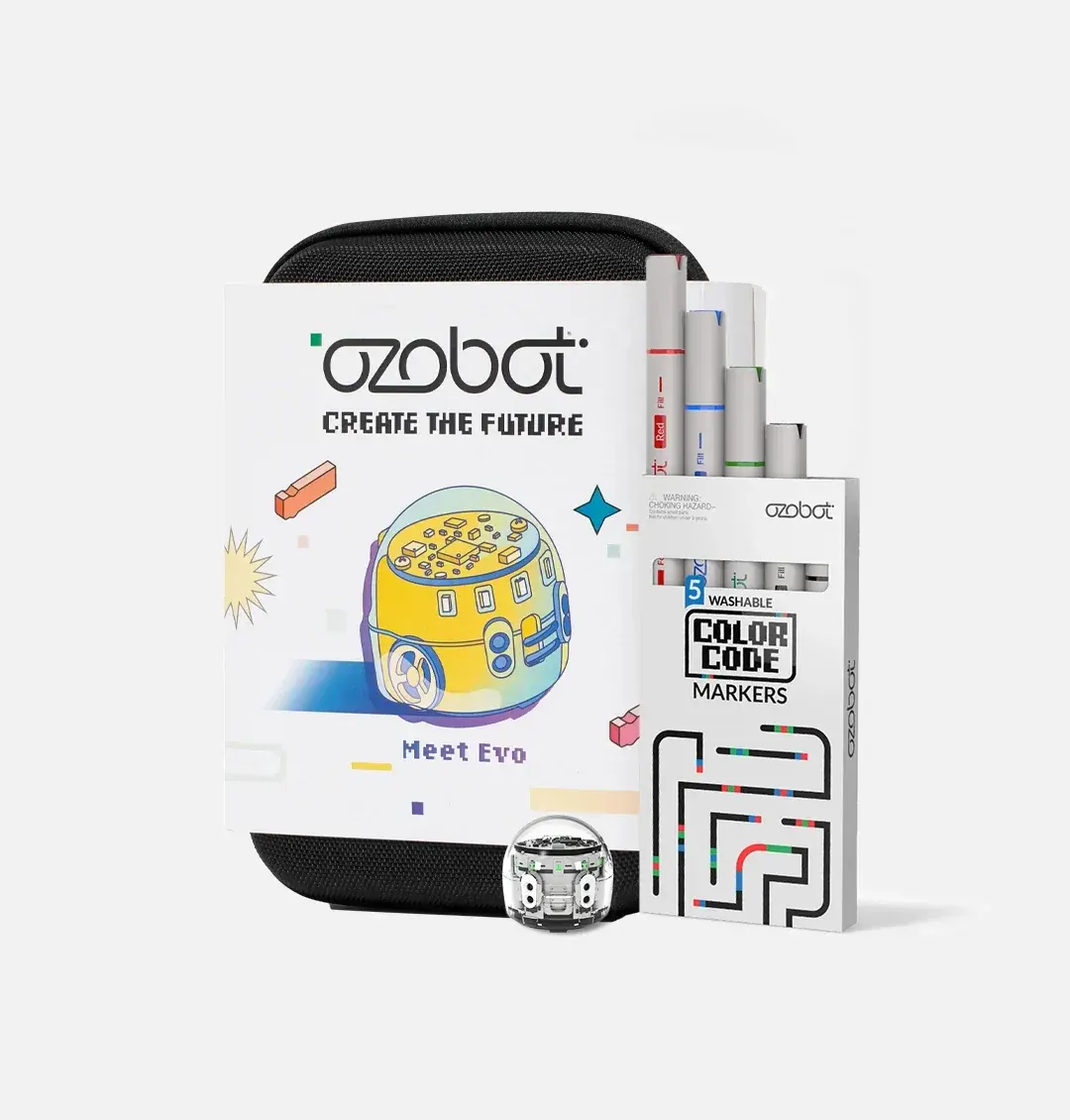
    The Ozobot Evo Entry Kit is a starting point for coding and robotics with Evo, a palm-sized robot designed for K-5 learners. It supports two ways to code: screen-free, by drawing Color Codes on paper with markers that the robot reads with its optical sensors, and screen-based, using Ozobot Blockly's drag-and-drop programming. Evo has optical sensors for reading lines and codes, proximity sensors for detecting obstacles, programmable RGB LEDs, a speaker and Bluetooth connectivity. Students use it to practise sequencing, loops, conditionals and debugging, and it works with Chromebooks, Windows and Mac computers and iOS or Android tablets. The kit contains one Evo robot, a charging cable, five dual-tip Color Code markers, Get Started activities and a protective zip case. Teachers can draw on hundreds of free standards-aligned lessons in Ozobot Classroom that connect coding to math, science and other subjects. The kit suits individual learners and teachers getting started, and multi-robot classroom kits are also available.

  • Grades 1–3Grades 4–5Grades 6–8

    VinciBot Coding Robot

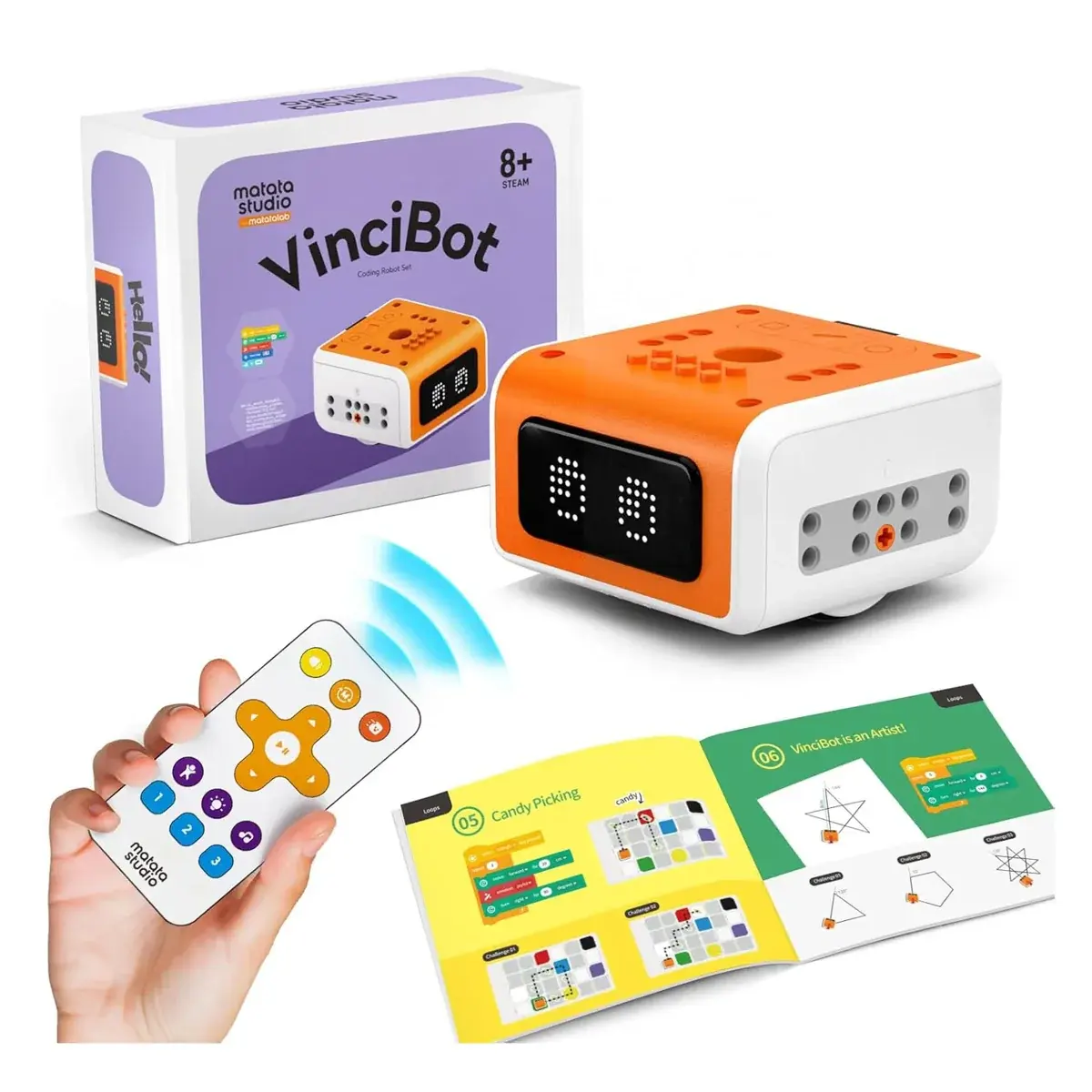
    VinciBot is a coding robot from MatataStudio for primary and lower secondary students. Learners start with visual block coding in MatataCode and can move on to Python as their skills develop, using Windows, macOS, iOS or Android devices. The robot has eight built-in sensors, including distance, color, light, sound, infrared and line-following sensing, along with a 128-LED matrix face, programmable RGB lights, a speaker with 21 instrument sounds and precise dual motors. A marker holder lets students program the robot to draw shapes, and it is compatible with LEGO bricks and Technic motors for building projects. The set includes the VinciBot robot, an IR remote control, a washable marker, a USB-C cable, a user guide, an 18-activity challenge booklet and a double-sided map with blank and line-following sides. The rechargeable 1500 mAh battery gives four or more hours of use. Creator, Inventor and AI Vision kits extend VinciBot into engineering, electronics and artificial intelligence projects.

Need a full classroom or lab?

We build bundles for 24–30 students with storage and charging, and can install and train your teachers.

Talk to us