STEAM products for schools and labs

Authentic kits and components, quoted for your school. Add items to your quote list and we'll reply with pricing and delivery.

265 products

Filters

Clear all
Brand
Grade level

265 products

  • Grades 1–3Grades 4–5Grades 6–8

    VinciBot Classroom Set – 6 robots + charging stations

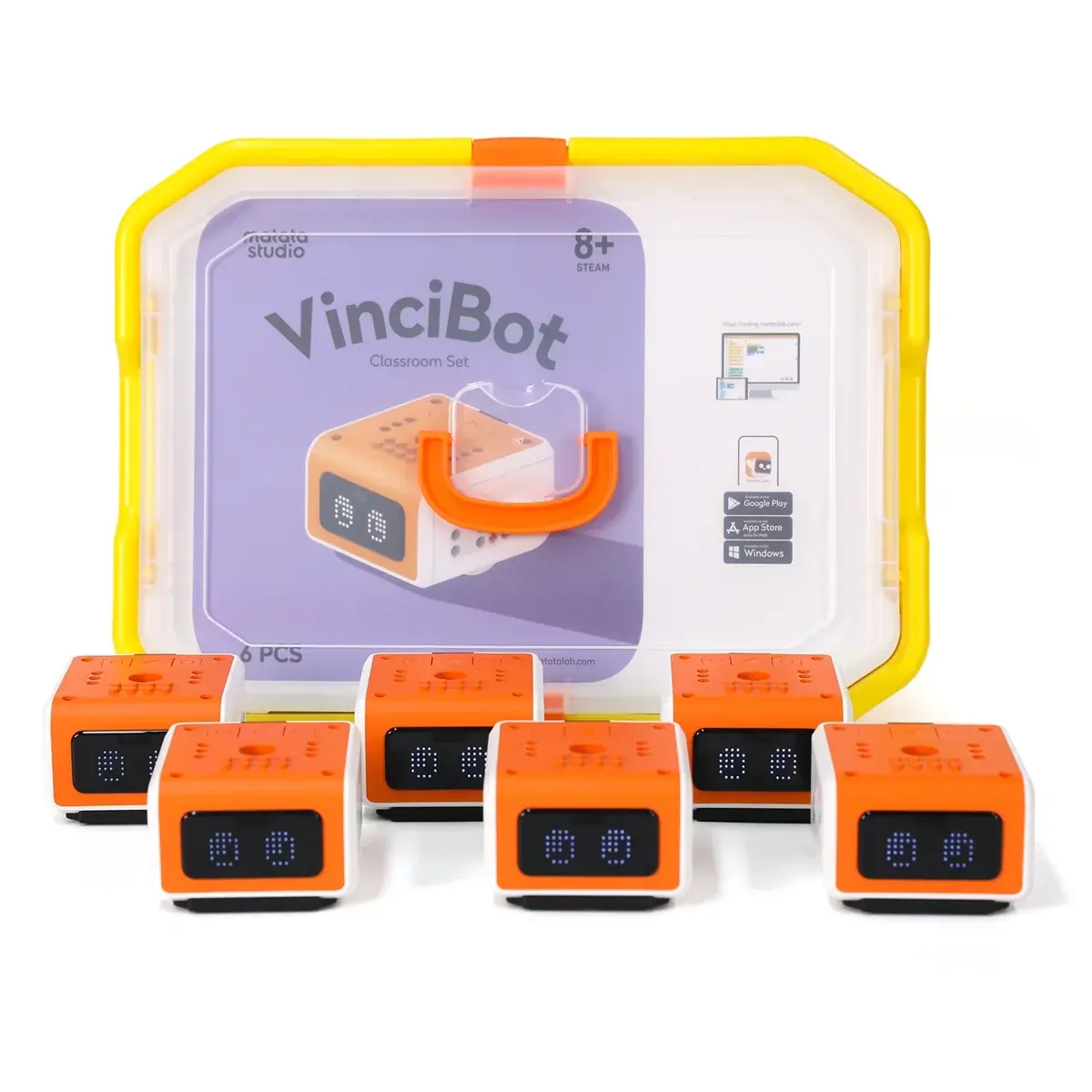
    The VinciBot Classroom Set equips a class with six VinciBot robots so students can work in pairs or small groups to plan, program, test and improve their ideas. It is built for coding stations, team challenges and collaborative projects, with charging stations to keep the robots ready between lessons. Each VinciBot supports visual block programming and Python, so the same robots serve beginners and more advanced learners. The robots include eight built-in sensors such as distance, color, light, sound, infrared and line-following, a 128-LED matrix, 21 instrument sounds and a marker holder for programmed drawing, and they work with LEGO bricks and third-party modules. The set comes with markers, cables and accessories as well as structured teaching materials that guide students from step-by-step activities to more open-ended STEAM projects. Each robot's 1500 mAh battery charges in about two hours and runs for four hours or more.
  • Grades 1–3Grades 4–5Grades 6–8

    VinciBot Inventor Kit add-on

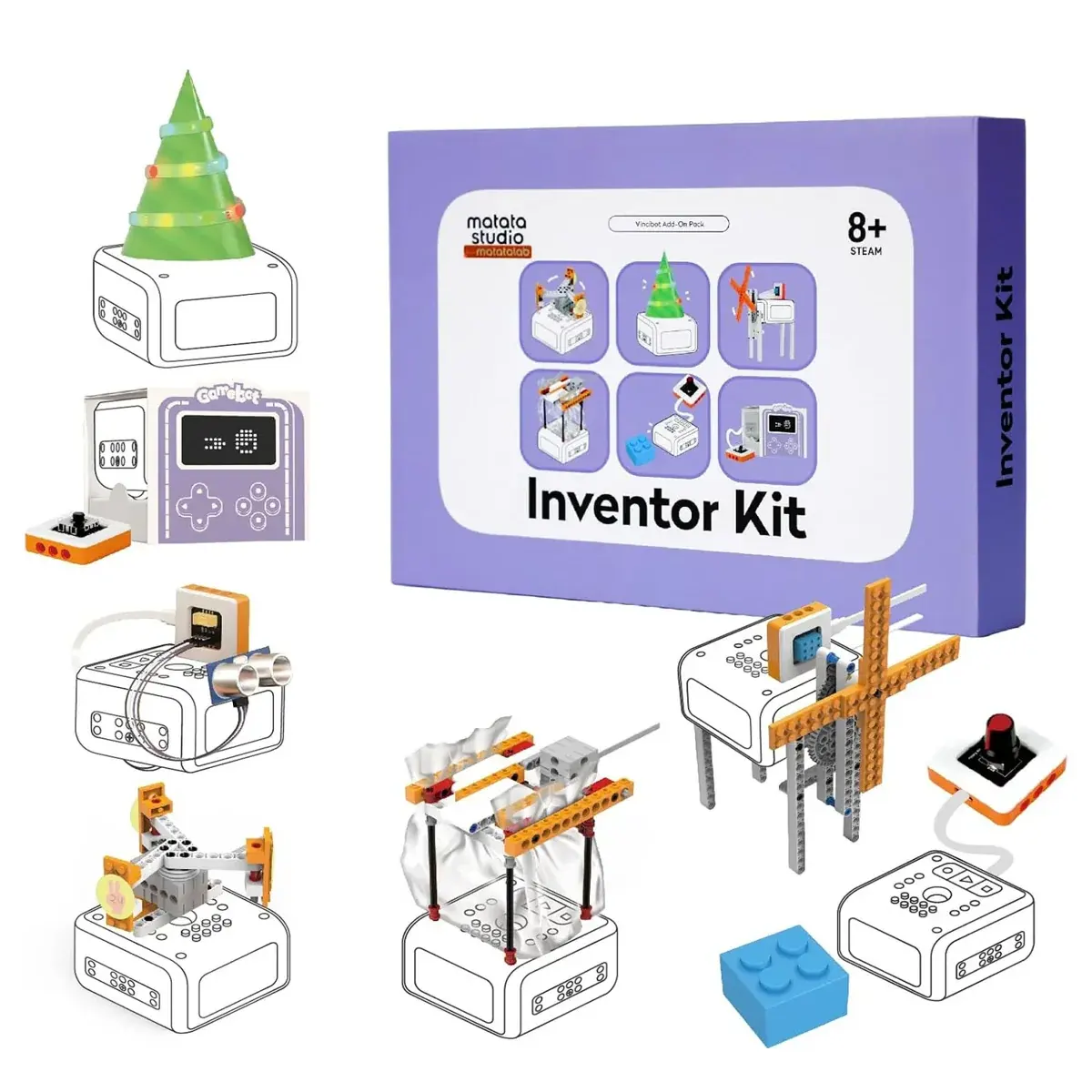
    The Inventor Kit is an electronics and engineering add-on that expands what students can create with VinciBot. By connecting programmable modules to the robot, learners design interactive projects that sense their surroundings, respond with light and movement, and can be controlled by hand. The kit includes five programmable modules: a 360-degree digital servo, a temperature and humidity sensor, an LED strip, a rotary angle sensor and a joystick. A Module Link Unit allows compatible third-party sensors and DC motors to be connected, and 128 building bricks are provided for constructing the physical parts of each project. Seven guided projects with step-by-step instructions help students get started before moving on to their own inventions, building skills in electronics, coding, engineering and design thinking. The kit is an expansion only and requires a VinciBot robot, which is sold separately.

  • Grades 1–3Grades 4–5Grades 6–8

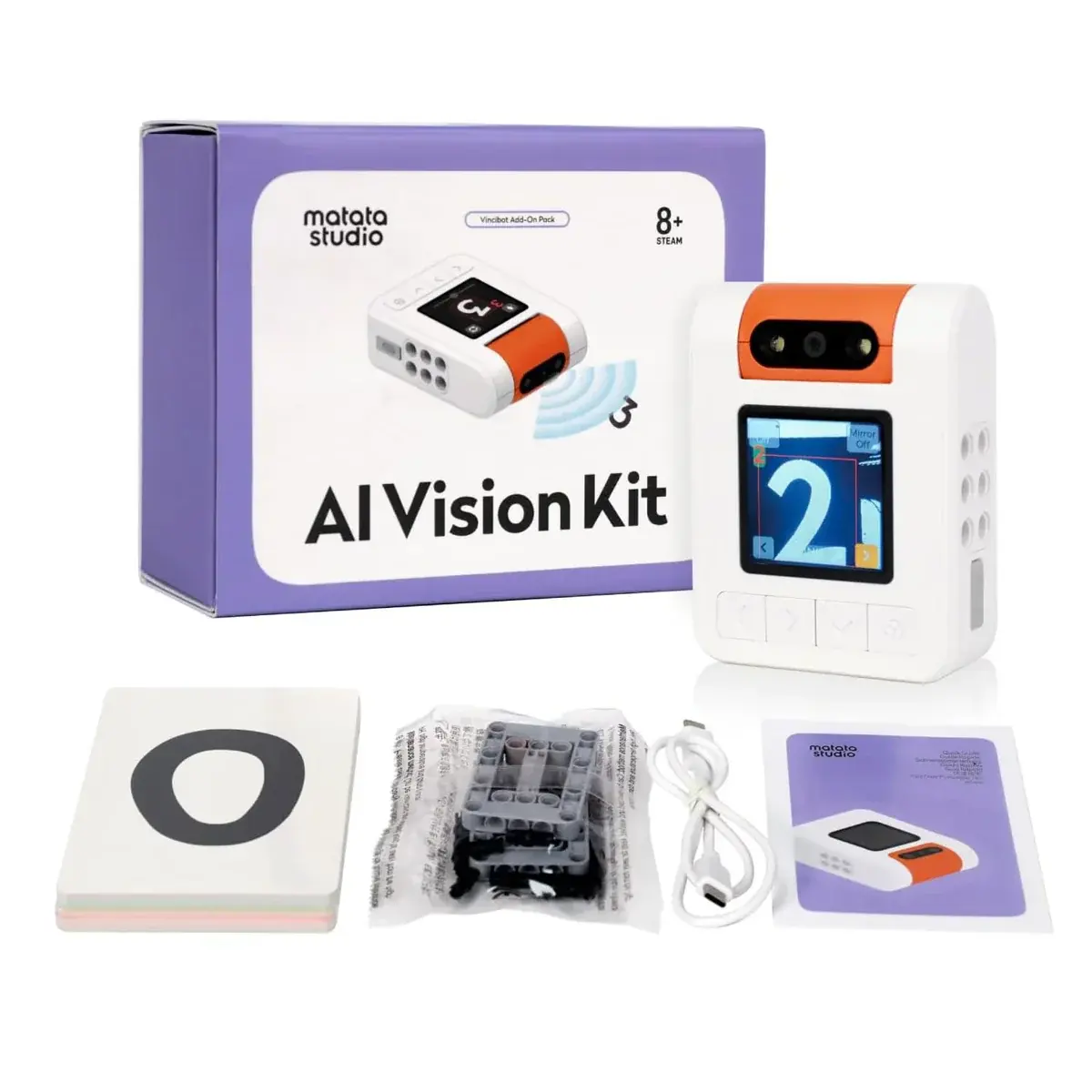
    VinciBot AI Vision Kit add-on

    The AI Vision Kit adds computer vision and artificial intelligence to the VinciBot coding robot. Students attach the camera module and use graphical programming to explore how machines recognise, track and respond to what they see. The module offers five preset AI functions: face detection, color recognition, color line following, AprilTag detection and recognition of handwritten digits from 0 to 9. A one-click data collection and training feature lets learners build their own recognition models, giving a practical introduction to how AI models are trained. A 1.5-inch full-colour LCD screen and flippable camera show live feedback during projects. The kit includes the AI Vision module with camera, six activity cards for guided experiments and a USB-C cable. It is an add-on that works only with VinciBot, which is sold separately, and suits classroom units on AI literacy and STEAM projects.

  • Grades 1–3Grades 4–5Grades 6–8

    VinciBot Creator Kit add-on

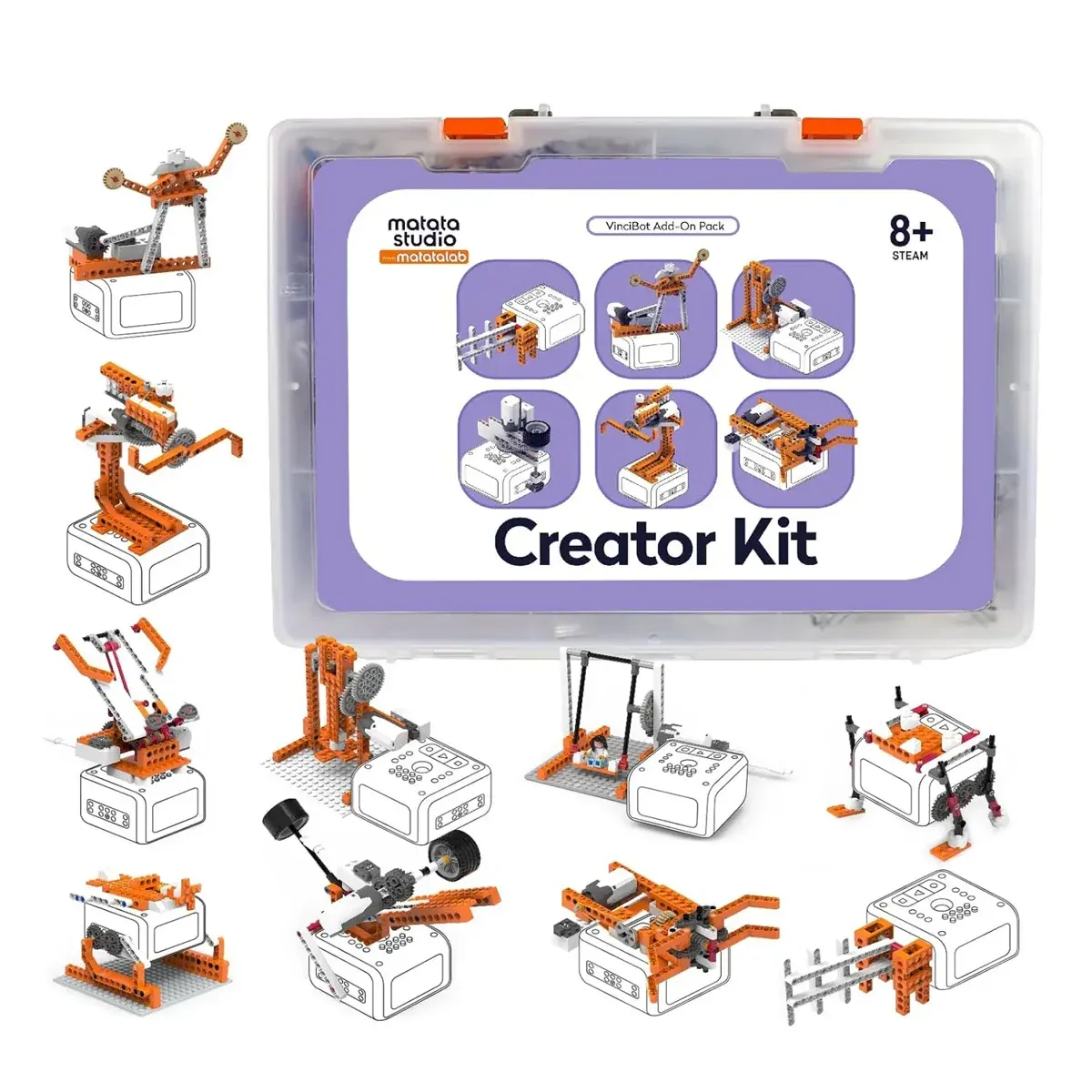
    The Creator Kit turns VinciBot into a platform for hands-on engineering. Students combine building blocks with VinciBot's programmable movement to create motorised structures and explore how mechanical systems work. The kit provides more than 400 building blocks, an external 9V motor and a 9V power adapter, together with a building manual and user guide. Over 20 guided builds introduce mechanisms such as crankshafts, linkages and cams, and students can adapt each model or design their own once they understand the principles. By writing code to control the motor and robot, learners connect programming with mechanical design, engineering and creative problem-solving. The Creator Kit is an expansion accessory and requires a VinciBot robot, which is sold separately, making it a natural next step for classes already using VinciBot.

  • Grades 6–8Grades 9–12

    Nous AI Set – Modular AI Robot

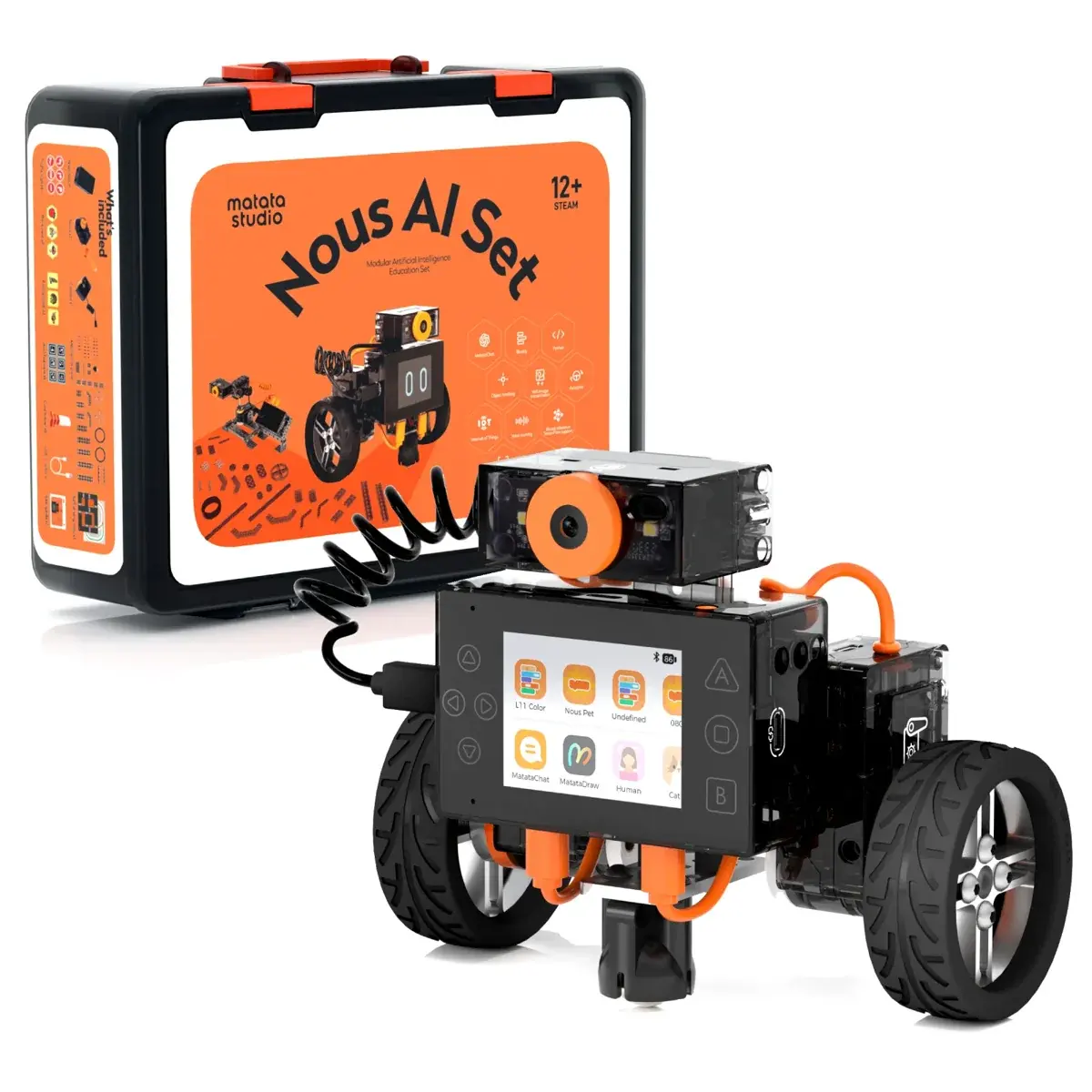
    The Nous AI Set from MatataStudio is a modular robot for teaching artificial intelligence, machine learning and robotics through practical projects. Students collect data, train image or voice models, deploy them to the Nous Hub and then watch the robot recognise its surroundings and react with movement, sound and on-screen feedback. Supported AI activities include image classification and object recognition, voice recognition and speech commands, visual tracking, autonomous driving, AprilTag navigation and traffic-sign detection. Trained models run on the hub without an internet connection. Students program in Blockly and can progress to Python, developing computational thinking, data reasoning and engineering skills. The set includes the Nous Hub, a camera, two servos, mechanical building parts with a metal structure, a self-driving map, plant and animal cards, traffic signs, AprilTags, card holders, a USB-C cable and a user guide. MatataStudio pairs it with 24 lessons and project materials, giving schools a complete path from data collection to real-world application.

  • Grades 1–3Grades 4–5Grades 6–8

    mBot2

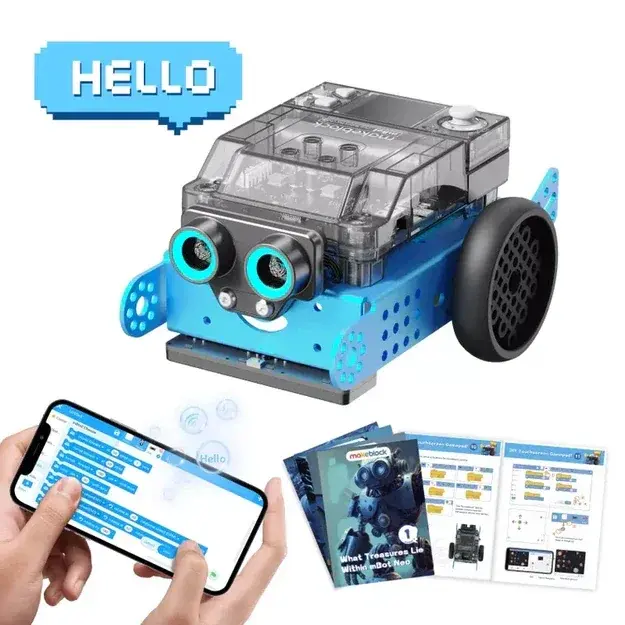
    mBot2 is Makeblock's buildable coding robot for STEM education, built around the CyberPi programmable mainboard. Students assemble it in about 30 minutes, then program it in mBlock, starting with block-based coding and moving to Python on the same platform. It can also be controlled with the Makeblock app or a Bluetooth controller. The kit includes CyberPi, the mBot2 Shield, an ultrasonic sensor, a quad RGB sensor, encoder motors, an aluminium chassis, wheels, a USB cable, a screwdriver and a line-following map. CyberPi adds a light sensor, microphone, gyroscope and accelerometer, and its Wi-Fi connection supports IoT projects and machine learning tasks such as image and pose recognition in mBlock. The sturdy aluminium build suits long-term classroom use, and the robot can be taken apart and rebuilt for DIY projects. Makeblock provides standards-aligned lessons, online cases and teaching plans, and mBot2 is widely used for after-school programs, STEM clubs and robotics competitions.

  • Grades 1–3Grades 4–5Grades 6–8

    mBot2 Smart World 3-in-1 Add-on Pack

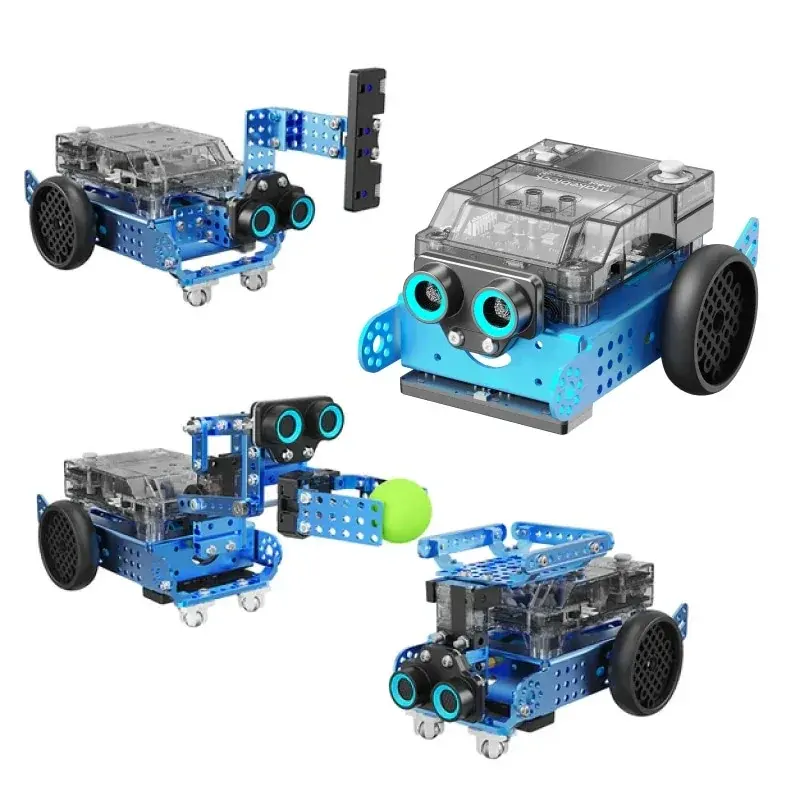
    The Smart World 3-in-1 Add-on Pack extends mBot2 with three new forms: a Robotic Arm, a Robotic Carrier and a Surveying Robot. It is built around Makeblock's Smart World concept, which brings real-life applications such as smart cities, smart farming and logistics into the classroom and links them to the UN Sustainable Development Goals. Students program the Surveying Robot to identify coloured objects, the Robotic Arm to grip and move them, and the Robotic Carrier to follow lines and deliver items. Using mBot2's wireless communication, several robots can work together, for example to complete a survey-harvest-transport sequence, building collaboration and problem-solving skills. Coding moves from block-based to Python in mBlock. The pack includes aluminium beams, plates, brackets, slide beams and stiffeners, two servo motors, red and green test balls, a screw and bolt pack, and a building guide. It does not include mBot2, which is required, or the scenery props shown in example setups.

  • Grades 1–3Grades 4–5Grades 6–8

    Codey Rocky

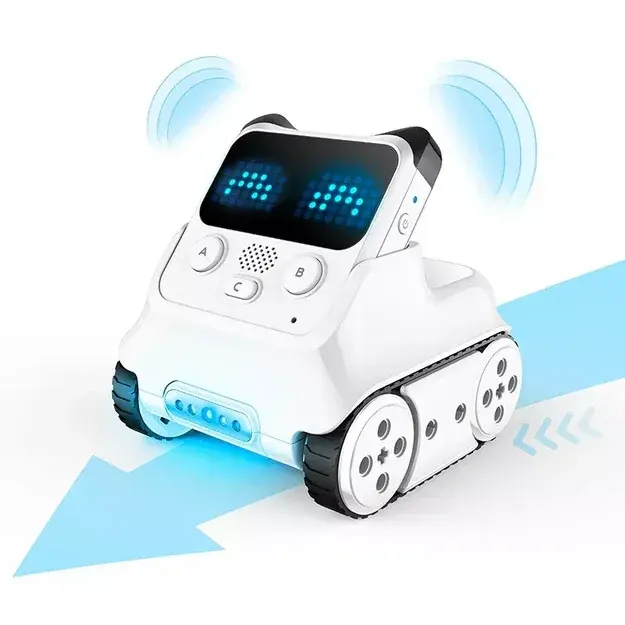
    Codey Rocky is a coding robot from Makeblock made of two parts: Codey, the controller with an LED matrix face that shows emotions, and Rocky, the wheeled base that lets it move and navigate. It comes ready to use with no assembly, so students can start coding straight away. More than ten built-in electronic modules include an LED display, buttons, sound and light sensors, a gyroscope and accelerometer, an infrared emitter and receiver, a color sensor, a speaker and a potentiometer. Children program it in mBlock using drag-and-drop blocks and can move on to Python, or use the mBlock app's game-based activities. The robot can follow lines, detect colors, express emotions and be remote-controlled, and it supports Wi-Fi and Bluetooth. Codey Rocky is compatible with LEGO Technic bricks and laser-cut parts for creative builds. Makeblock offers a CSTA-aligned curriculum of 24 lessons covering topics such as functions, variables and line following, along with other free learning materials.

  • Grades 1–3Grades 4–5Grades 6–8

    mBot Ultimate 10-in-1 Robot Building Kit

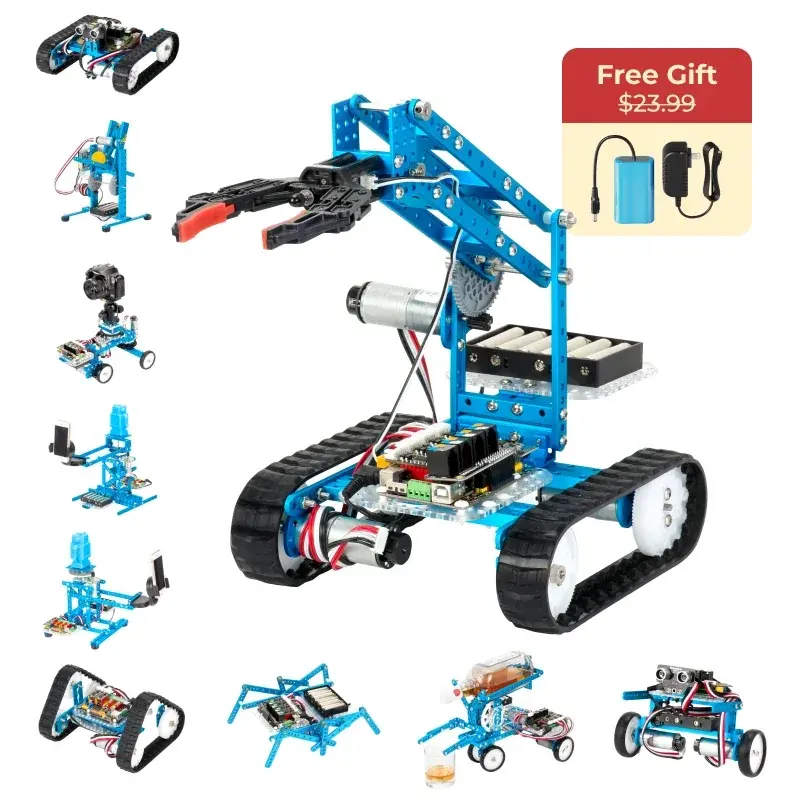
    mBot Ultimate is Makeblock's advanced robot building kit, offering ten different robot builds from a single set. With more than 160 electronic and mechanical parts, students design, assemble and program robots of increasing complexity, gaining experience in mechanical engineering and electronics alongside coding. The kit is driven by the MegaPi controller, which offers 11 motor and servo ports and five sensor ports. It includes an ultrasonic sensor, a line-follower sensor, a gyroscope and a shutter module, and it is compatible with Arduino sensors and LEGO bricks. Students can program with block-based coding in mBlock, write Arduino code or use Python, and the kit also works with Raspberry Pi. Connectivity options include USB, Bluetooth and 2.4G wireless, and an app provides ten remote-control modes for testing builds. The robots run on six AA batteries or a rechargeable LiPo battery. The kit suits secondary-level robotics classes, makerspaces and competition preparation.

  • Grades 1–3Grades 4–5Grades 6–8

    Sphero BOLT+

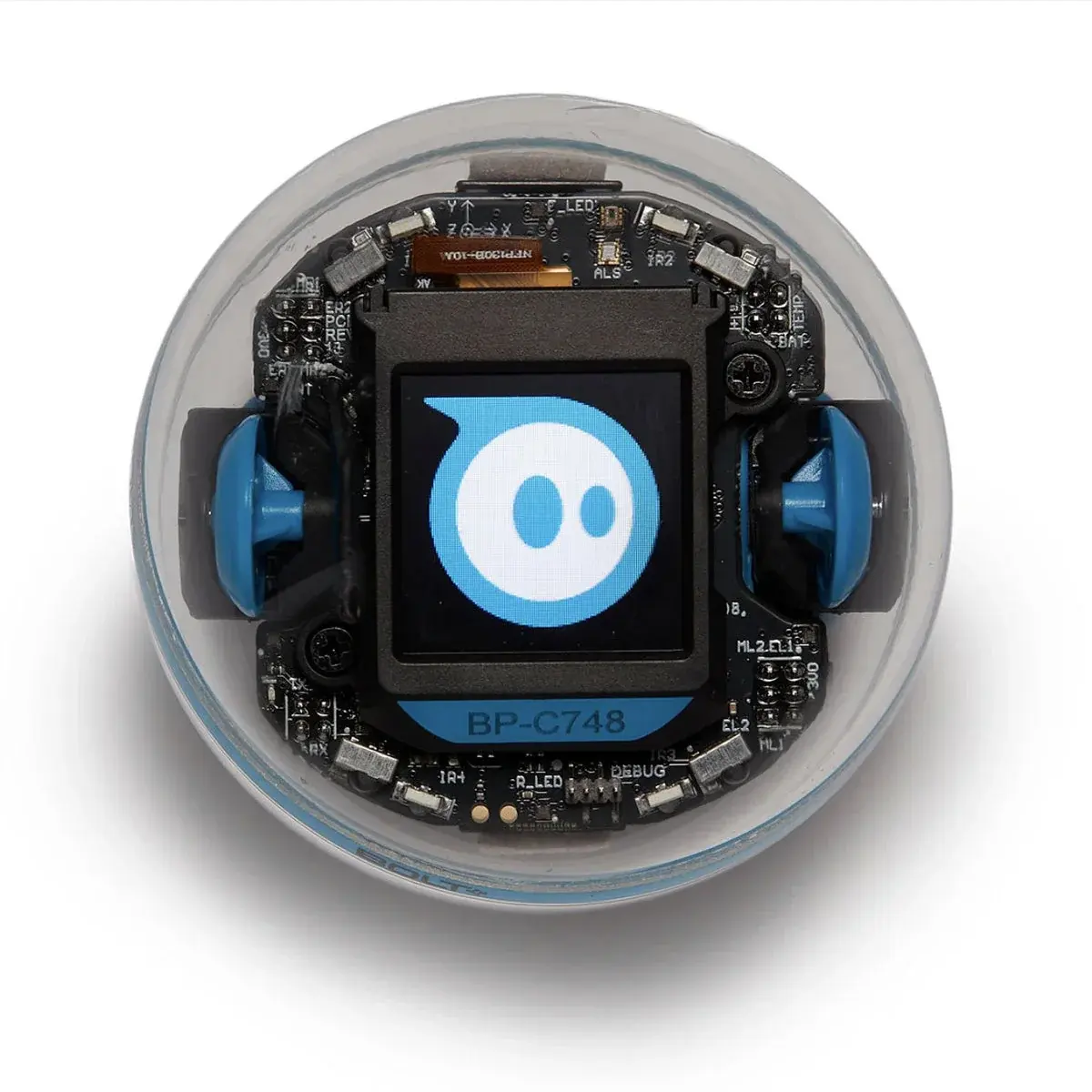
    Sphero BOLT+ is a spherical coding robot made for classrooms from Grade 3 up to Grade 10. Inside its waterproof shell are motors, a set of programmable sensors and a 128x128 LCD screen that can show more than 650 graphics and animations, messages or live sensor readings while students test and debug their programs. Learners program BOLT+ in the free Sphero Edu app or web app using three modes: Draw for beginners, drag-and-drop Blocks, and text coding in JavaScript or Python. Along the way they practise algorithms, conditional logic, pattern recognition, data and early AI-literacy concepts, and can use the robot for STEAM projects and interactive storytelling. The single robot ships with an inductive charging base, a 360-degree protractor, a sticker sheet and a quick-start guide, plus access to educator lessons. Wireless Qi charging, all-day battery life and "shake to wake" make it easy to manage in class, and one robot comfortably supports a pair of students.

  • Grades 1–3Grades 4–5Grades 6–8

    Sphero BOLT+ Power Pack – 15 robots

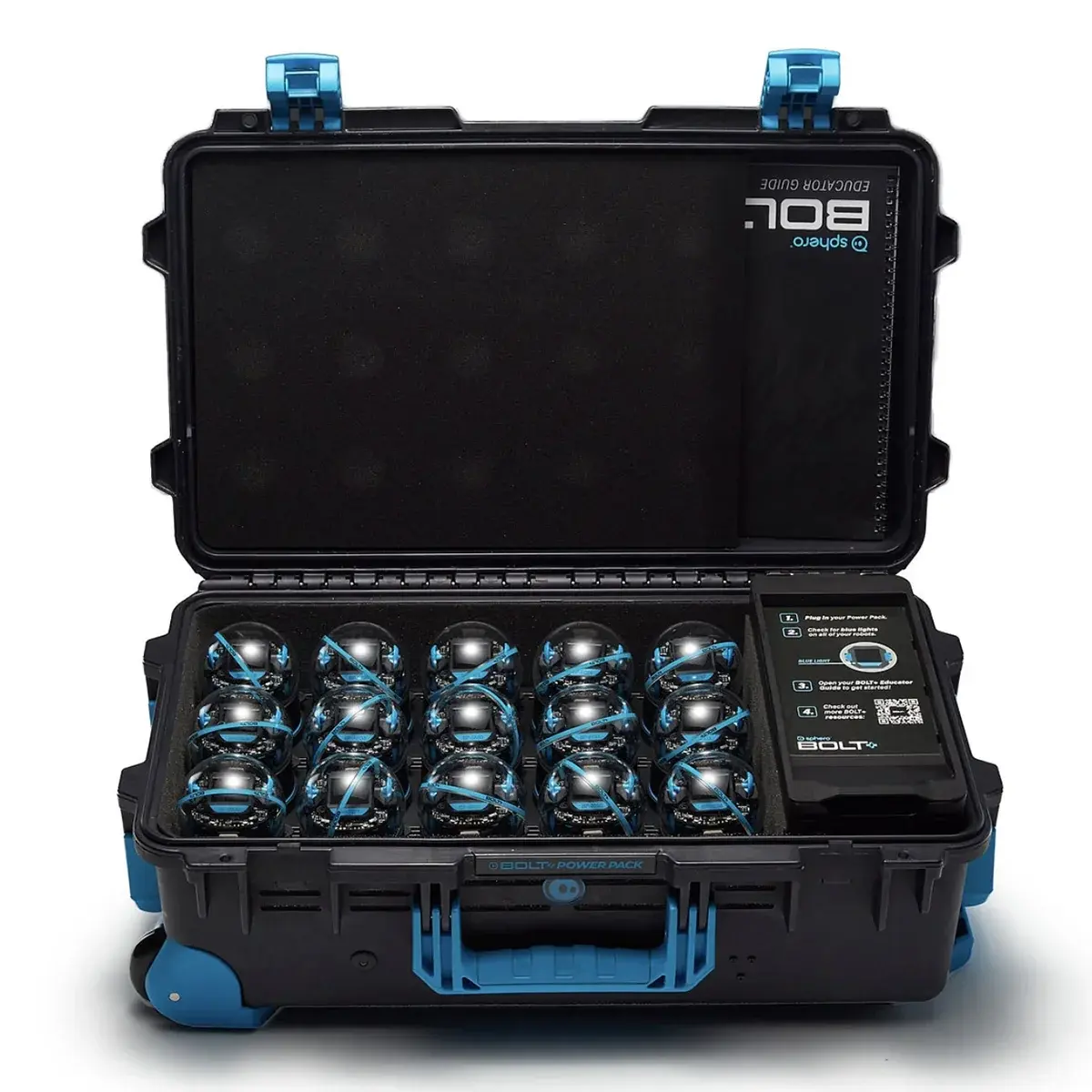
    The BOLT+ Power Pack equips a whole class with 15 Sphero BOLT+ robots, each with an LCD screen, programmable sensors and motors inside a waterproof sphere. With a two-to-one student-to-robot ratio, it is built around pair programming and collaborative problem solving for Grades 3 to 10. Students code the robots in the free Sphero Edu app using Draw, Blocks or JavaScript/Python, so the same set serves beginners and more advanced coders. Activities range from precise driving and maze challenges to displaying animations and sensor data, building skills in algorithms, logic and debugging. Everything is stored and charged in one durable case with inductive charging cradles. The pack also includes an Educator Guide, 20 challenge cards, 15 protractors, 15 turbo covers, maze tape and sticker sheets, together with access to Sphero educator resources and lessons.

  • Grades 1–3Grades 4–5Grades 6–8

    AIKIRO Coding Robot – Levels 1–2

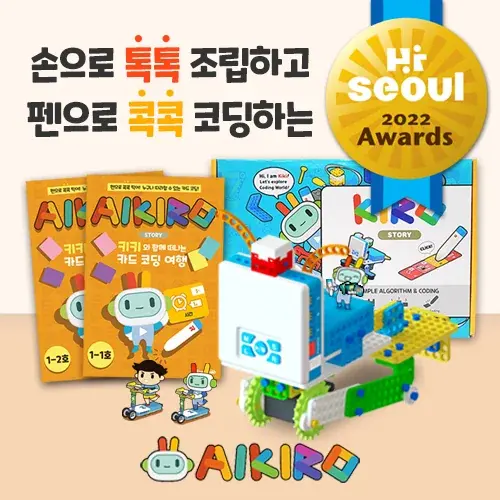
    AIKIRO is an elementary-level robotics kit from Korean educational robotics maker ROBOROBO that combines hands-on construction with screen-free coding. Students assemble robots from frames and simple one-hand rivet connectors that are quick to fit yet hold firmly. Programming is done with an OID coding pen and dedicated command cards: children tap the cards to create sequences, and the robot runs them without a PC. The kit offers more than 100 card combinations and works with motors, LEDs, melody output and over 20 digital and analog sensors and controllers. Lessons follow a story-based workbook with three main characters and everyday robot scenarios. As they build the workbook models and then design their own, students learn basic mechanical principles and foundational coding algorithms, making AIKIRO a practical first step into robotics for primary classrooms.

Need a full classroom or lab?

We build bundles for 24–30 students with storage and charging, and can install and train your teachers.

Talk to us