STEAM products for schools and labs

Authentic kits and components, quoted for your school. Add items to your quote list and we'll reply with pricing and delivery.

265 products

Filters

Clear all
Brand
Grade level

265 products

  • Grades 1–3Grades 4–5Grades 6–8

    PYXEL Coding Robot

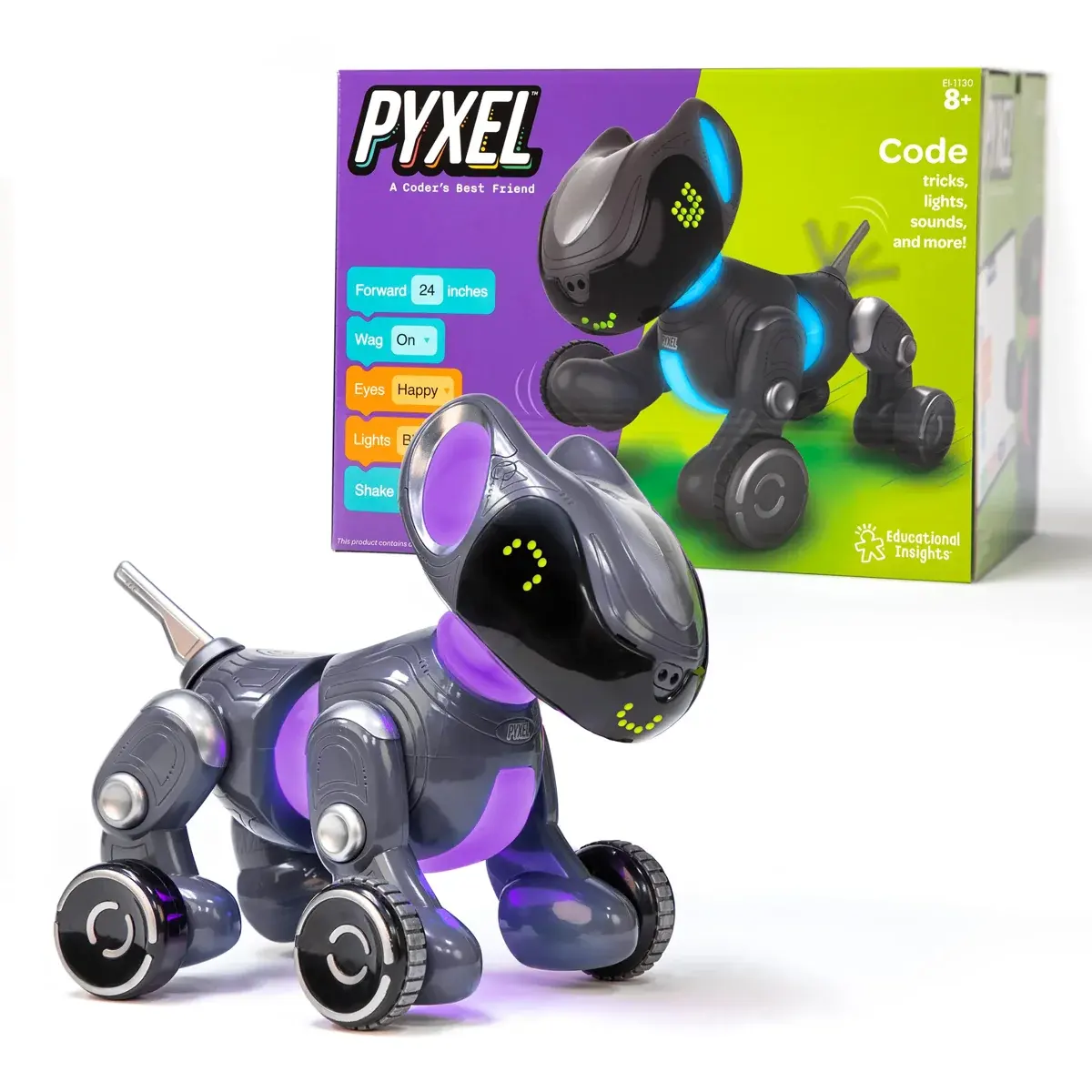
    PYXEL from Educational Insights is an interactive robot pet designed to teach programming fundamentals. Children write code that makes PYXEL perform tricks, change colours, play and react to sounds, and express emotions, turning abstract coding ideas into visible results. Coding starts with drag-and-drop Blockly and progresses to Python, both available in a built-in interface reached from a Wi-Fi-enabled tablet or computer. PYXEL creates its own password-protected Wi-Fi network, so no internet connection is needed, and built-in tutorials guide learners through new concepts. The box contains the robot with a built-in rechargeable battery, a USB-C charging cord, a Code Activator (needs 2 AAA batteries, not included) that lets children run saved routines without a device, and an instruction guide. Besides coding, PYXEL encourages critical thinking and social-emotional skills.
  • Grades 1–3Grades 4–5Grades 6–8

    Mech-5 Mechanical Coding Robot

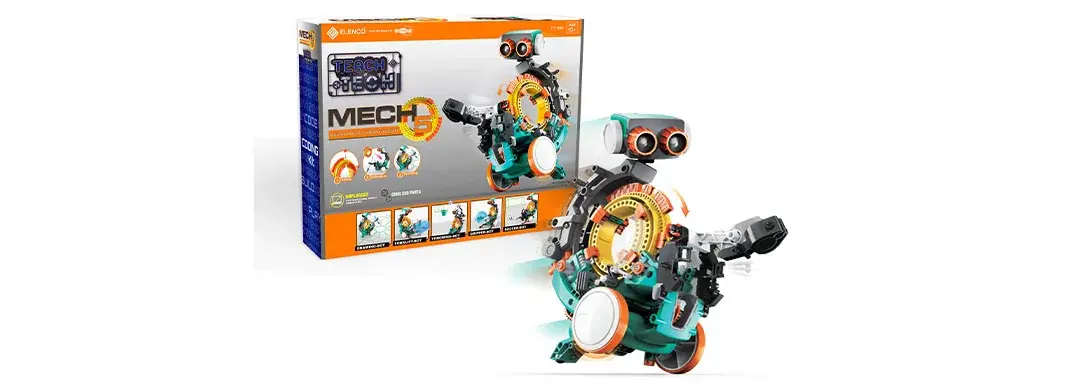
    Mech-5 (TTC-895) is part of Elenco's Teach Tech line and introduces coding and mechanical engineering together. Students first assemble the robot from a kit of more than 200 parts, then program it entirely without a computer, tablet or app. The heart of the robot is its mechanical coding wheel. Learners snap coding buttons onto the wheel to set a sequence of basic actions such as moving forward or backward, turning left or right, spinning or pausing. As their skills grow, they rebuild Mech-5 for more demanding missions like drawing, throwing, lifting and kicking. Because the code is physical and visible, Mech-5 suits mission-based classroom activities where students plan, test and correct their sequences. It develops problem-solving and troubleshooting skills alongside an understanding of how mechanisms turn instructions into motion. The robot runs on 2 AAA batteries (not included).

  • Grades 1–3Grades 4–5Grades 6–8

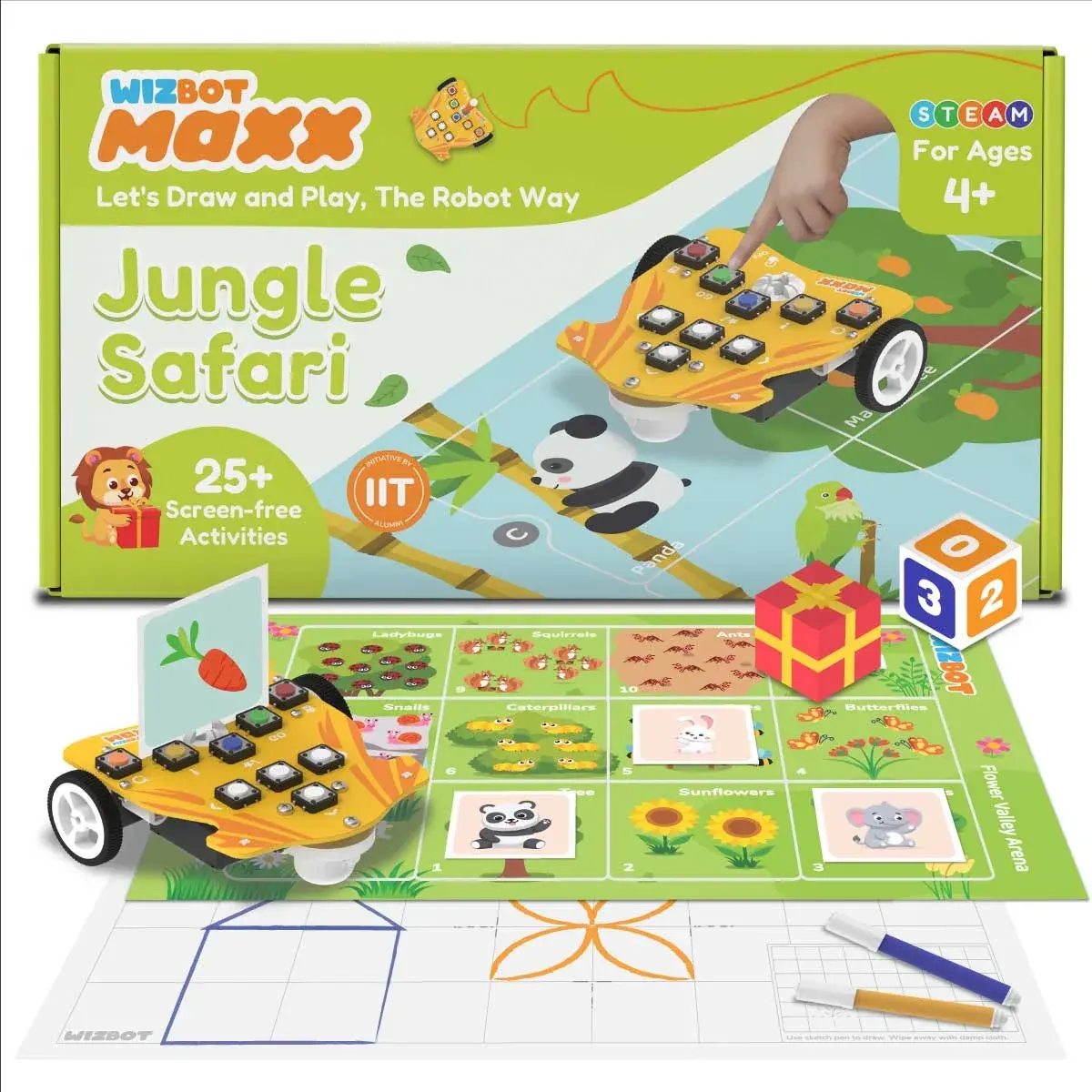
    WIZBOT – Coding, Robotics & AI

    Wizbot is a play-based educational robot from STEMpedia designed for children aged 4 to 10. It builds computational thinking alongside early numeracy and literacy through storytelling, games and puzzle-style activities, with curricula organised from preschool and kindergarten through Grades 1-2 and 3-5. Children code Wizbot in two ways. Nine colour-coded buttons on the robot let them enter movement sequences with no device at all, while the PictoBlox Junior Blocks app connects over Bluetooth for graphical block coding. In that mode, Wizbot can use face detection and human body detection, giving pupils a first look at AI. In Grid Mode the robot moves cell by cell across an arena following coded steps, and in Draw Mode a brush-pen attachment lets it draw shapes and patterns. Classroom packs include the robots, a teacher's handbook with lesson plans, game arenas, picture and coding cards, activity posters, drawing sheets and storage organisers.

  • Grades 6–8Grades 9–12

    Zumi Self-Driving Car Kit

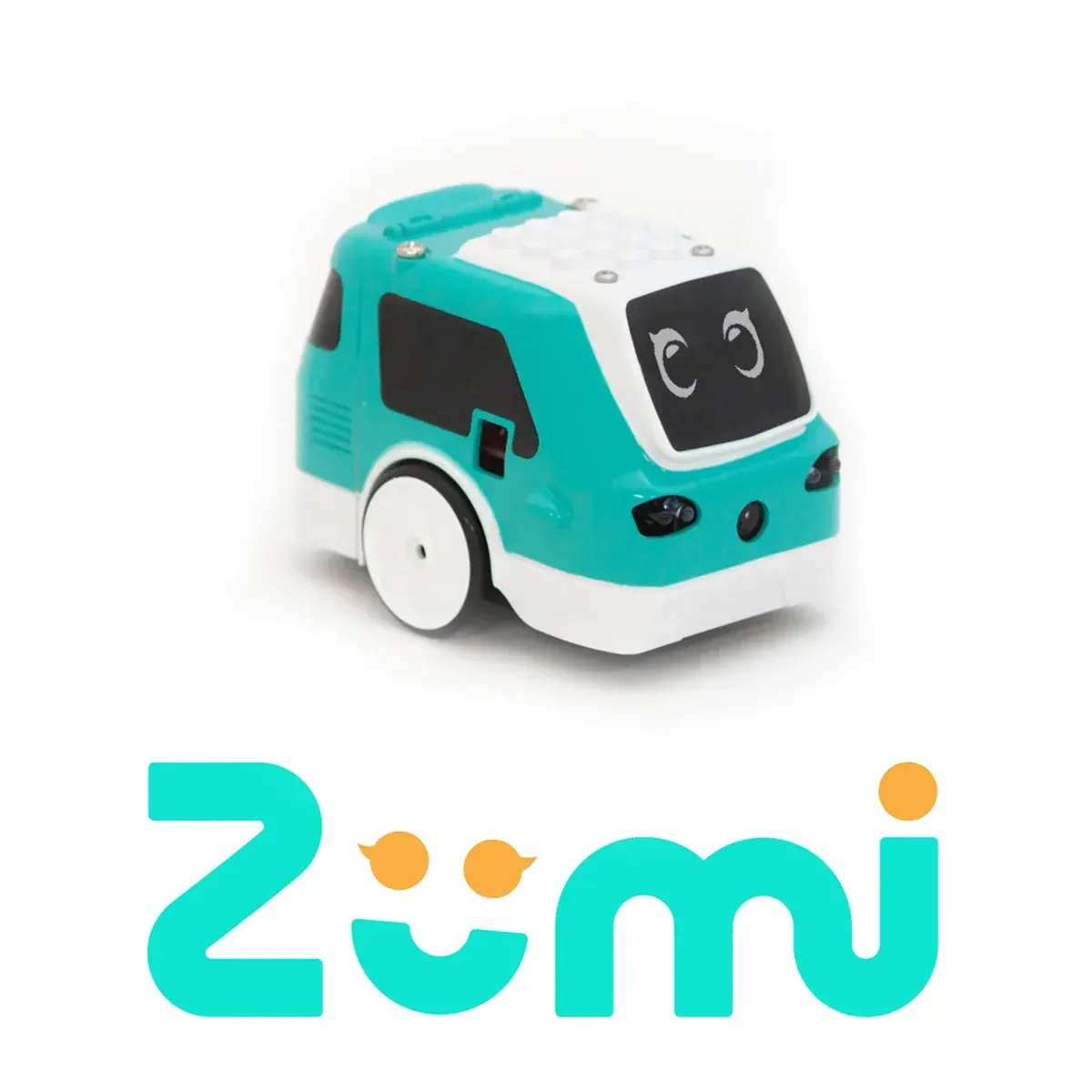
    Zumi from Robolink is a compact self-driving car kit that makes artificial intelligence approachable for Grades 6-12. Students assemble the car themselves, then program it to navigate with sensors, recognise objects and react to what its camera sees. Coding is done in Blockly or Python from a Chromebook, Mac, Windows PC, iOS or Android device. Lessons cover AI fundamentals, how machine learning works, computer vision for object recognition, sensor-based navigation, training data models, and coding the car's LEDs and sounds. The kit includes the shell, chassis and main board, a Raspberry Pi Zero with OLED screen, a Pi Camera, microSD card, a 950 mAh LiPo battery (about 40 minutes of use, 1-hour charge), two DC motors with wheels, plus fixings, cables, a screwdriver and colour activity cards. Zumi measures about 95 x 67 x 70 mm.

  • Grades 1–3

    Cretile TinkerBlocks Kit, Grades 1–3

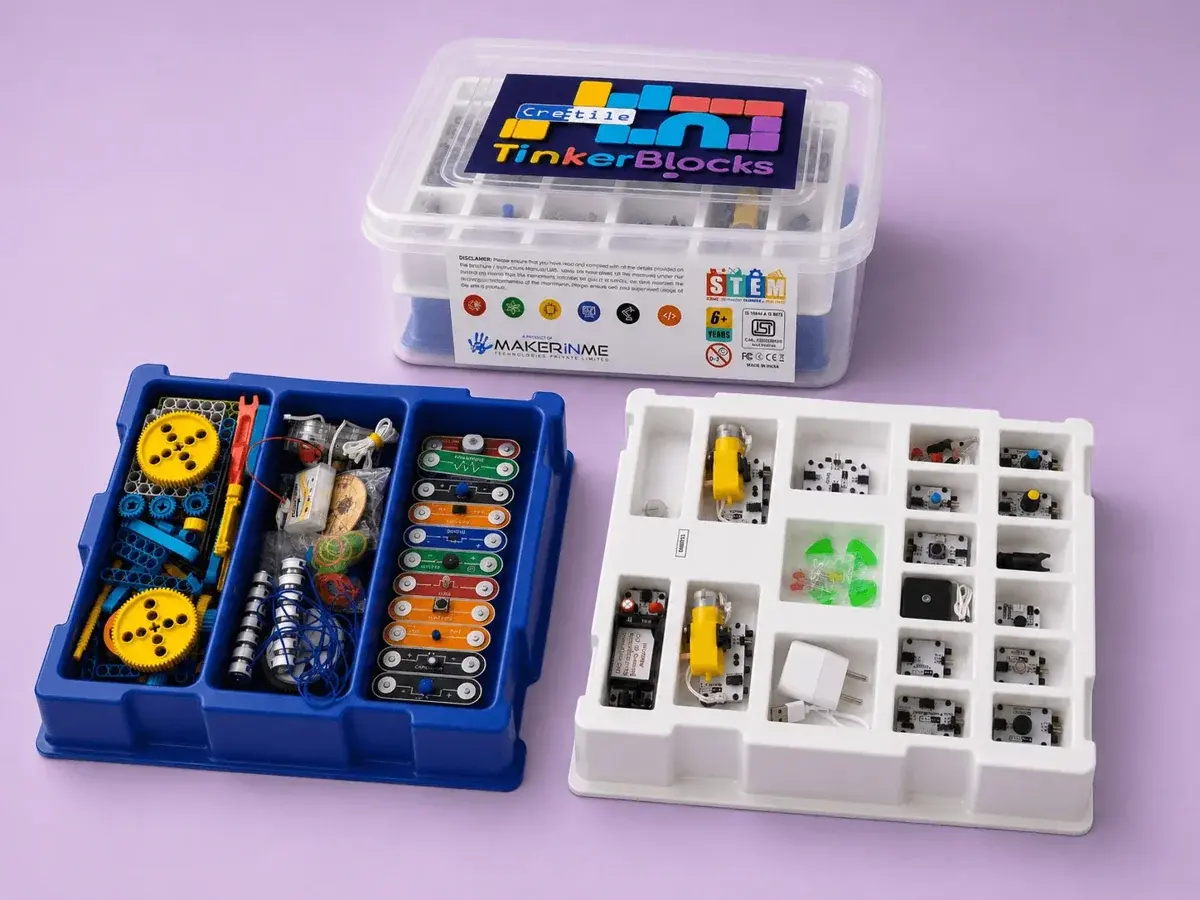
    The Cretile TinkerBlock Kit introduces young learners in Grades 1-3 to electronics and engineering through hands-on making before screens. Cretile blocks snap together and work straight away, so children can build circuits, models and simple machines without wiring, soldering or coding. The kit includes 40 Cretile blocks, a construction set of more than 100 pieces, 15 accessories such as motors, wheels and a fan, electronic parts like LEDs, a buzzer, switches and sensors, a rechargeable battery with charger, and a stackable storage box. More than 75 projects span basic electronics, Cretile modules and construction builds, and show ideas such as how a light sensor can guide a model's behaviour. Each kit serves a group of 2-4 students; a class of 30 typically uses about 10 kits including a teacher kit and a spare. The programme is NEP-aligned and mapped to CBSE/ICSE syllabi, with free educator training and lifetime LMS access to presentations, guides, videos and session plans.

  • Grades 1–3Grades 4–5Grades 6–8

    Cretile School STEM Kit – 100 pcs

    This Cretile school kit (sold by Cretile as the Mini School Kit) is designed for Grades 4-10. It pairs 40 plug-and-play Cretile blocks with a construction set of more than 100 pieces, so students can move from simple circuits to sensor-driven robots and connected devices without soldering or wiring. More than 144 projects are organised into domains including electronics and robotics, robotics and coding, app development, the Internet of Things, artificial intelligence, and design thinking with AI. Example builds include a line-follower robot, smart street light, soil-dryness alarm, remote-controlled robot, IoT plant watering and AI-based classification and text recognition. Coding is done in blocks or Python in the browser through the Cretile coding portal. The box also holds motors, wheels, a fan, LEDs, a buzzer, switches, a dimmer, sensors, a rechargeable battery with charger and a stackable storage box. Each kit serves 2-4 students, and schools receive free educator training, an NEP-aligned curriculum with session plans, and lifetime LMS access.

  • Grades 6–8Grades 9–12

    Databot STEM Science & Coding Device – 16 sensors

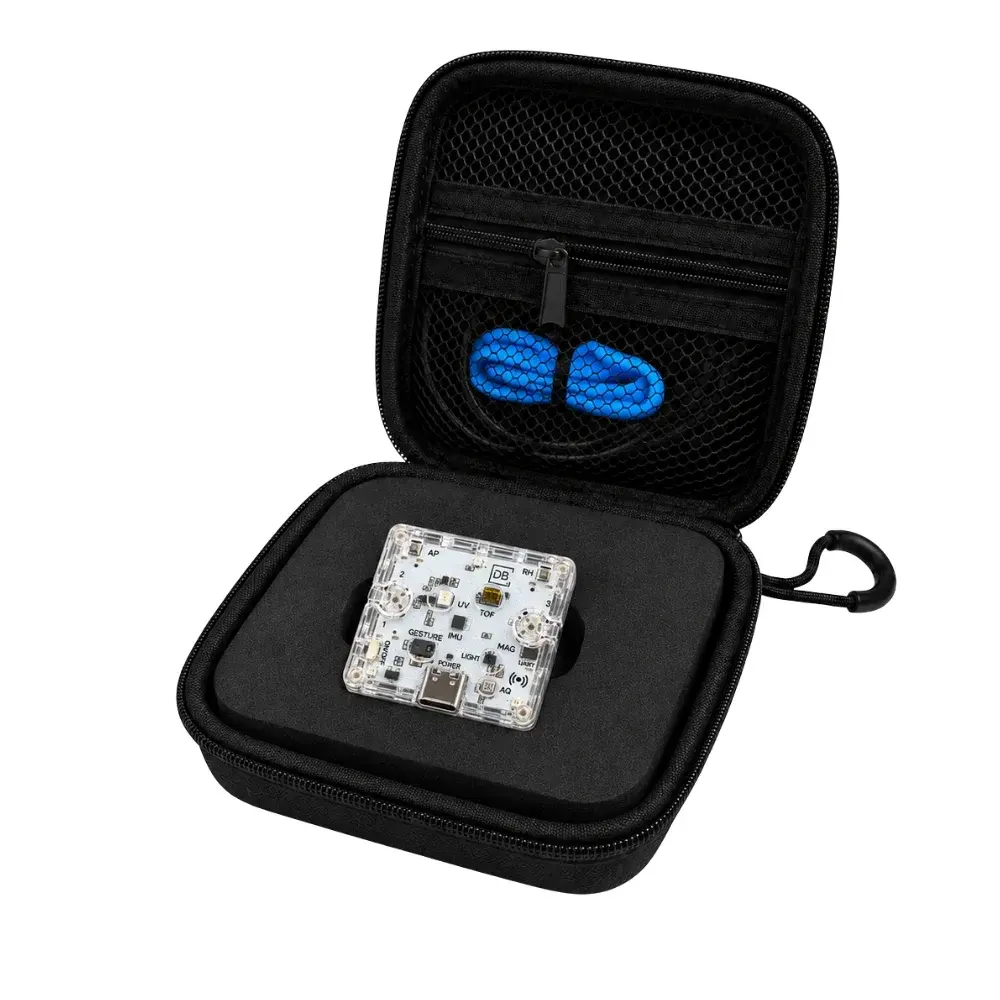
    Databot is a compact sensor device that lets students collect real scientific data and see abstract concepts take shape. It is suited to Grade 4 and up, from elementary science through high school, technical and CTE courses, as well as camps and after-school programmes. It offers 16 sensors and measurements: acceleration, air pressure, altitude, eCO2, colour, gesture, gyroscope, humidity, light, magnetometer, proximity (up to 3 m), sound intensity, temperature with support for two external probes, UV-A and UV index. Students graph and analyse data with the free Vizeey app and CODAP, and code the device with MicroBlocks, or with Arduino IDE and MicroPython for advanced work. Each unit comes with a waterproof temperature probe, a micro-USB charging and programming cable, a lanyard, a soft protective case and a built-in rechargeable battery. Teachers use it in science, math, computer science, physical computing and engineering design challenges.

  • Grades 4–5Grades 6–8Grades 9–12

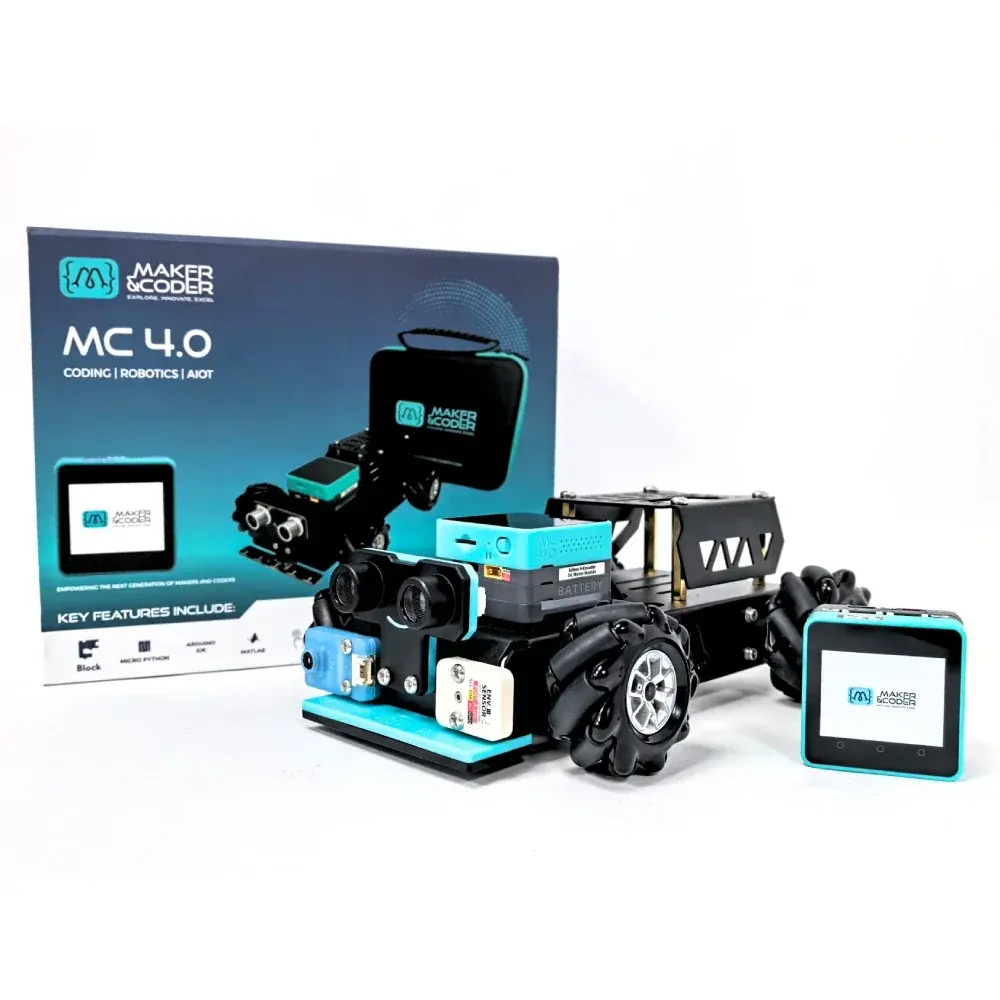
    Maker & Coder MC4.0 AIoT Robotics Kit

    The Maker & Coder MC4.0 AIoT Robotics Kit brings robotics, artificial intelligence and the Internet of Things together on one platform aimed at high-school learners. Built around the MC4.0 controller, it lets students design robots that see, sense their surroundings and share data online. The kit includes an AI camera for image recognition and object tracking, an environmental sensor, a 4-channel relay module, four DC motors with encoders, two servo motors, mecanum wheels for omnidirectional movement, a battery pack, cables and documentation. Students can program it in Scratch, Python or Arduino, so it supports both newcomers and experienced coders. Typical projects include obstacle-avoiding robots, image-recognition applications, environmental data collection and IoT monitoring systems that connect to cloud platforms such as AWS and Azure. Lesson plans and setup guides are provided, with a full curriculum through the MC4.0 Academy learning portal, making it suitable for science labs, tech clubs and makerspaces.

  • Grades 4–5Grades 6–8Grades 9–12

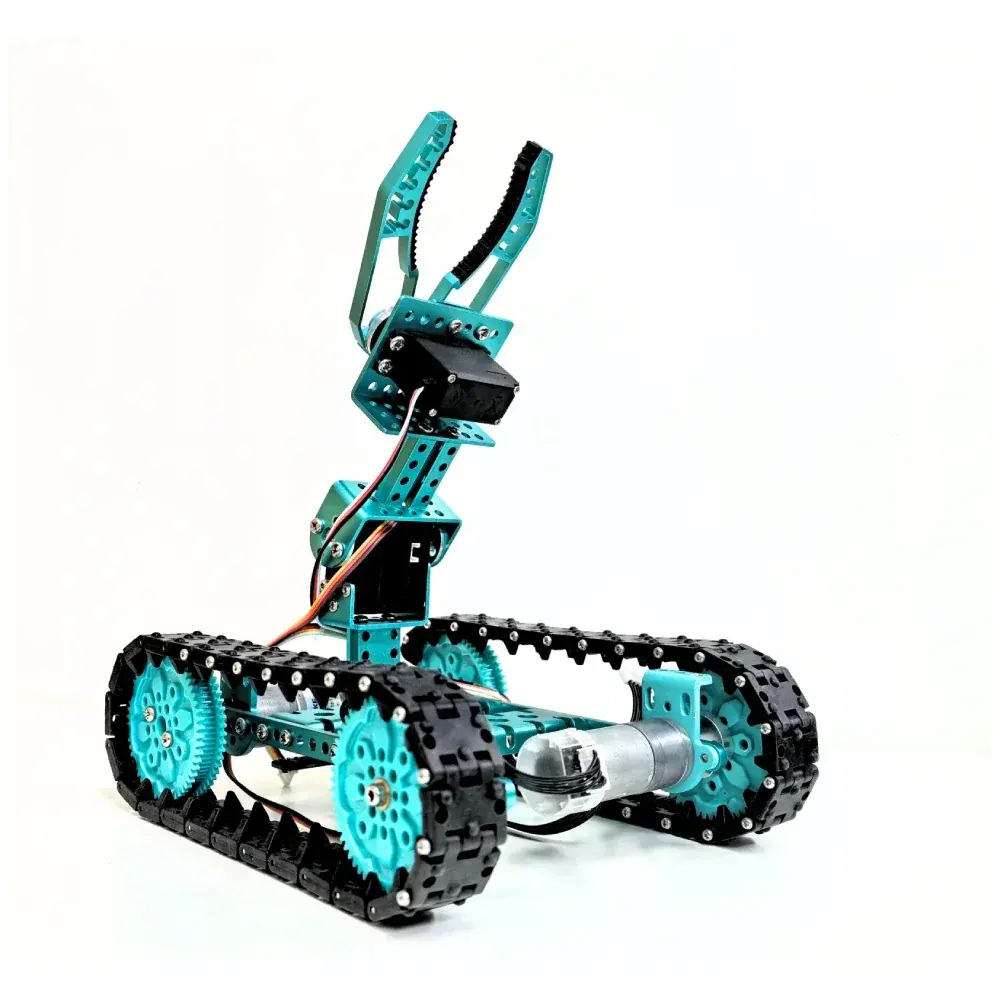
    Maker & Coder MC4.0 STEAM Kit

    The Maker & Coder MC4.0 STEAM Kit is an educational robotics platform for learners aged 12 and up who want to explore science, technology, engineering, arts and maths through building. Its focus is helping students progress from visual block coding to text-based programming. At its centre is the MC4.0 controller with a touchscreen, speaker, microphone, real-time clock, IMU and vibration motor. The tray box adds a DC motor driver, two servo motors, an ultrasonic sensor, a line-follower sensor, a metal gripper pack, gears, track tyres, metal beams, linkages, fasteners, spacers and tools, plus a user manual and quick-start guides. Students begin with simple robot cars and advance to sensor-based projects that involve gripper construction and mechanical design, coding first in blocks and later in Arduino IDE and Python. The modular design accepts additional Maker & Coder sensors and modules, and teachers can use it for group projects and individual challenges in STEM/STEAM classes and makerspaces.

  • Grades 4–5Grades 6–8Grades 9–12

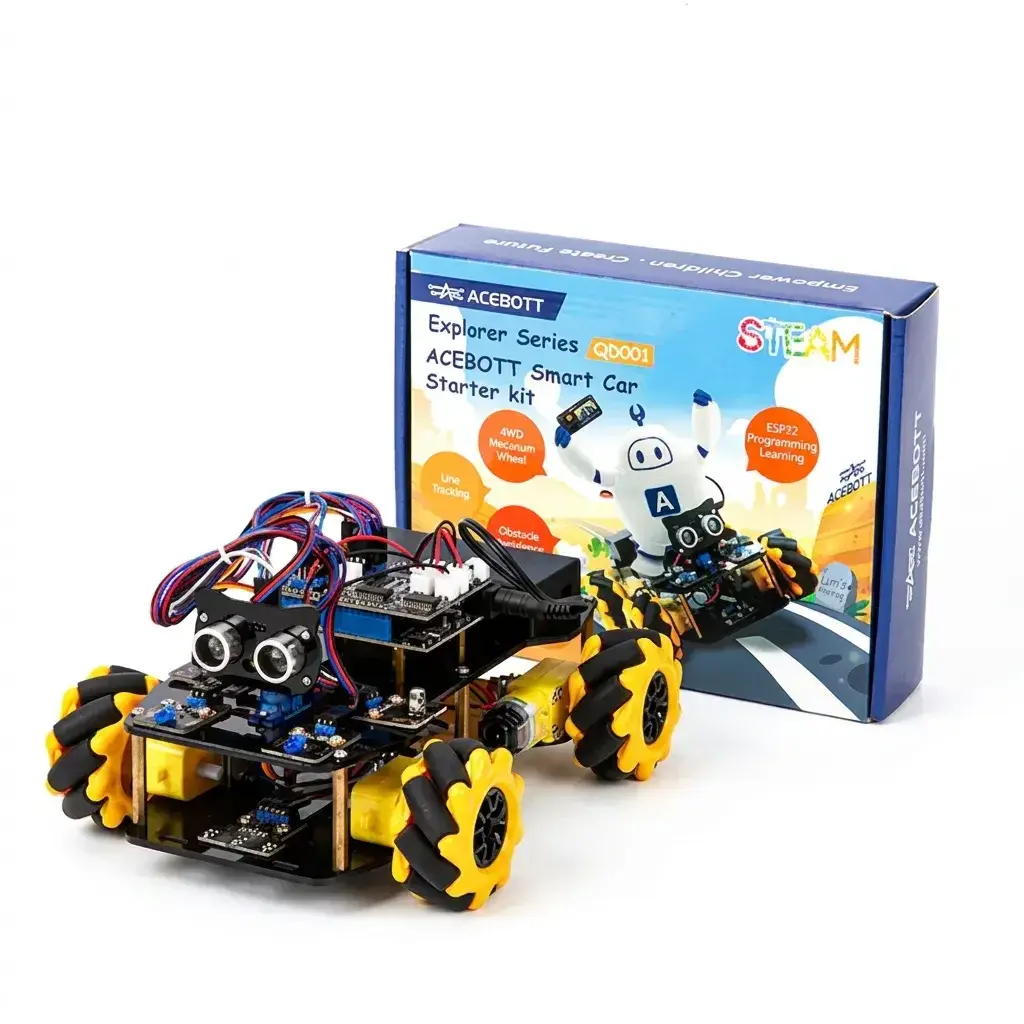
    STEM Robot Car Starter Kit – Mecanum Wheels, Camera, ESP32

    This ACEBOTT starter kit (QD001 series) is a four-wheel-drive smart robot car built around an ESP32 controller board. Its mecanum wheels let the car travel forward, backward, sideways and diagonally, giving students a hands-on way to explore omnidirectional motion and autonomous driving ideas. After assembling the car, learners program it to follow lines, avoid obstacles and respond to different remote-control methods, including an IR remote and a mobile app. The kit supports ACECode block programming as well as Arduino and Python, and comes with 16 story-based tutorials. The QD001 is offered with a camera pack so students can add live video and vision-based projects. The car is the core of ACEBOTT's Explorer series and accepts further expansion packs, such as AI, tank, robot-arm, solar and GPS packs, so a class can keep extending the same platform. Getting started follows three steps: assemble, code and drive. Batteries are not included.

  • Grades 4–5Grades 6–8Grades 9–12

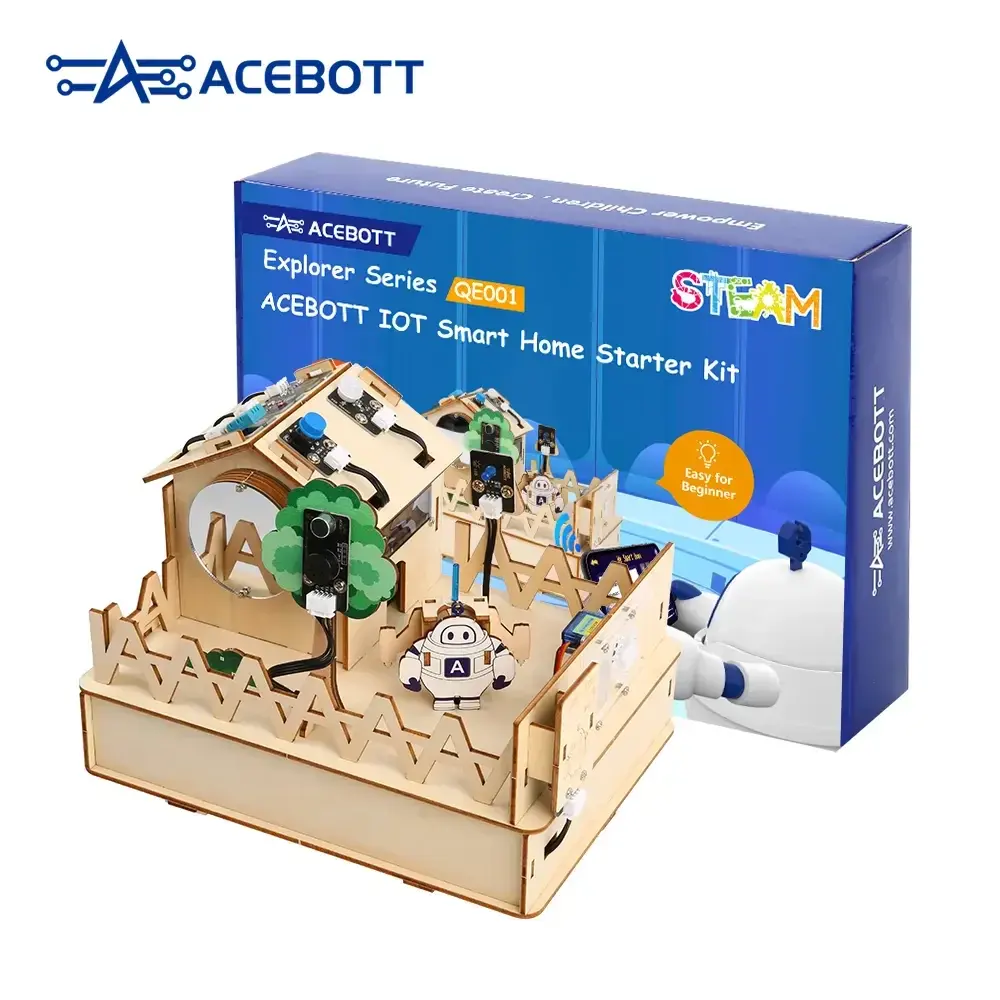
    Smart Home IoT STEM Kit

    The ACEBOTT Smart Home IoT Starter Kit (QE001) introduces the Internet of Things through a model house that students build and program themselves. Built on an ESP32 board, it turns everyday home automation into a series of hands-on STEM projects for learners aged 8 to 12. Projects include controlling the house from a mobile app and by voice, unlocking the door with RFID cards, closing a window automatically when the rain sensor detects water, and switching LED and RGB lighting. Each feature shows how sensors, controllers and outputs work together in a real connected system. Students program the kit with ACECode, a Scratch-style visual language, and can move on to Arduino as they gain confidence. A step-by-step, story-based curriculum and online tutorials support use at home or in class, and the ESP32 design leaves room for further customisation.

  • Grades 4–5Grades 6–8Grades 9–12

    Quadruped Bionic Spider Robot Kit

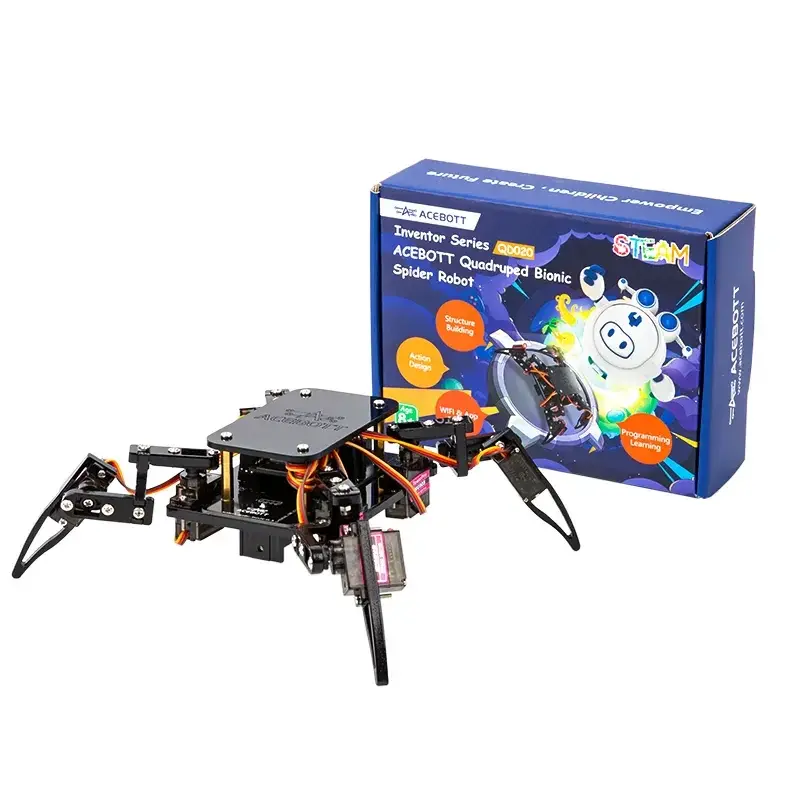
    The ACEBOTT QD020 Quadruped Bionic Spider is a robot kit from the Inventor series that imitates the walking movement of a spider. Aimed at ages 12+ and makers, it combines mechanical assembly, electronics and programming in one project. The spider uses an ESP8266 controller and MG90 metal-gear servos to move its four legs. Through the mobile app it can walk in six directions and perform nine preset actions, including standby, lying down, sleep, greeting, push-ups, fighting, dancing and swinging. Once students learn the basics, they write their own code to create new movements. Programming is supported in ACECode (Scratch-based) and Arduino, guided by eight lessons that cover both electronics and coding. The kit uses a unified screw system for simpler assembly and charges via Type-C; it takes an 18650 battery, which is not included.

Need a full classroom or lab?

We build bundles for 24–30 students with storage and charging, and can install and train your teachers.

Talk to us